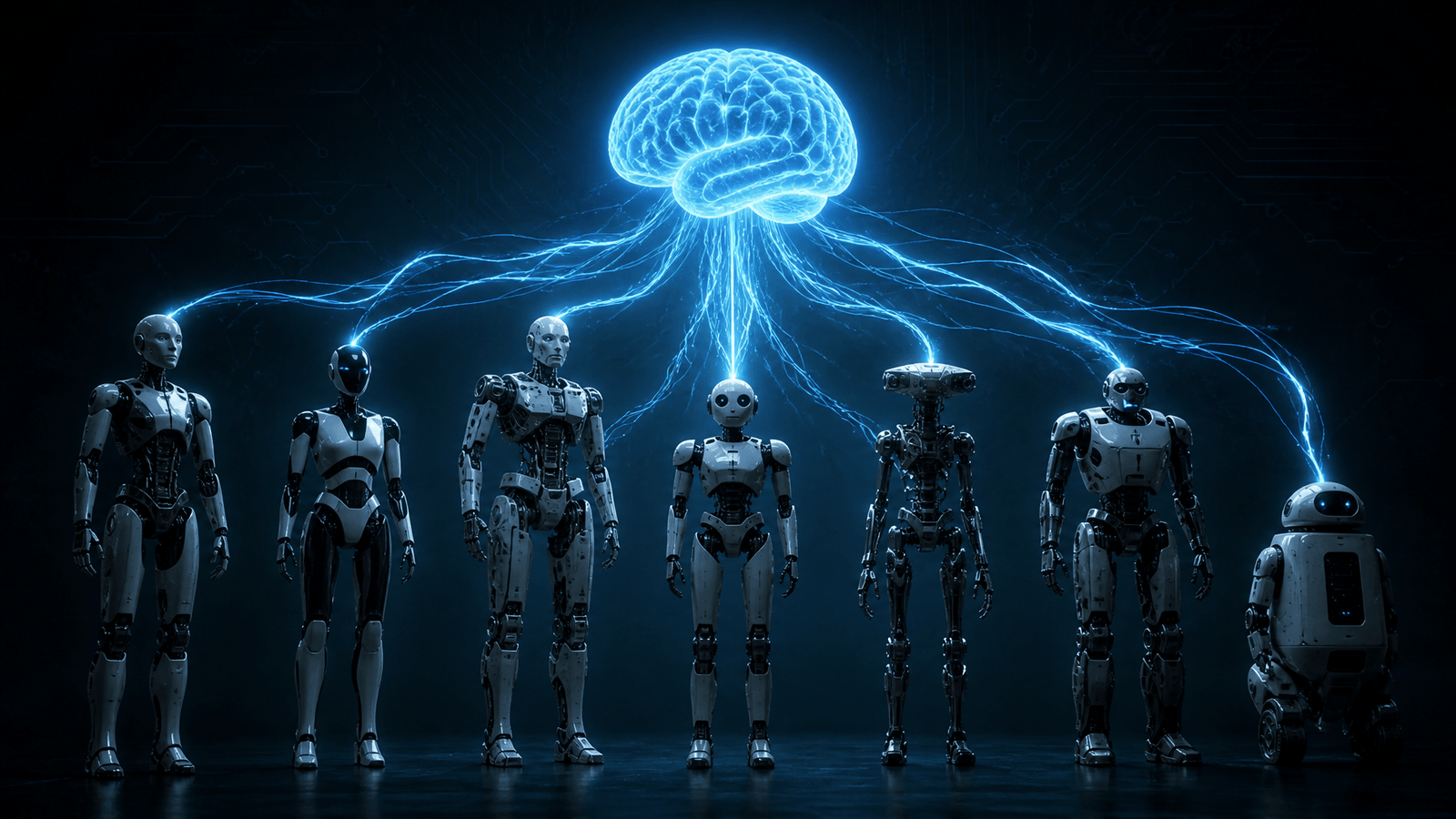
While Tesla and Figure race to build the better body, Google placed a different bet: own the brain, and let everyone else build the robot around it.
On 30 July, Google DeepMind released Gemini Robotics 2, a trio of models that reads like an operating system for robots rather than a single product.
Three models, one architecture
The first, Gemini Robotics 2, is a vision-language-action model that turns vision and language straight into motor commands, controlling a humanoid from toes to fingertips. The second, Gemini Robotics ER 2, is an embodied-reasoning model that plans multi-step tasks and, for the first time, coordinates multiple robot types in real time. The third, On-Device 2, is a lightweight model that adapts to a brand-new robot body in a few hours of data.
Crucially, a single VLA model can drive three different robot forms, a direct challenge to the vertical-integration playbook of Figure and Tesla, which build their own models, hands and factories.
The reasoning layer goes open
The sharper move is in ER 2’s openness. The VLA and on-device models stay with early partners, but ER 2 is on the Gemini API and Google AI Studio, free for any developer to wire into their own robot. Google is turning the industry’s most valuable layer, understanding the physical world, into a commodity API.
Android or Apple?
The history cut both ways. Android dominated phones; Nest and Wear OS never replicated that grip. If robotics follows the Apple model, where tight hardware-software coupling wins, Google’s platform could end up building someone else’s moat. If it follows Windows-Intel, where standards beat integration, Google is the natural landlord.
Fortune Business Insights projects the global humanoid market reaching 165.1 billion US dollars by 2034, a compound annual growth rate near 50.6 per cent from a 4.89 billion dollar base in 2025. Three giants, three strategies, one shared conviction: this is the next trillion-dollar market. Google’s wager is simply that its brain makes every other robot run.
Translated and adapted from Sohu IT (it.sohu.com).