Guangdong Luxshare has secured a construction permit for a Greater Bay Area centre in Guangzhou, a RMB 280 million project in the Tianhe 2112 industrial park that will house embodied robot and sorting robot R&D plus a supply-chain production centre. At full output the site is projected to generate RMB 1 billion in annual value.
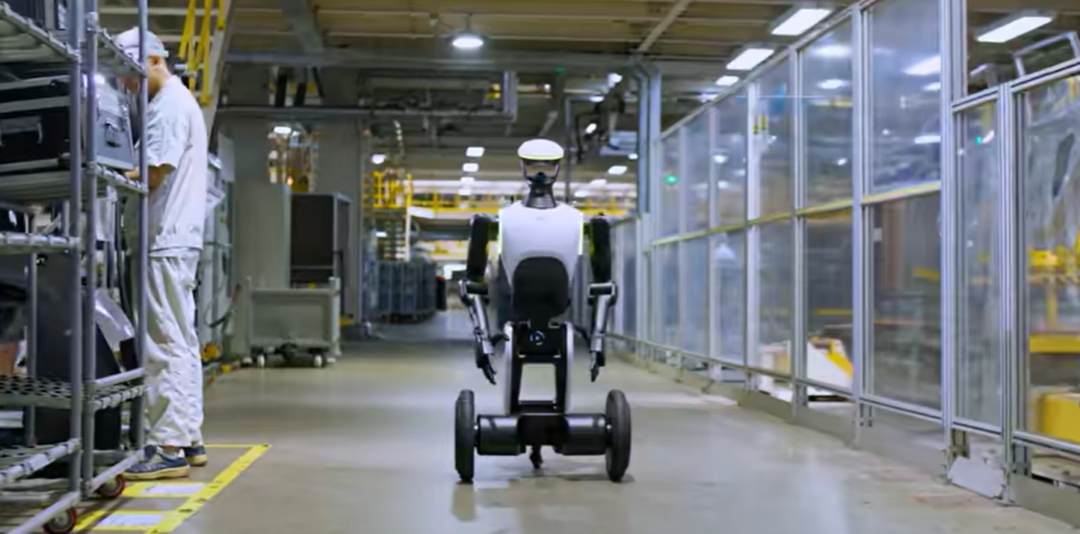
Read as one permit, it is routine. Read against the rest of the district, it is a pattern with a thesis inside it.
Editor’s note: This is an adapted translation of the original OFweek report. It has been trimmed and restructured for readability for an international business audience. The full original (in Chinese) is at https://robot.ofweek.com/2026-11/ART-898890-8420-30711066.html.
Three carmakers, one contract manufacturer, one platform
In February, XPeng signed with the Tianhe district government to build a full-chain humanoid mass production base in the Guangtang sci-tech city embodied AI park. The main structure is topped out and production is expected within the year. GAC put its robotics headquarters in Huangpu with RMB 200 million and incubated a humanoid company, Huilun Technology, internally. JD, which does not build robots, chose Huangpu Science City for a RoboBase project due to start production in 2029 with projected annual output value of RMB 1.75 billion, positioned as an industry base that supplies scenarios, supply chain and data to other companies.
Different industries, same direction. A carmaker brings supply chain discipline, a contract manufacturer brings process yield, a platform brings demand. What they have in common is that none of them is opening with a robot that dances.
The money is going into the test hall
Tianhe has pooled a fund that pays up to RMB 100 million per project for work on core technology such as foundation models and dexterous hands, and up to RMB 10 million a year in subsidies for embodied training grounds. Huangpu targets projects that actually land, offering packages across site construction, equipment purchase and hiring worth up to RMB 50 million per project for new arrivals with fixed asset investment above RMB 5 million.
The division of labour is deliberate. Tianhe funds algorithms and test infrastructure. Huangpu funds manufacturing and real-world scenarios. A company can develop a prototype, run pilot production and scale without moving city, which is the one thing most Chinese robot parks promise and few deliver.
The criticism is fair and the article makes it directly. Many cities chase the segment with the best headlines, the humanoid integrator, and end up with a plaque, a photo and no test environment. Companies arrive and still have to hunt for suppliers. Guangzhou is placing its money on the parts of the stack that do not photograph well, which is usually where the bottleneck is.
What the policy cannot fix
Core component costs remain high, non-standard real-world scenarios remain hard to adapt to, and high-quality training data remains scarce. A prototype can run a smooth demo at an exhibition and degrade the moment it meets an actual workshop. Carmakers entering the field can reuse supply chain resources, but the engineering logic of a miniature robot joint or a force-torque sensor is not the same as a car part, and technology transfer still has to clear its own hurdles.
The distinction worth watching is between subsidy size and subsidy target. Districts that pay for training grounds and component R&D are accepting a longer cycle and more failed attempts. Districts that pay only for an integrator to plant a flag are buying a press release.
Buildings going up is the easy part. The test is whether component makers, algorithm teams and scenario owners in the same park can shorten the distance between a lab prototype and a product someone pays for.