Fourteen carmakers published July sales results, and the split tells the story of where Chinese EV momentum now lives. Leapmotor delivered 101,300 units, up 102 per cent and its first month above 100,000, while Zeekr reached 35,800 (up 111 per cent) and Arcfox 23,500 (up 150 per cent). Seven new-force brands, including Harmony Intelligent Mobility, Xpeng, NIO, Li Auto, Deepal and Voyah, slipped month on month, but mostly by small margins as the summer lull set in.
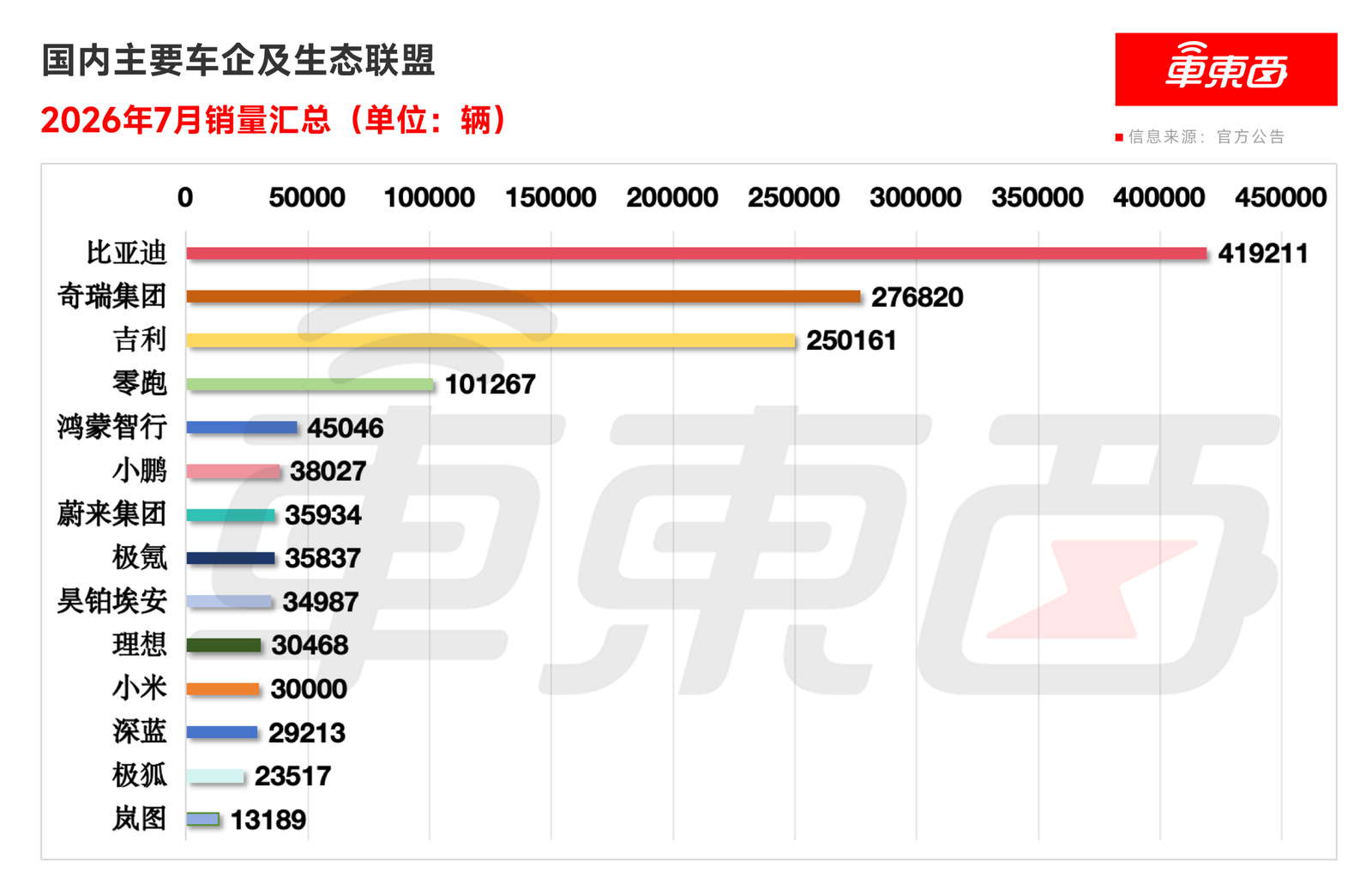
The traditional makers carried the export story. BYD shipped close to 420,000 units in July, up 22 per cent, with overseas sales of 179,800 setting a record. Chery delivered 276,800 units, up 23 per cent, and its exports of 202,500, up 70.1 per cent, made it the first Chinese carmaker to top 200,000 monthly exports, a run now five months long. Geely reached 250,200 units with overseas sales above 100,000 for a second straight month.
Why the overseas number is the one to watch
July is normally a weak month in China, with retail sales estimated around 1.52 million units, down roughly 17 per cent year on year. Against that soft backdrop, the year-on-year gains from Leapmotor, Zeekr and Arcfox stand out, and the month-on-month dips mostly reflect seasonality rather than demand trouble. Leapmotor’s jump came from steady contributions across its A, B, C and D model lines plus a fresh overseas tailwind, its B10 cleared Mexican certification and began local delivery, opening a North American front.
The read for European and global competitors is straightforward: Chinese brands are converting domestic manufacturing scale into export volume faster than the headline total suggests. As more heavyweight models reach customers in the second half, the export channel, not the home market, is becoming the primary growth engine, and that is the figure Western boardrooms should be modelling.
Read the original report (in Chinese)
*Translated and adapted from Chedongxi (https://chedongxi.com/p/373666.html).*