Nanjing Guangli Precision has started construction on a production line for 10 million robot bearing sets a year in Lishui district, according to Nanjing Daily. It is the latest robot and high-end equipment project to land in the district, and it reflects a supply chain that keeps heating up at the component level.
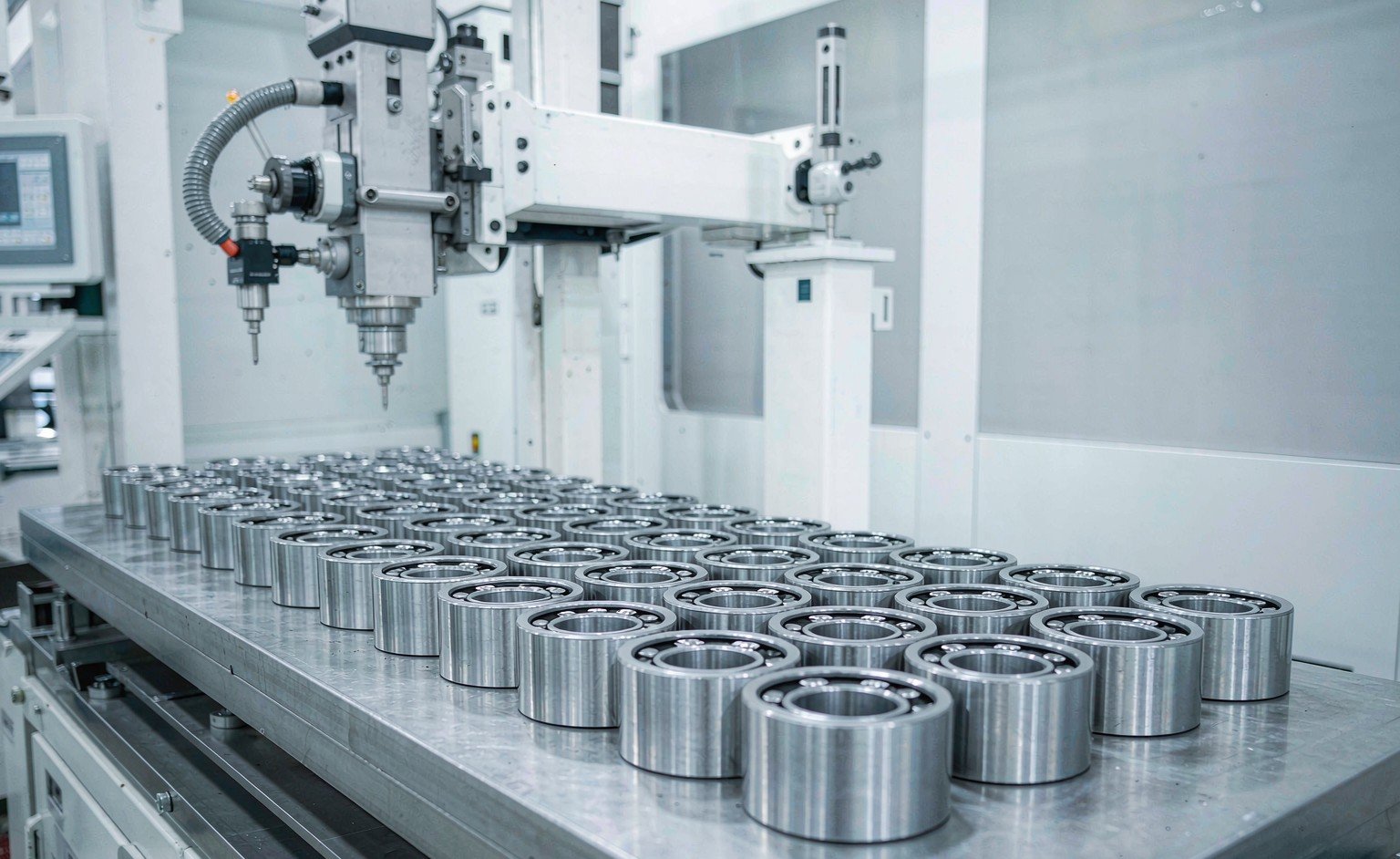
The project carries RMB 600 million of planned investment and several high-precision cylindrical roller bearing lines, with the process chain running from raw material processing through forming, heat treatment, grinding, sorting and inspection. Production is scheduled for 2028, with annual sales projected to exceed RMB 300 million, aimed at industrial robots and high-end machine tools.
A district stacking up robot projects
Lishui has been collecting these projects at pace. Nanjing Tuolingzhi Automation is building a line for 500 welding robots and 500 CNC machine tools plus components a year, with RMB 510 million of total investment and RMB 100 million planned for 2026. Nanjing Ningchuang Intelligent Technology, which works on intelligent unmanned cleaning equipment, is putting RMB 1 billion into a smart factory due to be completed in April 2027.
From whole machines to specialised equipment to core components, the district is assembling a cluster whose projects reinforce one another.
Why bearings decide the price of a joint
Bearing capacity is the least visible part of the robot build-out and among the hardest to scale. A humanoid uses dozens of bearings across joints and actuators. Precision cylindrical rollers carry radial load in the joint and set how much backlash a limb has after a million cycles, which is the difference between a demonstration and a machine that holds tolerance through a production year.
Chinese suppliers have spent a decade closing a gap that Japanese and German incumbents held for roughly thirty years, and the current round of investment is aimed at volume as much as at precision. Announcements made in 2026 land in 2028, which is roughly when the first serious humanoid volume forecasts come due. Capacity built ahead of that demand is a bet that the forecasts hold.
If they do, the joint becomes the cheapest part of the robot. If they do not, the district owns a very good bearing plant with a machine tool customer base as a fallback.
Editor’s note: This is an adapted translation of the original OFweek report. It has been trimmed and restructured for readability for an international business audience. The full original (in Chinese) is at https://robot.ofweek.com/2026-11/ART-8321201-8120-30712053.html.