A two-round year for a non-consensus thesis
Robot Forefront reported on 10 August that Oak Fruit Robotics closed an angel round led by China Merchants Venture and NIO Capital, with Tsinghua alumni seed fund following. Four months after a near-RMB 100 million seed round in March, the company had completed two rounds, cumulatively several hundred million renminbi. Founded at the end of 2024, Oak Fruit describes itself as the world’s first general embodied-AI firm built on an instinct-driven approach. The core team spans Tsinghua and Harvard across mechanical engineering, neuroscience and artificial intelligence, with nearly 15 years in robotic manipulation.
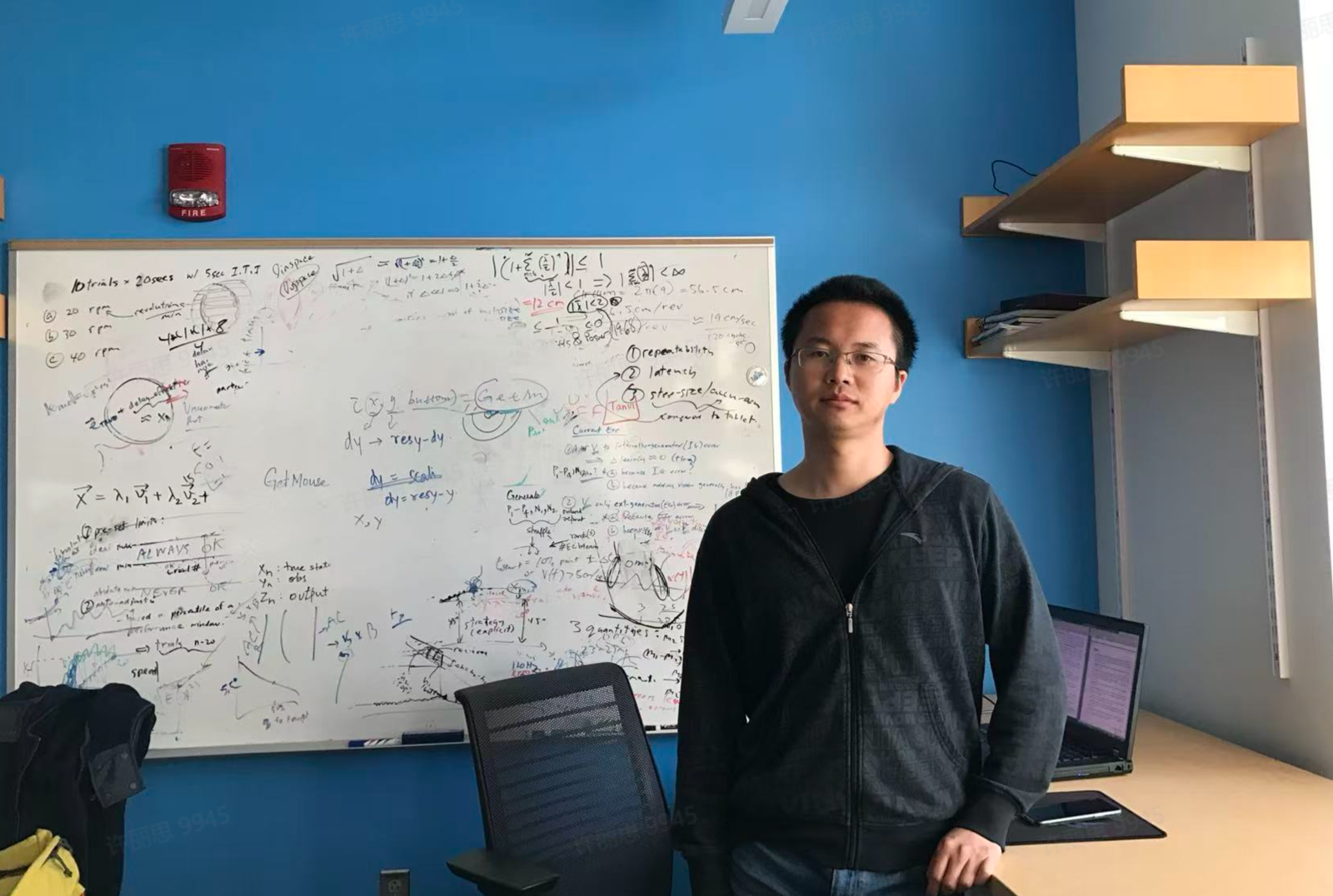
Founder Jiang Yao is an associate researcher at Tsinghua’s Department of Mechanical Engineering, with a PhD from Tsinghua in 2016 and postdoctoral work at Harvard’s SEAS. He proposed instinct-driven embodied manipulation in 2017 and brought the company out of stealth in June 2026.
When the robot flinches before it thinks
The route grew from a long observation of human manipulation. When a person meets a pain stimulus they pull back without training, and almost everyone reacts the same. Jiang argues manipulation has similar inborn instincts. Oak Fruit wants to give the machine a similar base ability so that, without having seen a specific task, it can still act on physical feedback. Where most embodied-AI firms followed data-driven VLA routes, Oak Fruit abandoned the visual-led, large-model, data-heavy approach and built perception-operation links bottom-up from tactile sensing, forming muscle memory through instinct reflex and letting operation intelligence emerge for cross-body, cross-platform, cross-task generalisation.
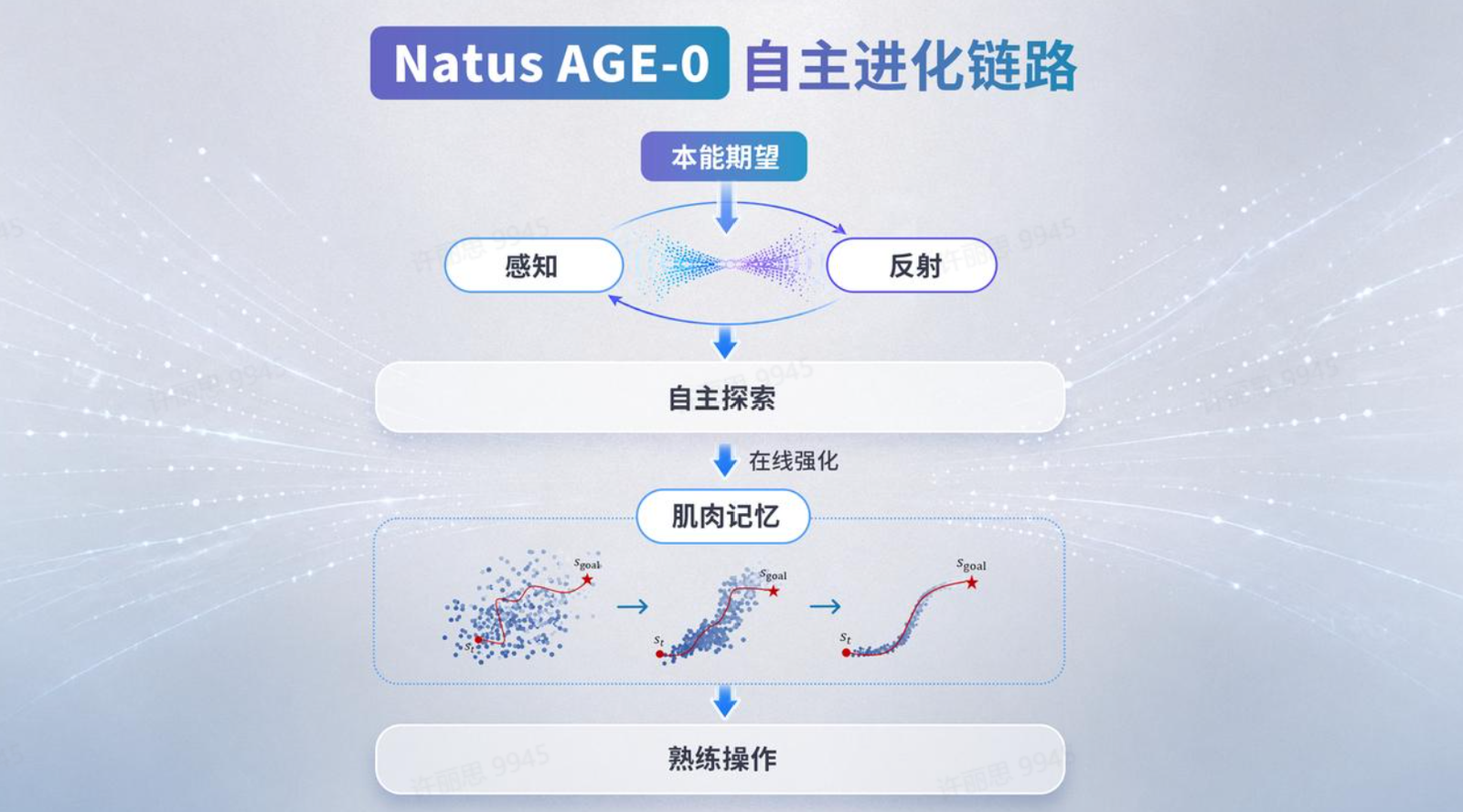
The firm also released Natus AGE-0, the first general manipulation base model centred on tactile sensing and replicating human operation mechanism, with zero-data cold start. It does not depend on massive scene-annotated data, a fixed robot body or fixed materials and conditions, but extracts general physical-interaction laws from tactile sensing and contact mechanics, giving the robot an inborn operational instinct with zero-shot generalisation.
From instinct to skilled
Distinct from models that memorise fixed trajectories, Natus replicates human biological behaviour through an instinct-reflex, behaviour-emergence, experience-reinforcement chain. Because a robot re-exploring every task cannot meet industrial efficiency, Oak Fruit also builds Magis, a general skill model that uses the precisely tactile-labelled data Natus produces, such as weight, centre of mass and friction, to semantically enhance vision data and train skills, moving the robot from can-do to skilled.
Oak Fruit is polishing a standardised dual-arm flexible production cell using self-developed visuo-tactile sensors and embedded Natus, suiting fast-moving-consumer, personal-care and food scenarios with many SKUs, small batches and fast iteration. It completed a proof of concept with a global top cosmetics ODM in two months and booked commercial revenue.
What investors now want
Jiang says the shift is clear: investors no longer only ask about the best technology. They want the commercial case made. They chose Oak Fruit because its route is non-consensus, yet that non-consensus is scarce certainty, the ability to let the robot move first. He draws the autonomous-driving parallel: the firms that promised L4 from day one mostly died. You first ship an L2 that runs, gather real data, and climb. Robotics, like driving, must enter the real scene. The car learns to read the road by driving, and the person learns to swim by entering the water. Operation must be learned in practice.
Why zero-data is not no data
Jiang defines zero-data cold start as no pre-training data, not no data at all. A child does not need 10,000 grasp trials. A grasp reflex is present at birth. Oak Fruit moves data generation online, defining an expectation from touch that drives exploration until the ideal is reached. Behaviour is never predefined. It emerges, but is constrained by instinct expectation, so the result is predictable even when the trajectory is not. Natus is unsuited to long-horizon home tasks, which is why the firm avoids the home scene and fits industrial tasks that are already well decomposed.
Oak Fruit delivers as dual-arm robots rather than full humanoids, because walking humanoids are inefficient in production. It refuses project-based delivery, the pain of the prior automation generation, and binds the order directly to production rather than to decomposed motions, aiming for the ultimate flexible cell that replicates one worker’s capability.
Editor’s note: This is an adapted translation of the original Zhidx report. It has been trimmed and restructured for readability for an international business audience.