A Series B for the sports large model
AI sports-hardware company Pongbot has announced a several-hundred-million-yuan Series B. The round was led by the Shanghai Guotou Xiandao fund, with Yuanhe Puhua and Pudong Venture following and existing shareholder BlueRun continuing, and Gaohu Capital as sole financial adviser. The funds go to sports large-model, motion-vision and training-decision R and D, plus global market expansion.
Pongbot was founded in Shanghai in 2019. Founder Zhang Haibo has more than ten years of sports-training robot R and D experience and once led a national-team-grade table-tennis rally robot. Starting from a table-tennis serving robot, the product line now spans professional to consumer grades, with over 300,000 global users, more than one million user-generated ball paths and over two billion cumulative serves.
The “hand-eye-brain” stack
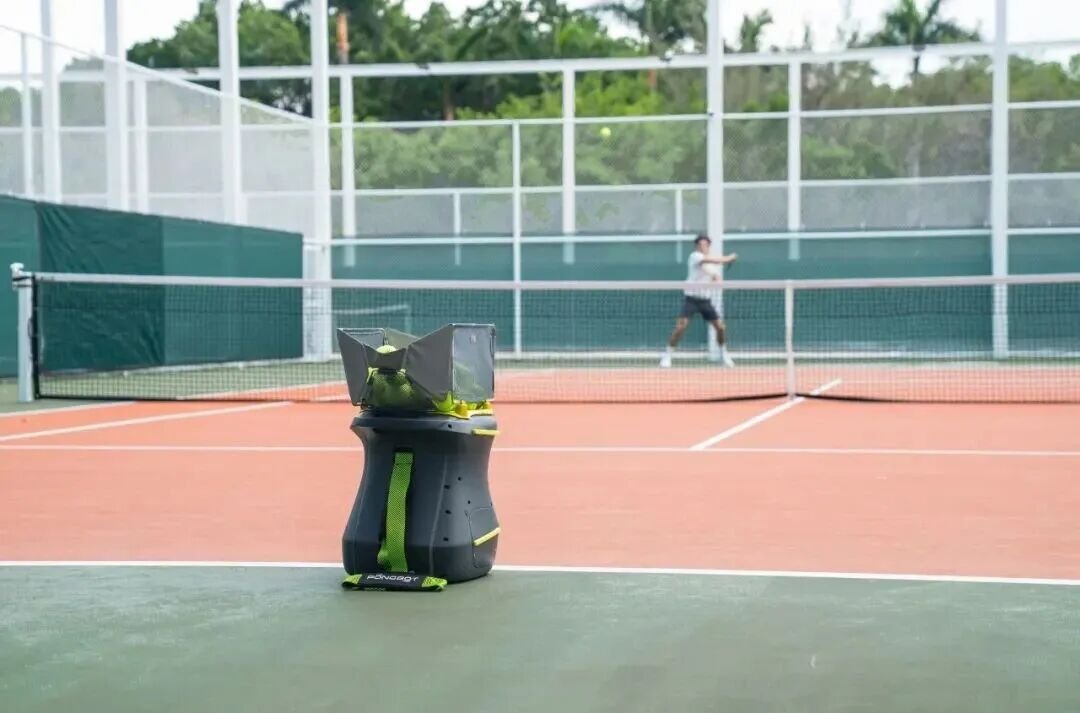
The core of this round is the sports large model. Pongbot’s architecture is a three-layer “hand, eye, brain”. The hand is the serve and feed system that precisely replays speed, spin and placement. The eye is motion-vision perception that captures the user’s movement in real time. The brain is the large-model AI coach that turns natural-language interaction into a personalised training plan.
On the Aura all-in-one coach robot released in May 2026, this stack is already live, and the product passed one million US dollars on Kickstarter within five hours and reached more than four million in total.
Why the model travels
Extending from table tennis to tennis, pickleball and padel leans on reused underlying technology. Pongbot’s three core technologies, ball-characteristics algorithms, trajectory generation and human-action analysis, validated in ping-pong, moved to tennis with only about 10 per cent of the original R and D cost. Overseas revenue exceeded domestic for the first time in 2025, and during the 2024 Black Friday month single-month sales passed RMB 20 million.
The sports large model moves from “understanding sport” to “joining the training” on the strength of real-scene data. The two billion serves and one million user ball paths form the base of a data barrier: the more devices sold, the sharper the AI coach’s feedback. Shanghai state capital leading the round, with Pudong Venture participating, points to Shanghai’s intent to lay out the crossover of AI hardware and sports technology.
The open question is whether the hand-eye-brain architecture keeps the same data-accumulation efficiency as it leaves ping-pong for tennis and beyond.
More from the original report
Editor’s note: This is an adapted translation of the original OFweek Robotics report. It has been trimmed and restructured for readability for an international business audience. The full original (in Chinese) is at https://robot.ofweek.com/2026-10/ART-8321203-12005-30706751.html.