Qiyuan Robot, the consumer embodied intelligence unit of listed materials company Shangwei New Materials, rolled its 10,000th personal robot off the line on 8 November. The 5,000th unit came off on 25 October. Fourteen days separate the two.
At the line, Liu Dongfang, co-president of Qiyuan Robot and president of its Q business unit, handed the machine carrying the number 10000, a Q1, to the user Wu Xiaobo as the symbolic recipient.
Consumer robots are a quality problem, not a demo problem
The hard part of consumer embodied intelligence is not making one robot work. It is making ten thousand identical, and keeping them identical after two years of being dropped, poked and left on charge overnight. Qiyuan’s answer is what it calls a car-grade plus 3C-volume manufacturing system: automotive quality control requirements married to consumer electronics precision and cycle time.
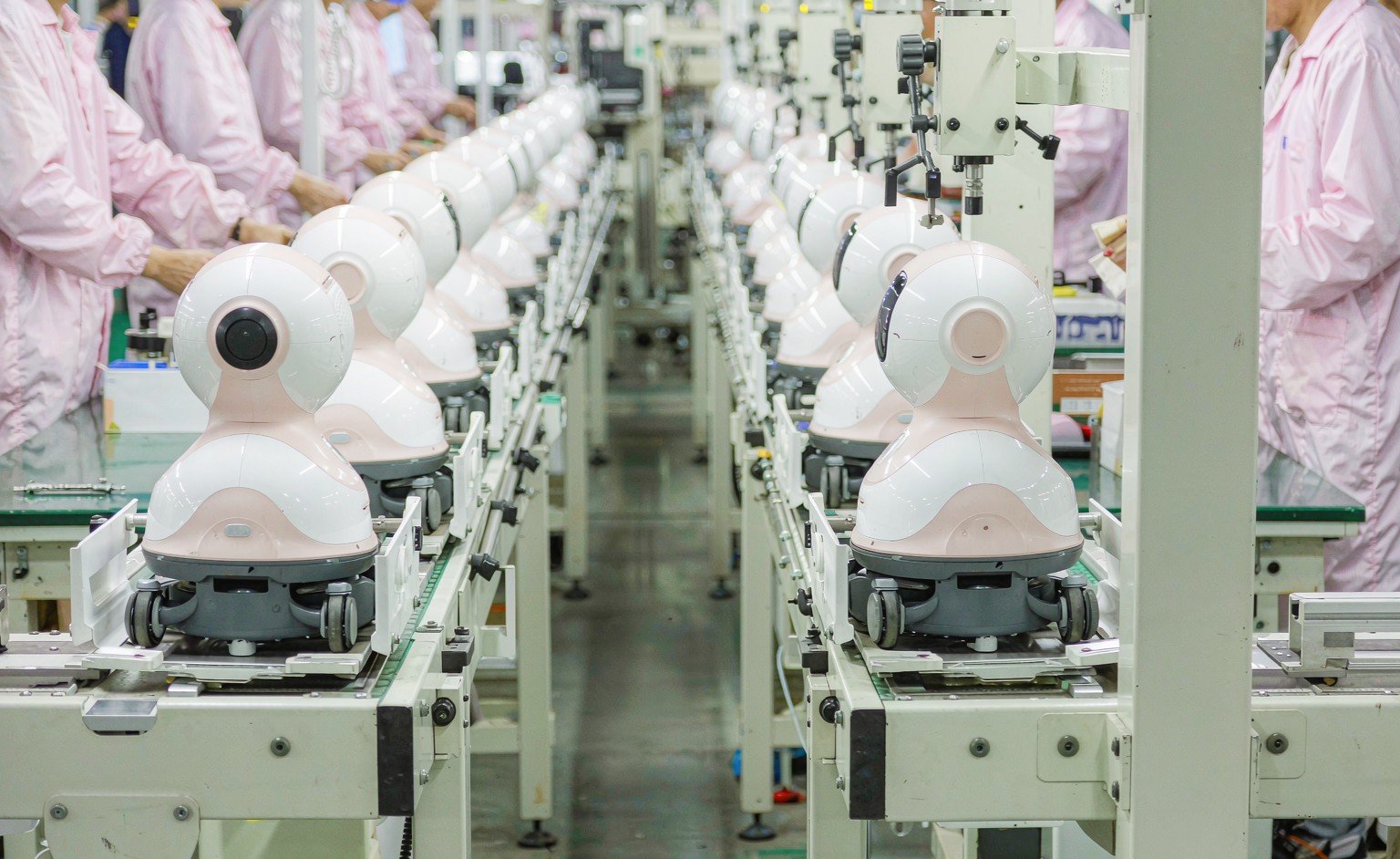
In production that means process freezing, quality convergence, automated assembly and calibration testing. In the supply chain it means joint raw material warehouses with suppliers, a semi-automated assembly line the company describes as an industry first, and an end-to-end manufacturing IT system giving full traceability. In test it means a million-cycle wiring harness bend test, a hundred-thousand-cycle joint durability test and module impact testing.
None of that is glamorous. All of it is what separates a product that survives a return window from one that generates refunds.
The engagement numbers matter more than the unit count
Qiyuan says monthly active use exceeds 98 per cent, daily concurrent online peaks above 40 per cent, average daily online time is three hours and the average user interacts with the robot more than 100 times a day. Those are unusually high for a consumer hardware category, and they are the number the company will be judged on next. A robot that ships and then sits in a corner is a warranty liability.
Three days before the milestone, Qiyuan pushed the first over-the-air update for both the Q1 and the larger T1, touching close to 50 functions. The Q1 gained six official characters including a storyteller and a science explorer, plus upgrades to its English conversation practice and an AI introductory course. The T1 gained terrain recognition, automatic follow mode and the ability to view and drive the robot remotely over audio and video.
Shangwei New Materials is a listed materials company that re-rated on the humanoid theme, and Qiyuan is the operating asset behind that re-rating. Shipping 5,000 units in 14 days is a manufacturing claim, not a demand claim. The 98 per cent monthly active figure is the closest thing to a demand claim in the release, and it is self-reported.
The consumer humanoid category is currently priced on narrative. Qiyuan has just moved the argument to a place where narrative does not help: unit economics on a device that costs a few thousand renminbi and must be supported for years.
Editor’s note: This is an adapted translation of the original Gasgoo report. It has been trimmed and restructured for readability for an international business audience. The full original (in Chinese) is at https://www.gasgoo.com/apps/e060bad9eca91db7f01403fc7120041f/robot/news/70477365/.