Realman Intelligent founder and CEO Zheng Suibing recently said something worth sitting with: the first step of embodied-AI landing is creating value even without intelligence.
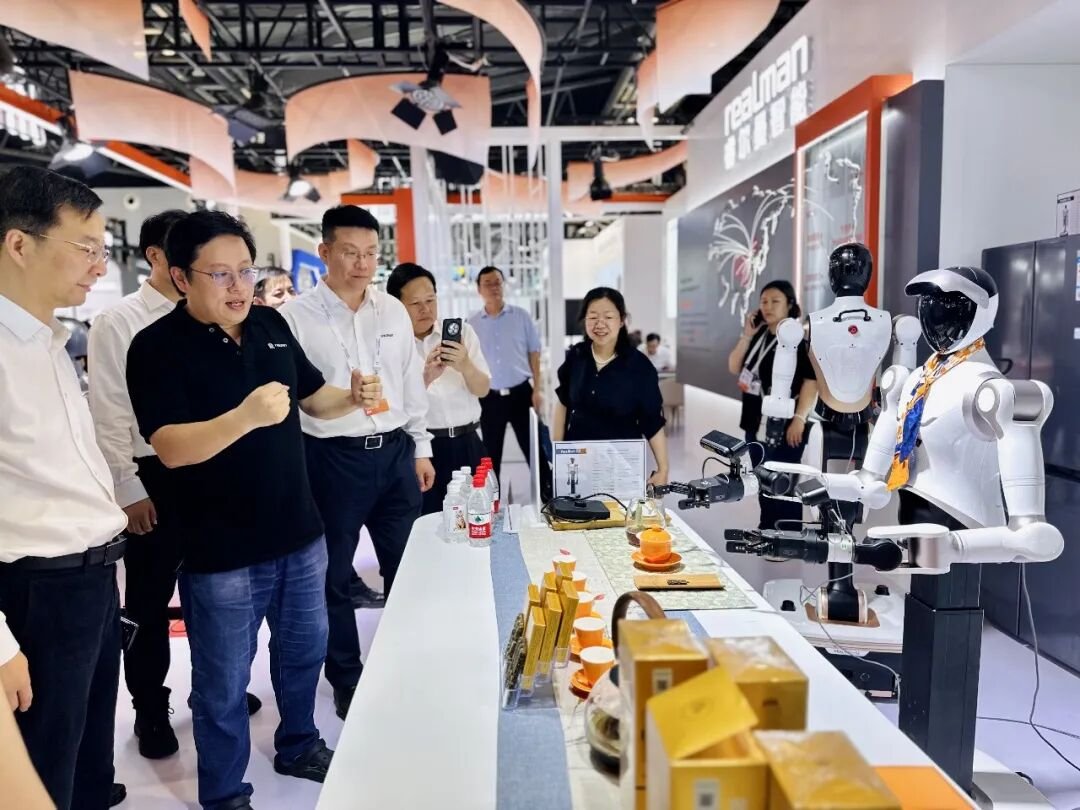
The industry’s loudest debate is when robots get smart. The default premise is that a robot must first become highly autonomous to be commercial. Realman disagrees. The robot “brain” has not had its GPT moment, yet the industry cannot afford to wait. If a robot is not smart yet, can it not work? Commercial value need not start from brain smartness. Count the work it can already do.
Recently Realman began IPO tutoring. Earlier it closed a Series C of about 500 million yuan. Last year its net profit reached tens of millions of yuan. While many peers still run on funding, Realman feeds itself on products.
Its clear commercial path: enter scenarios with hardware, let robots work first, then accumulate data from real work to raise autonomy. The whole logic hinges on three words, real work.
Real work starts with a body that can take the beating
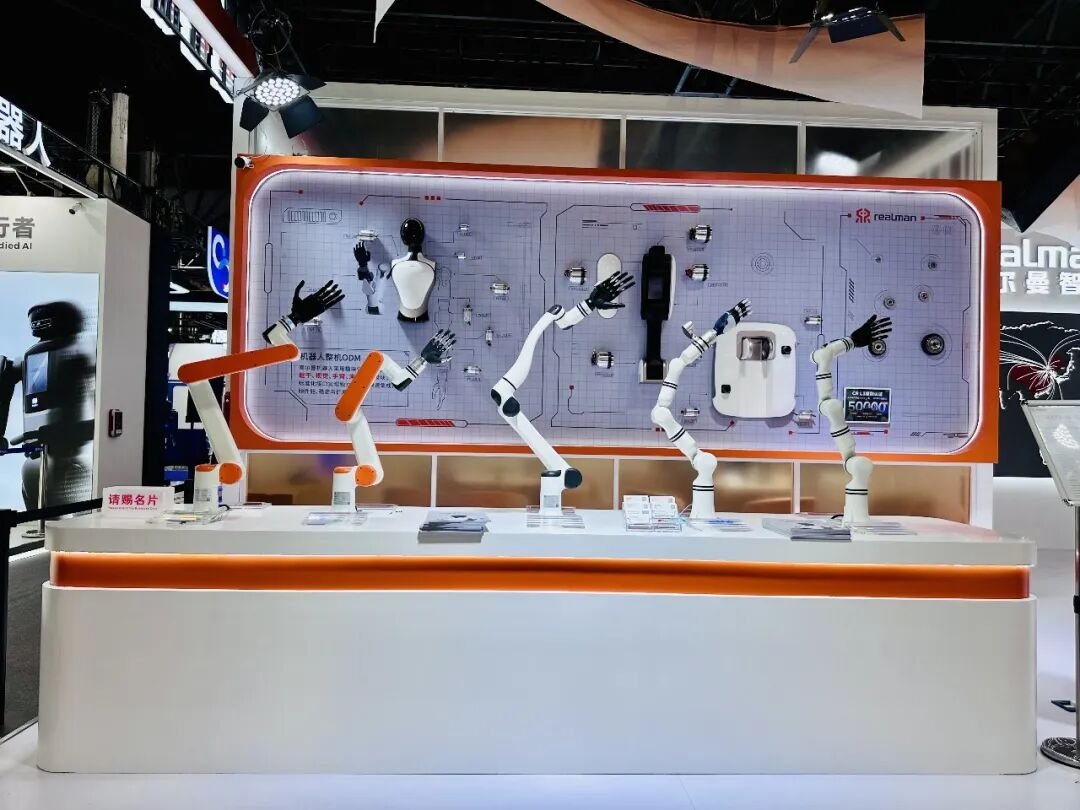
Realman’s latest positioning is an “embodied-intelligence system-level infrastructure platform”, made of hardware, data and the GLN global labour network. Hardware is the revenue base, data is the nourishment for smartness, and GLN links people, robots and real tasks.
What first anchored Realman in the industry was joint modules and ultra-light manipulators, because once a robot enters a worksite its body is tested first. Can the arm run continuously? Do joints overheat? Is grip precision stable? These questions cannot be dodged on a customer floor.
Zheng has long argued a manipulator should be as light as a human arm, so Realman developed its own key modules and control systems. At the same volume its joint modules raise torque by 35 to 55 per cent; at the same torque they roughly halve in size. Compact joints mean lighter arms, more room for batteries and sensors, easier entry into tight spaces, and tighter control of cost and iteration pace.
Realman counts more than 8,000 customers across 100-plus countries, including universities, research bodies, industrial firms, medical-device makers and embodied-intelligence whole-machine companies. Galaxy General and AgiBot are key customers. In other words, Realman sells the “arms and joints” to the top whole-machine builders.
On capacity, its Changzhou plant already builds over 500,000 joint modules a year, with a plan to reach 1 million.
If the brain is not ready, let a human drive it
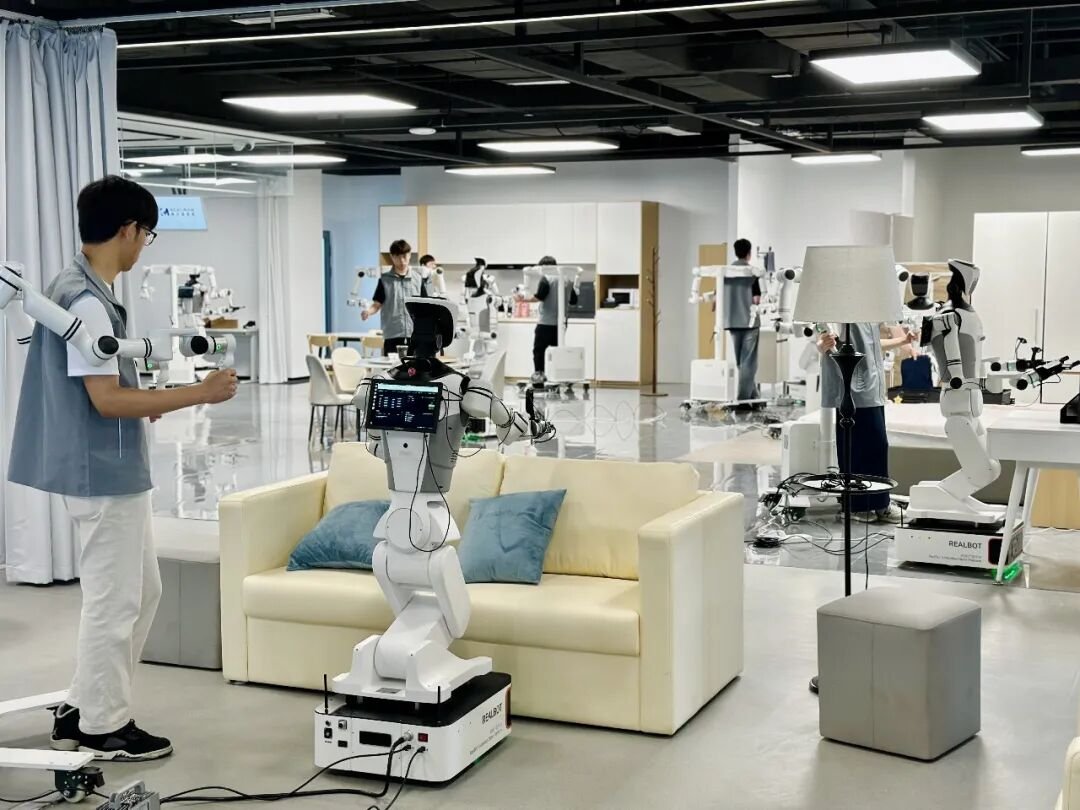
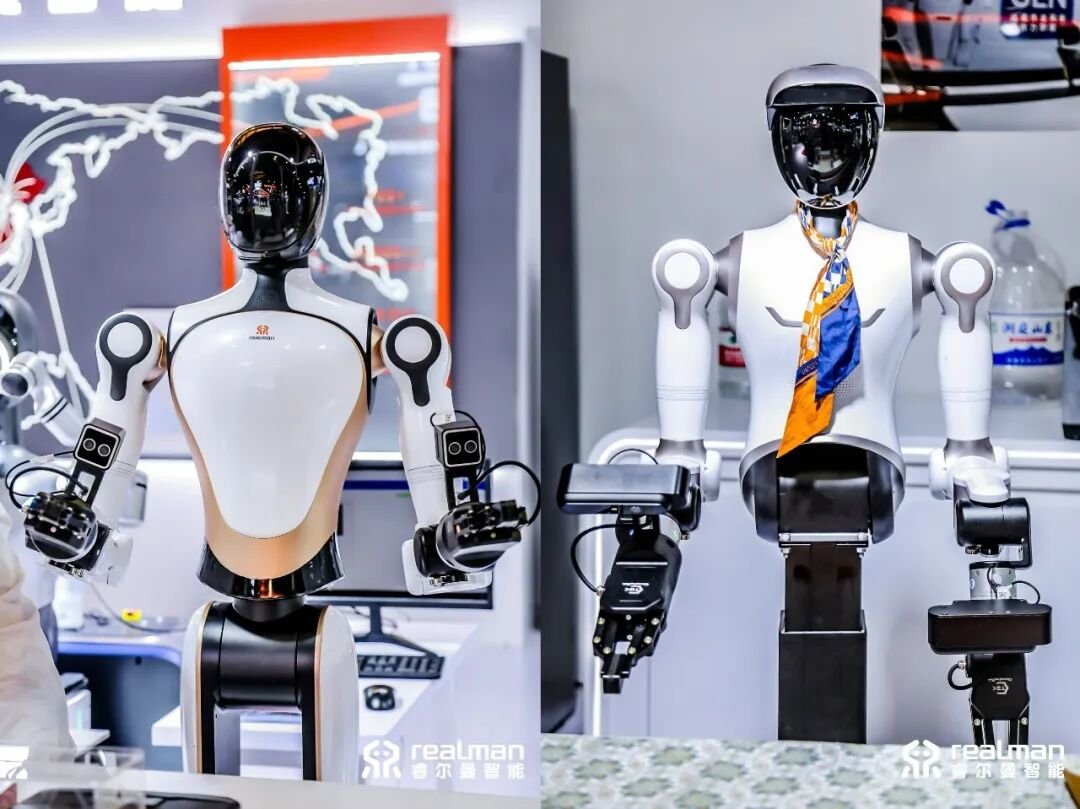
At this year’s WAIC, Realman released the RealBot-S2 and RealBot-L2 wheeled humanoids. The S2 is foldable, supports 90-degree lateral movement, has a minimum turning radius of 413 millimetres, and can crouch to pick up floor-level items. The L2 is a lift type with a vertical range of 2.1 metres, a lift that carries at least 60 kilograms, a single-arm load of 9 kilograms and a dual-arm load above 15 kilograms, aimed at high-bay storage and industrial sorting.
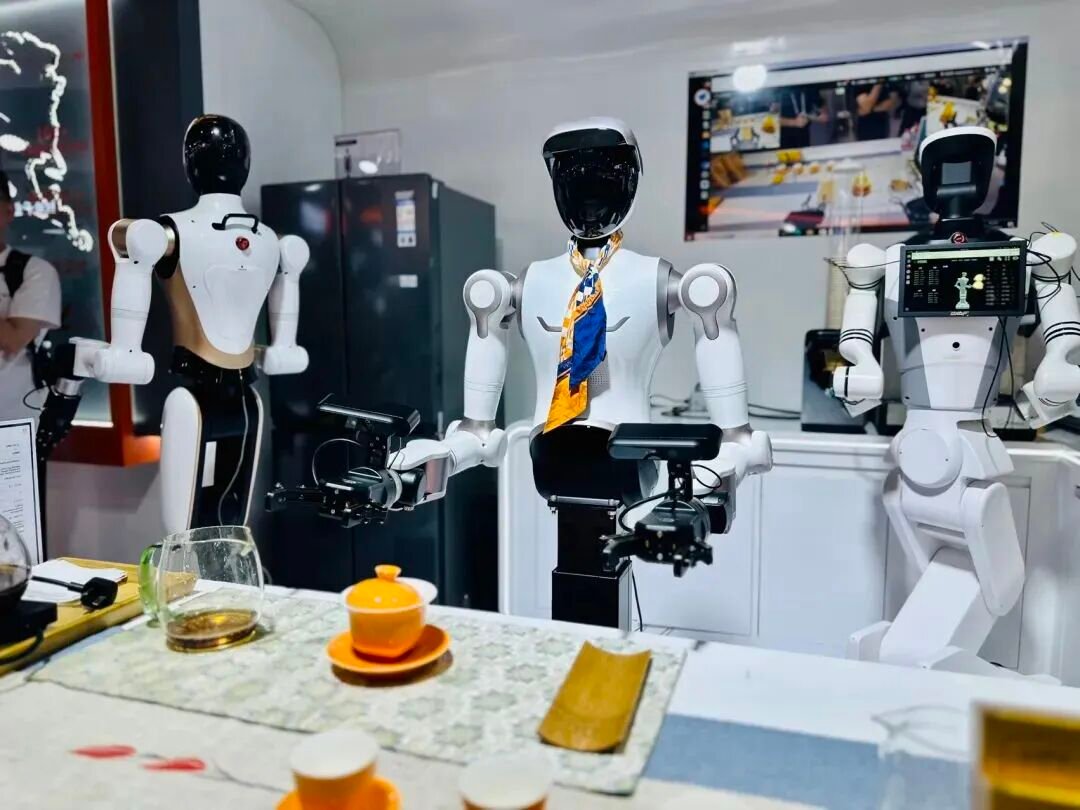
A GLN demo showed cross-city tea pouring: a Beijing operator controlled a Shanghai robot through warming the cup, adding tea, pouring water and serving. One view holds that since a human still drives it, it is not a true intelligent robot. But the client buys task completion, not an autonomy scorecard. A Southern Power Grid high-voltage switchgear demo made the point: the robot operates, the worker stays safe and remote. The value is separating the human from high-voltage risk.
Zheng says Realman is leading a national key elderly-care robot programme, exploring autonomous operation and remote service inside care homes. That fits GLN: one end connects real tasks, the other remote operators.
More from the original report
Editor’s note: This is an adapted translation of the original OFweek Robot report. It has been trimmed and restructured for readability for an international business audience.