Global shipments of household cleaning robots reached about 11.205 million units in the second quarter of 2026, up 21.5 per cent, according to IDC. Robot vacuums alone accounted for 7.885 million units, up 22 per cent. The demand is real. The profit is not evenly distributed.
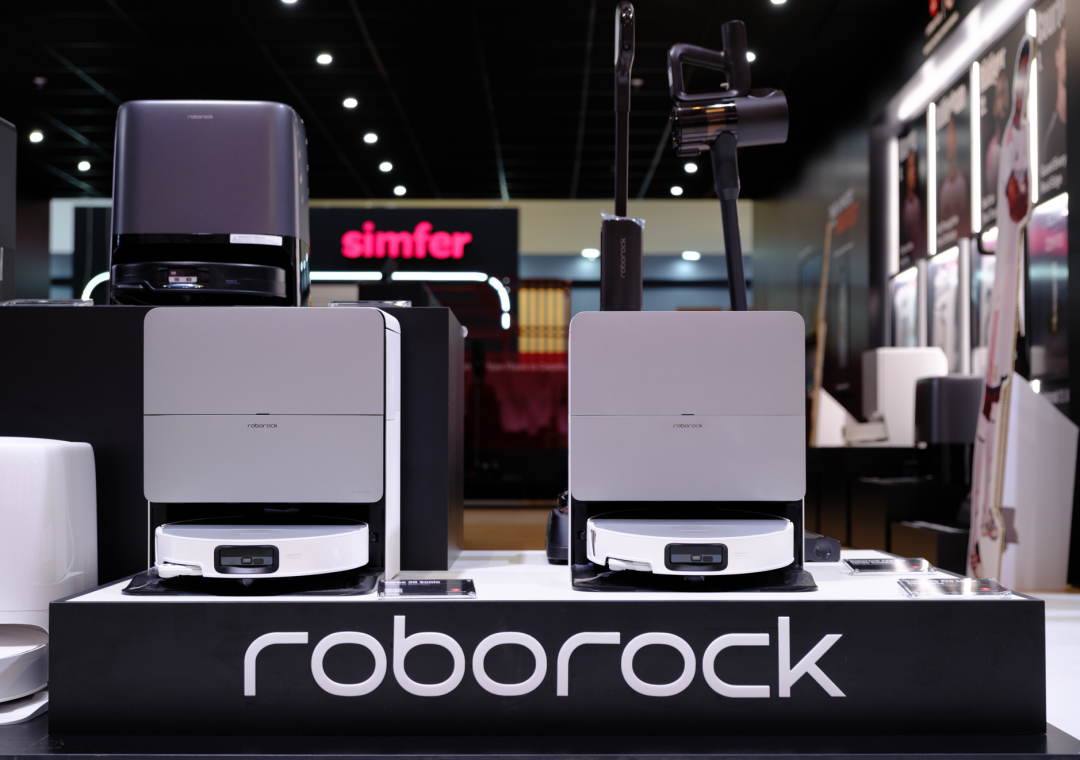
One grows both lines, one grows only the top
Roborock reported revenue of RMB 15.699 billion for the first nine months of 2026, up 30 per cent, and net profit of RMB 1.466 billion, up 41.23 per cent. Third quarter revenue was RMB 5.614 billion, up 34.85 per cent, accelerating from the first half. The shares rose 18 per cent on the result to a market capitalisation of RMB 33.5 billion.
The driver is geography. Overseas revenue grew 53 per cent in the first half and now accounts for 60 per cent of the total. Roborock leads in several markets outside China, and the brand investment has been running long enough to compound.
Ecovacs told a different story. Revenue for the same period was RMB 14.987 billion, up 16.39 per cent, but net profit fell 3.47 per cent to RMB 1.368 billion, and non-GAAP profit fell 19.7 per cent.
Its overseas revenue grew 45 per cent to RMB 5.11 billion in the first half and reached 49 per cent of the total, while domestic revenue grew 1.6 per cent. Overseas is now the engine, but it is not yet enough to offset what is happening at home.
Memory chips ate the margin
Ecovacs attributes the profit squeeze to a significant year-on-year rise in memory chip procurement prices, which cut into gross margin. It also stocked up on memory and other semiconductor components ahead of the increases, which pushed operating cash flow negative.
Inventory reached RMB 5.41 billion at 30 September, up 66 per cent. That is a hedge that costs cash today to protect margin tomorrow, and it lands on the balance sheet in the same quarter as the price rise.
This is the least discussed link in the robotics supply chain. A robot vacuum is a mobile computer with motors. Memory and storage pricing moves its bill of materials as surely as a lithium price moves an electric car.
Concentration without discipline
Five brands control the market. Roborock, Dreame, Ecovacs, Xiaomi and MOVA together hold 75 per cent of shipments and 82 per cent of value. Concentration of that order usually produces pricing power. Here it has produced a marketing arms race instead.
Dreame has taken second place on shipments at 21.2 per cent on the back of overseas growth. Ecovacs sits third at 16.2 per cent. Being displaced at home while expanding abroad is an expensive combination.
The spending shows it. Ecovacs spent RMB 4.123 billion on selling in the first nine months, a 27.5 per cent expense ratio. Roborock spent RMB 3.445 billion, a 22 per cent ratio.
Marketing buys revenue. Whether it buys margin depends on whether the product behind it is differentiated enough to hold price. On these numbers, one of the two has crossed that line and the other has not.
What the split actually predicts
The category is still growing at more than 20 per cent, and penetration is far from saturated outside China. The next leg will be decided by 3D vision and large-model perception, which is where the product genuinely improves rather than merely getting cheaper.
The Ecovacs result is the more useful signal for the wider robotics sector. Component inflation can erase a profit increase even when revenue grows double digits and the brand is winning share abroad. Robot makers that have not locked in memory and compute supply are exposed to the same arithmetic.
Editor’s note: This is an adapted translation of the original OFweek report. It has been trimmed and restructured for readability for an international business audience. The full original (in Chinese) is at https://robot.ofweek.com/2026-11/ART-8321203-12003-30709935.html.