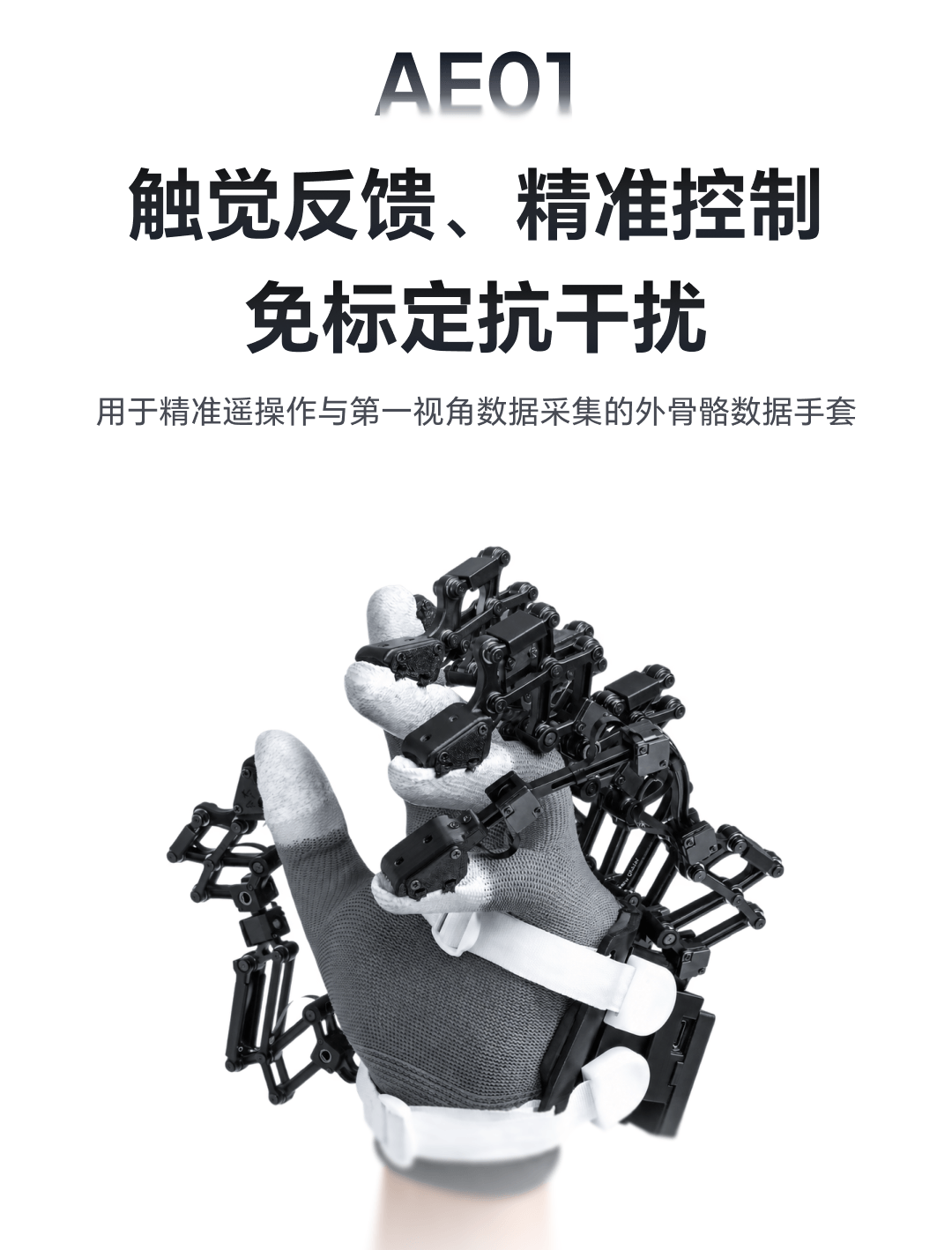
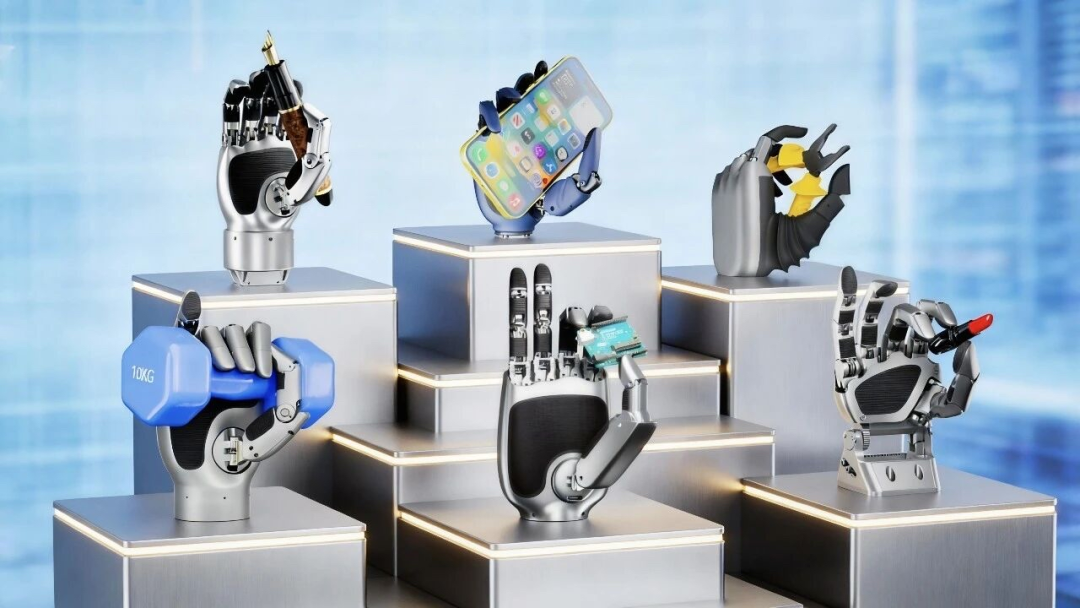
In 2026 the business of robot “skin” began to fork. At IROS 2026, Sharpa launched the D01 robot, the W02 dexterous hand and the AE01 exoskeleton data glove at once. The glove logs an operator’s finger-joint motion with 22 encoders and feeds contact back through five fingertip vibration motors, so one device both teleoperates a robot and captures first-person teaching data.

Daimon took the chain further, putting its DM-Tac sensor, its Data-Nexus collection system and its Daimon-TWM tactile-anchored world model side by side. PaXini went straight to a shop, listing whole-body tactile datasets in eight categories at prices of RMB 5, 7 and 9 per item. The question for every vendor is which of four budgets, parts, collection tools, data or models, can become a standalone business.
The sensor itself is already scaling. In February, Fulai signed 100,000 tactile-sensor units with Lingxin after delivering 1,000. Collection tools are newer, selling by the set to universities: Shanghai University budgeted RMB 220,000 for a vision-touch-training system, Jilin University RMB 200,000 for a teleop arm plus camera and tactile sensor.
The data business hits a wall the sensor does not: a second customer. Vision shares pixels, but touch is bound to each sensor’s material, structure and calibration. Swap the “skin” and the model may meet a different sense. In the TacVerse paper, a model trained on one GelSight marker hit 90.3 per cent accuracy, fell to 24.8 per cent on a close variant and to 5.4 per cent on the more different MagicGripper, near the 3.3 per cent random line. That is the “reskinning cost” of tactile data.
So the model becomes the digestor. Daimon’s Daimon-TWM reached 64.0 per cent average success across adjust, wipe, insert and assemble tasks against pi0.5’s 26.0 per cent, and held 53.5 per cent versus 5.8 per cent under disturbance. The vendor has shown it can work. Moving from “can do the task” to “can charge for it” still needs proof, because the deeper into data and models a vendor goes, the fewer public deals there are to check.
The real test is not how long the product list is. It is whether each layer inward earns its own separate budget. In 2026 the skin moved from sample to product. The data and model layers have shown value but not yet a verifiable revenue model.
Editor’s note: This is an adapted translation of the original OFweek report. It has been trimmed and restructured for readability for an international business audience. The full original (in Chinese) is at https://robot.ofweek.com/2026-10/ART-8321201-8420-30705914.html.