Shutu Tech has closed a Pre-A round of nearly RMB 100 million, its third raise in a single month, led by CDH Investments’ Baifu arm and the Kunpeng Fund, a national-level big-data vehicle, with Guangzhou Industrial Investment and Yihe Capital joining and existing backer Trend Investment topping up. The money goes straight at the hardest problem in embodied AI: making robots act, not just perceive.
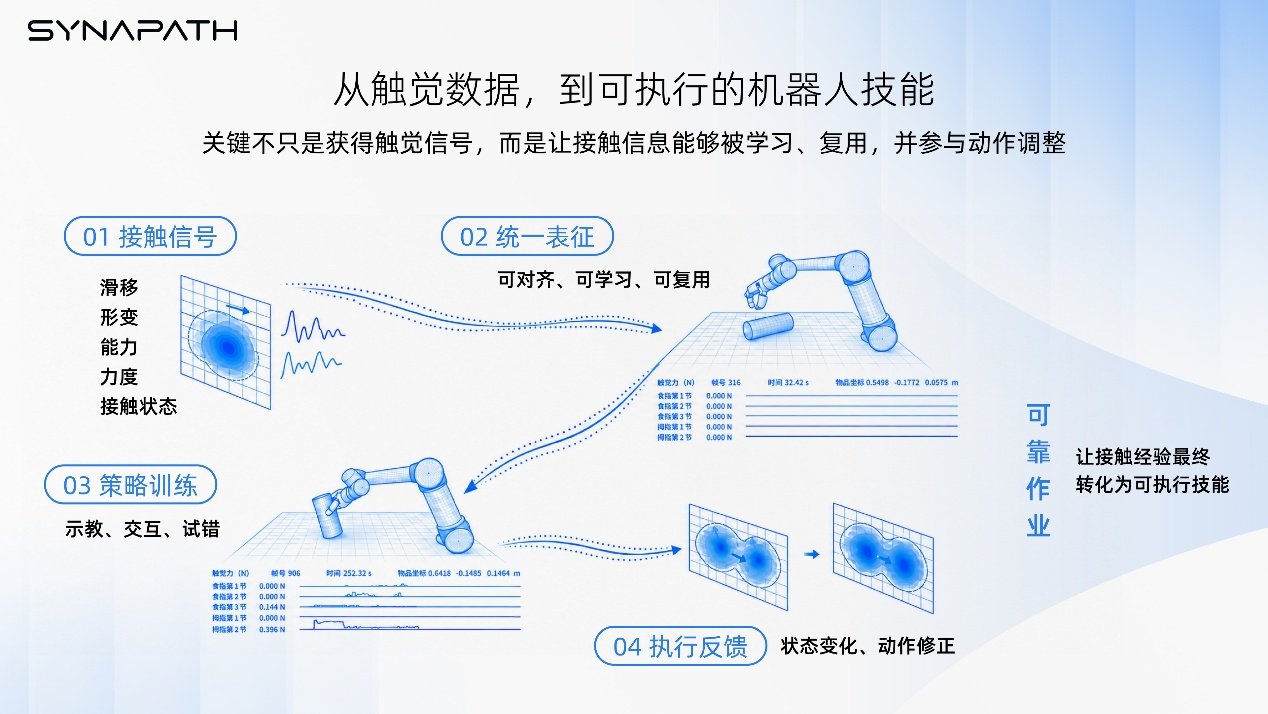
Shutu’s thesis is that the gap from demo to delivery sits in two places. The “brain” still poorly understands the world, and the “cerebellum” executes contacts unreliably. Video-upscaling human-behaviour data tells a robot what to do; tactile representation is what makes it do the job well, judging slip, deformation and resistance and adjusting force on the fly.
The team is no stranger to that gap. CTO Dr Wei Mu was formerly vice-president of R&D and China software lead at Covariant AI, the Silicon Valley embodied-AI pioneer, and Shutu’s core group is built from Covariant’s algorithm team. They shipped embodied algorithms from demo to stable production and treat data, training and verification as one loop.
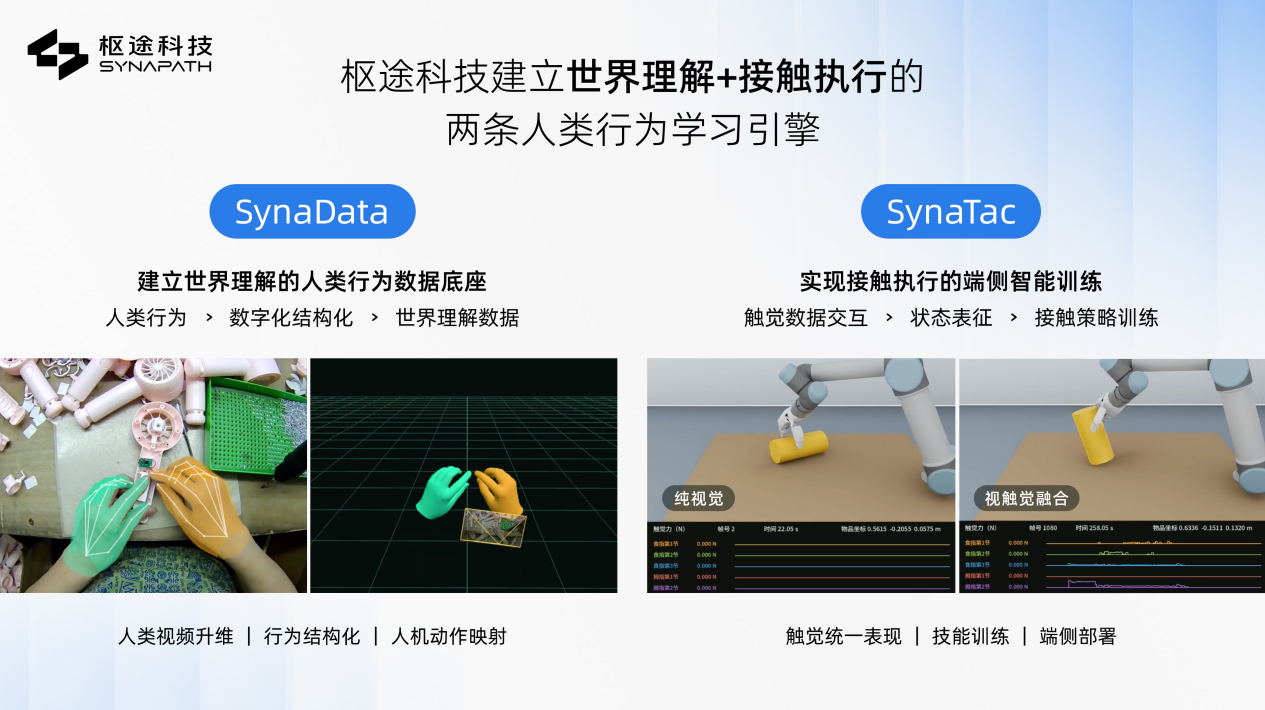
Two engines now anchor the product. SynaData turns real human-action video into structured multimodal training data, through video upscaling, human-object reconstruction and cross-embodiment mapping, across Syna-Ego, Syna-Exo and Syna-RR lines. It already serves over 60 per cent of the embodied-AI unicorns valued above USD 10 billion and wins bulk orders from top tech vendors. SynaTac builds on unified tactile representation, aligning object, action and contact state and fusing vision, touch and robot state.
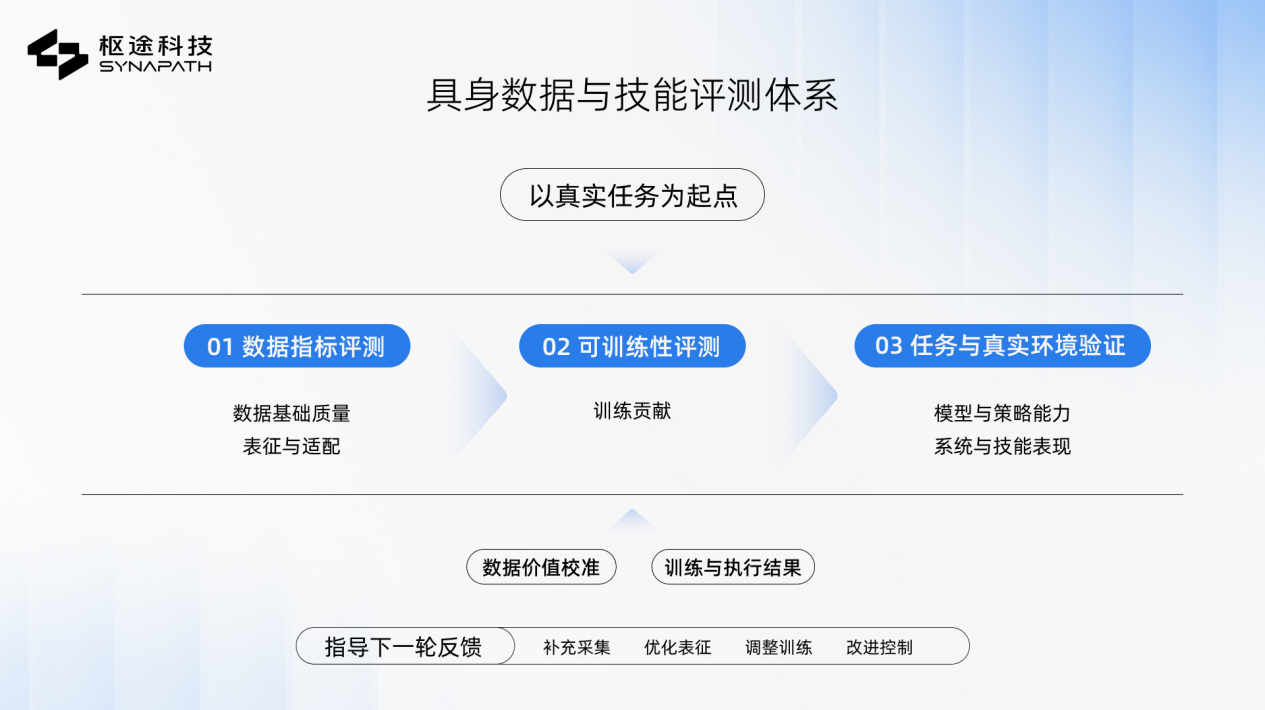
Shutu also published its embodied-data and skill benchmark, the first public one in its stack, tying data supply, model training and robot execution into one verification chain across data-quality, trainability and real-task phases. The point is less to prove one product works than to give an industry with fragmented hardware a shared reference.
For investors, the prize is a physical-AI infrastructure niche: a common substrate for tactile-data processing, policy training and device adaptation, so the next team on a new robot does not rebuild the same scaffolding. When data scale grows, capability does not automatically follow. Shutu’s bet is converting physical contact into learnable structure.
Editor’s note: This is an adapted translation of the original LeiPhone report. It has been trimmed and restructured for readability for an international business audience. The full original (in Chinese) is at https://www.leiphone.com/category/robot/zVCVfjhnzD1S34Pm.html.