UBTech, the Shenzhen humanoid maker listed in Hong Kong since December 2023, is pushing overseas and targeting Southeast Asia and Europe, where agents are already signing. Management expects overseas deliveries to scale through next year.
The company was founded in 2012 and runs three lines in parallel: industrial, commercial service and home consumer. In the first half of 2026 revenue reached RMB 1.27 billion, up 104.2 per cent year on year. Humanoid unit sales rose 268.3 per cent, and revenue from full-size embodied humanoid robots rose 1,445 per cent.
In September a 10,000-unit humanoid super-factory went into production, closing the loop from development to volume delivery.
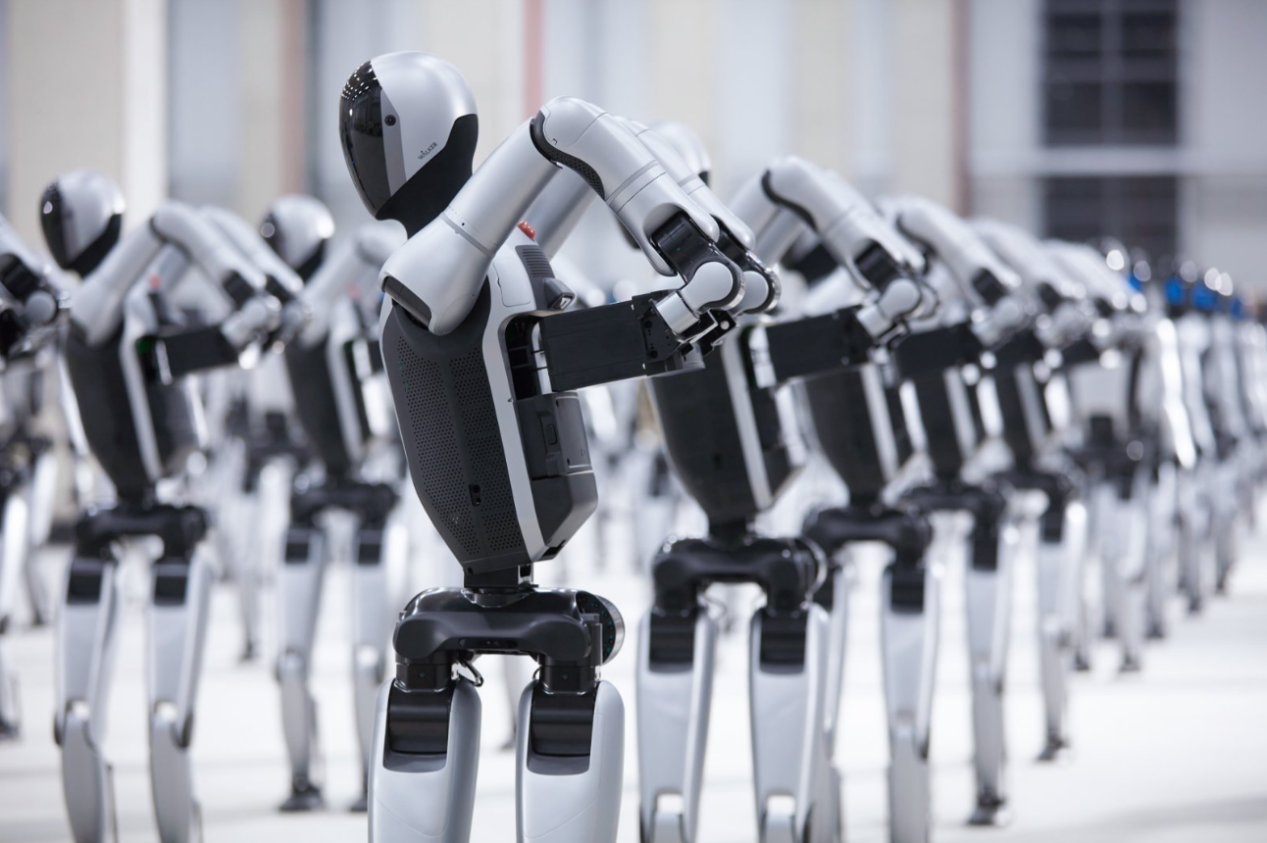
What the industrial line actually sells
The Walker S2 and its siblings are configured around handling, machine loading and unloading, sorting and palletising. Deployments cover carmaking, smart logistics, consumer electronics, semiconductors and aviation manufacturing. Named customers include Airbus, Hitachi, BYD and Foxconn.
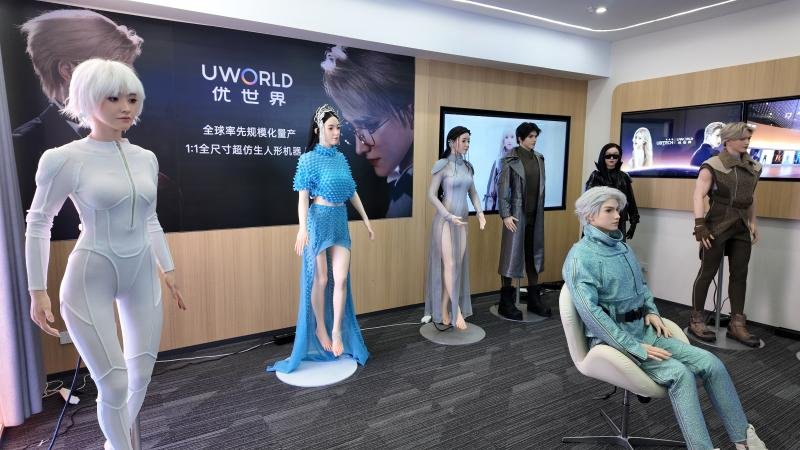
The commercial service line, Walker C1, launched in June and covers reception, exhibition and visitor interaction, extending into research and basic education. The home line, the U World U1 hyper-realistic humanoid launched the same month, carries a self-developed emotional model aimed at companionship and elder care, and began shipping to end customers in September.
The market share claim
Frost and Sullivan’s report puts the top five humanoid vendors by global revenue in the first half of 2026 as all Chinese, together holding more than half the market. UBTech ranks first at 16.5 per cent. In the full-size embodied humanoid segment it holds 26 per cent.
In the Fortune and Boston Consulting Group 2026 ranking of future growth companies, UBTech placed 11th globally, the highest Chinese entry.
Where the money went
R&D headcount reached 1,103 by mid-2026, with 3,112 granted patents, of which 1,857 are invention patents and 530 granted overseas. First-half R&D spending exceeded RMB 300 million, and the full-year figure is expected around RMB 700 million.
The company’s Thinker foundation model took nine first places in authoritative benchmarks for embodied brain models under 10 billion parameters, and its industrial world model Thinker-WM topped the Libero benchmark.
UBTech has also bought Fenglong, a Shanghai-listed machining company, and formed a joint venture with GPU maker Mixi called Xixuan Chuangzhi to develop and produce embodied AI chips.
The Greater Bay Area advantage
Jiao Jichao, the group vice president who heads the embodied AI and humanoid research institute, points to manufacturing response time as the reason the company can iterate quickly. A drawing sent to a Shenzhen or wider Greater Bay Area supplier returns a sample the next day, and partners for customised batteries can be brought in quickly. Capacity is ramping, with more deliveries expected in the fourth quarter and next year.
Industry observers note the same caveat the company does. Unit costs still need to fall and model generalisation still needs to improve before volume deployment becomes routine.
Editor’s note: This is an adapted translation of the original Shenzhen News report. It has been trimmed and restructured for readability for an international business audience. The full original (in Chinese) is at https://www.sznews.com/news/content/2026-11/06/content_32209555.htm.