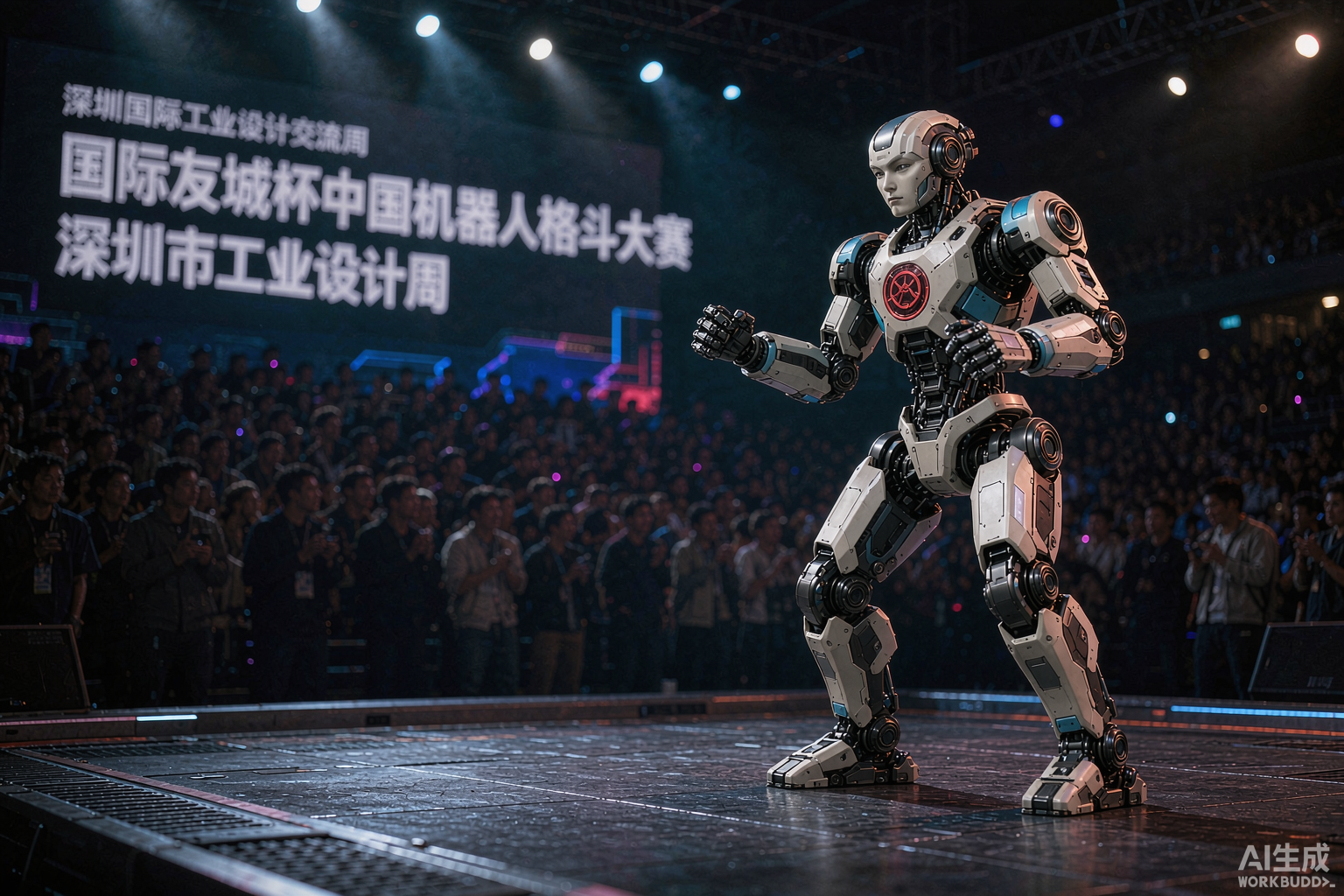
EngineAI’s full-size general-purpose humanoid, the T800, recently showed off its martial-arts repertoire at the company’s Shenzhen showroom, replaying the moves that made it a hit at URKL. URKL, launched by EngineAI, is the world’s first industrial-grade humanoid robot fighting competition.
A crowded field needs a face
Founded in 2023, EngineAI has built a full-stack embodied-intelligence base spanning physical body, cerebellum-style motion control and brain-level cognition, and has shipped the T800, PM01, SE01, SA01 and JS01 across entertainment, commercial service, smart traffic, industrial manufacturing and research education. The T800, at 1.73 metres with a hard-edged mecha look and near-human proportions, is the model most viewers recognise. Founder and CEO Zhao Tongyang says that with so many companies crowding the humanoid track, winning market recognition means building a sharply defined brand image.
The T800 carries EngineAI’s latest self-developed core technology, including 450 newton-metres of peak torque, and can perform spinning kicks and rapid fall recovery. When reporters pushed it from several angles on the show floor, it stayed upright, demonstrating impact resistance and whole-body dynamic balance. Zhao argues that this kind of anti-interference, posture-stable motion is exactly what future humanoids will need to enter factories and homes.
Competition as a research loop
URKL is open to universities, technology firms and research institutes worldwide, with the T800 as a unified platform. Teams tune AI perception and decision making, balance control and motion algorithms so the robots fight with autonomous sensing, attack and defence, and decision making. High entry barriers, a complete tournament system and large cash prizes have drawn broad attention. Earlier rounds in Shenzhen and Shanghai drew more than 30 million live viewers and over 510 million video plays across the web.
Zhao describes the humanoid ecosystem as a loop where research, open collaboration, scenario validation and commercial landing reinforce one another, with URKL as a flagship example. High-intensity combat exposes gaps in balance control, impact structure and real-time decision making that then feed back into product iteration. The event is less a mecha arena than a platform for technology display, algorithm contests and industry-academia-research coordination, designed to drive research through competition and drive industry through competition.
Editor’s note: This is an adapted translation of the original Shenzhen Special Zone Daily report. It has been trimmed and restructured for readability for an international business audience. The full original (in Chinese) is at https://sztqb.sznews.com/PC/content/202610/19/content_3485024.html.