For years, Sinian Intelligent Driving was known almost entirely for port autonomy. Compared with robotaxi and city navigation, port driving is the silent corner of the autonomous sector, a closed scenario with a limited market and long, fussy delivery cycles.
That changed when Sinian closed a 300 million yuan Series C from Xingzheng Capital and Yidao Capital, earmarked for next-generation vehicle-grade autonomous systems and steady investment in research and daily operations. Alongside the raise, the company signalled it is moving out of ports and into open-road heavy logistics.
From docks to a capacity system
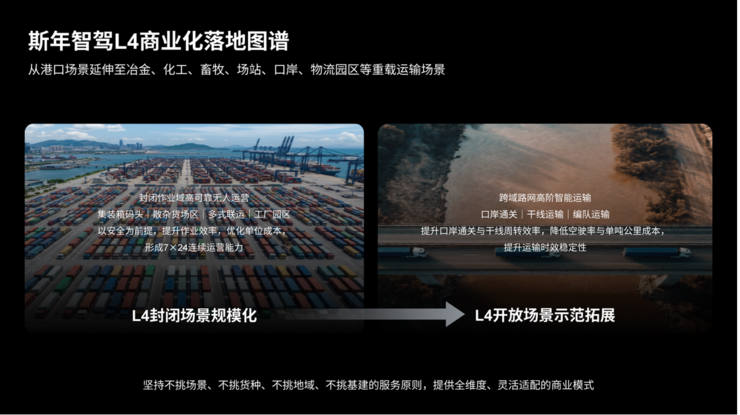
Sinian holds the global number one share in port autonomous driving. Its vehicles now appear in railway yards, steel mills, multimodal hubs and cross-border ports on the China-Mongolia and China-Vietnam frontiers. Founder He Bei chose ports early because container handling is highly informatised and labour intensive, making the business case for autonomy easier to prove.
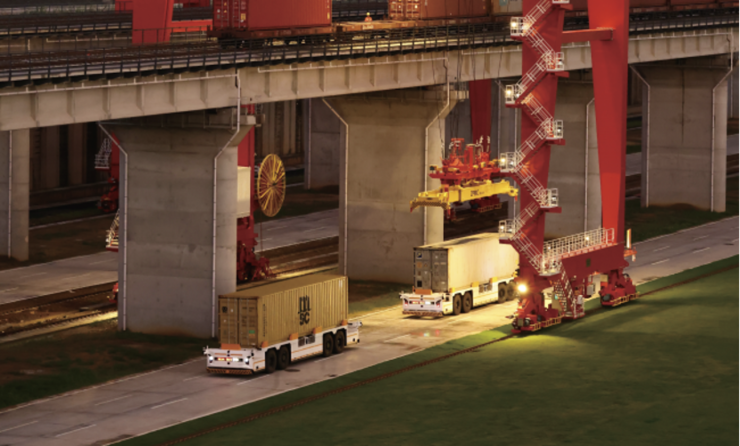
Reality was harder than expected. An unmanned container truck shares the quay with manned vehicles, coordinates with cranes and takes orders from a central scheduler. Delivery, long-term operation, fleet management and scheduling all had to be honed on real sites. Through trial across bulk, break-bulk and different vehicle types, Sinian built a standardised operation, scheduling, delivery and scene-adaptation capability.
Copying one stack across scenes
The company deliberately laid a path of in-port, between-port and beyond-port. It entered multimodal corridors like the Yiyongzhou channel, served cross-border logistics at the Mandula and Youyiguan ports, and put unmanned flatbed trucks into industrial logistics at CNPC’s Baoshun project. Each new scene kept the same organisational logic but a harder operating environment, a natural next step for capability extension.
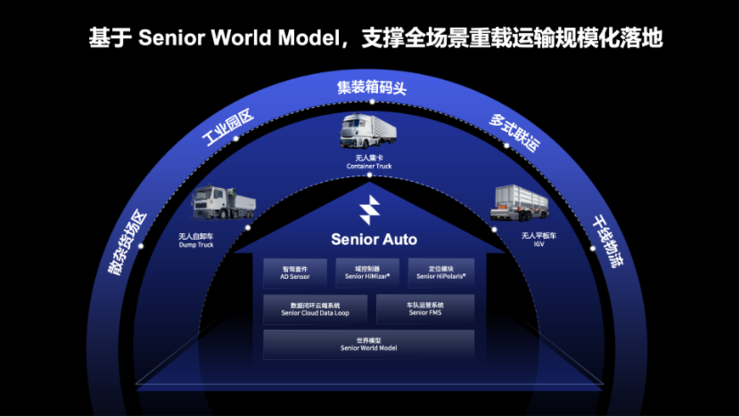
He Bei says customers do not care how perception or planning works. They want a capacity system that keeps creating value, not a self-driving truck. So Sinian moved from a single-vehicle intelligence supplier to a full-scenario, system-level solution provider, adding cloud scheduling, roadside units, capacity operations and EPC turnkey services.
Map-free and ready to go overseas
To cut replication cost, Sinian dropped high-definition maps for a map-free approach, shortening deployment and lowering project cost. That also opens overseas markets. He Bei expects labour rules and low wages abroad to be manageable through staffing and efficiency, and the port-to-mill-to-cross-border track record lets the firm enter new markets at lower cost.
Two business models, paying customers
For large clients like port groups and CNPC, Sinian uses EPC turnkey, supplying vehicles, roadside gear, scheduling and operations as one package. For scattered smaller clients, it runs centralised fleet management to spread per-vehicle cost. He Bei is clear the firm does not take loss-making projects and focuses on long-term operating value.
The message for investors has shifted. They now prize revenue quality, profit and self-sustaining cash flow over technology stories. Sinian’s years of operating, delivery and scene-adaptation skill decide whether customers keep paying and whether a durable moat forms.
Editor’s note: This is an adapted translation of the original LeiFengWang report. It has been trimmed and restructured for readability for an international business audience.