2026 is the first year of mass production for hybrid, or solid-liquid, batteries. Huang Xuejie, one of China’s leading lithium-battery scientists and convener of the energy-storage direction at the Institute of Physics of the Chinese Academy of Sciences, argues that all-solid-state batteries cannot overturn the table before 2035, so hybrid electrolytes must be taken seriously.
At a Shenzhen forum themed criticality and breakthrough, Huang gave a talk on the market opportunity for hybrid-electrolyte routes, sharing their use in ternary lithium and lithium-iron-phosphate cells and their industrial value in automotive power and storage.
Huang says 2026 is the first year of hybrid-electrolyte mass production. Before 2035, all-solid-state cannot overturn the table, so hybrid must be valued.
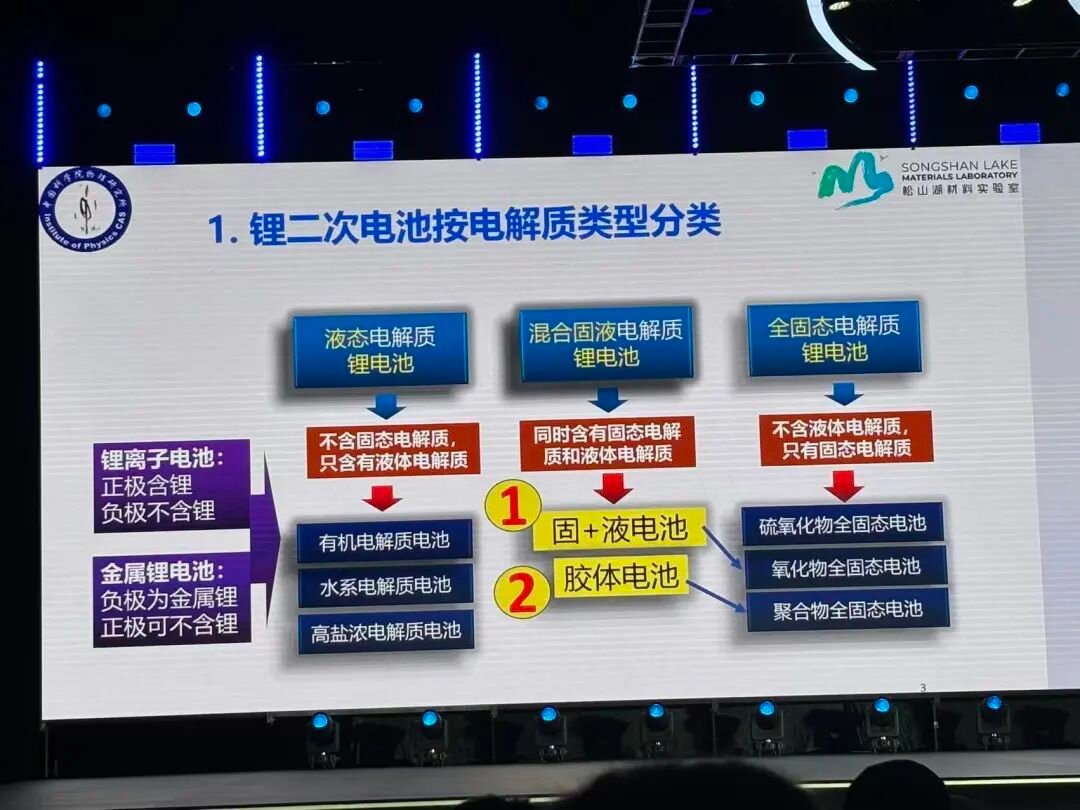
China’s technology roadmap 3.0, released last October, sets a clear timeline: 2026 first year of hybrid mass production. 2030 small-batch all-solid-state. 2035 some cars can afford next-generation solid-state. From liquid to hybrid to all-solid, the classification is set by the electrolyte. Hybrid has two paths: fully inorganic solid electrolyte, oxides and phosphates, like mixing sand into water, or adding polymer to form a gel cell. Either is hybrid.
Why hybrid first Hybrid’s merits are clear. Today’s liquid-battery production lines need almost no change, with over 90 per cent compatibility. China’s lithium industry fixed-asset investment has passed 1 trillion yuan, so a disruptive swap means scrapping it all. Hybrid also lifts energy density while improving safety and cutting thermal-runaway risk.
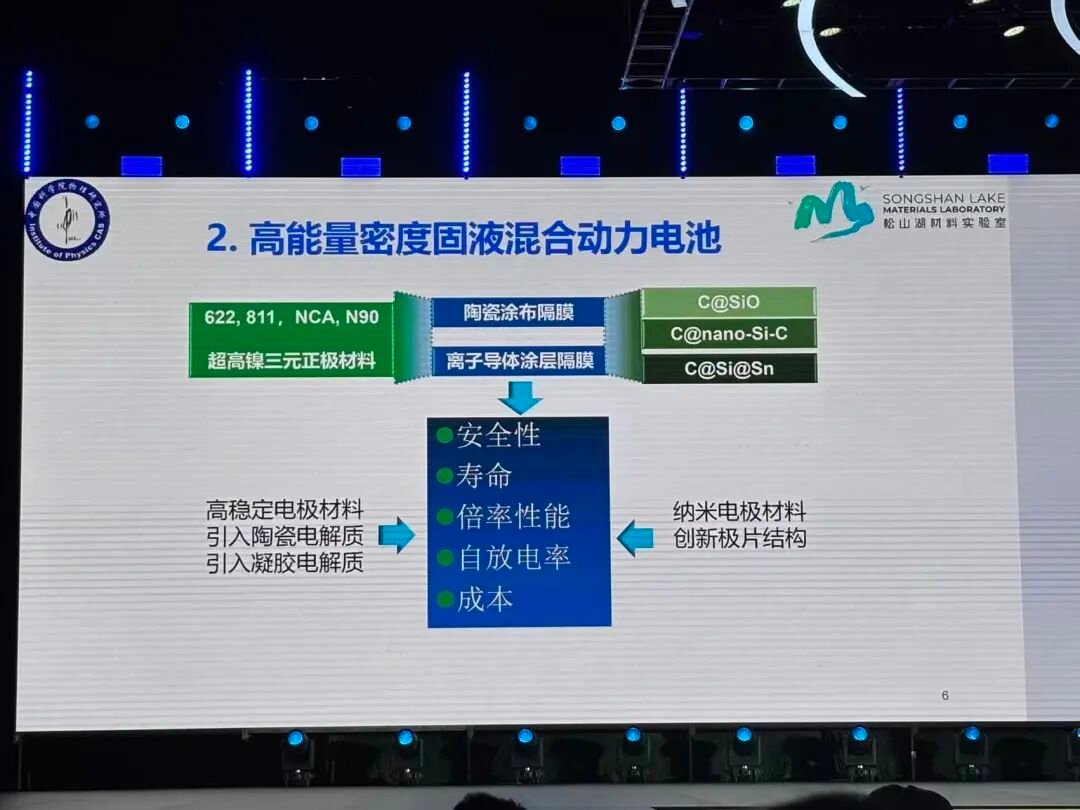
So before all-solid-state overturns the table, hybrid must be valued. But gaining energy density and safety is not just add a little solid electrolyte. Higher-energy electrodes are needed, plus solid components at the positive and electrolyte interfaces, at near-zero extra cost.
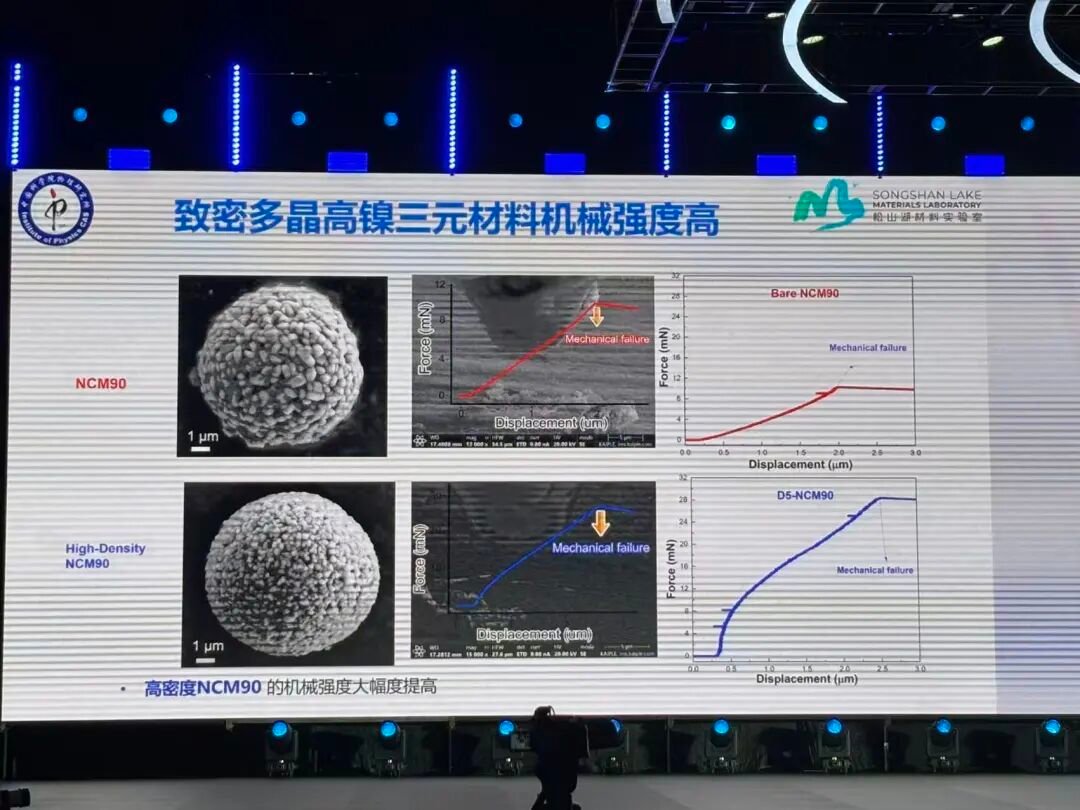
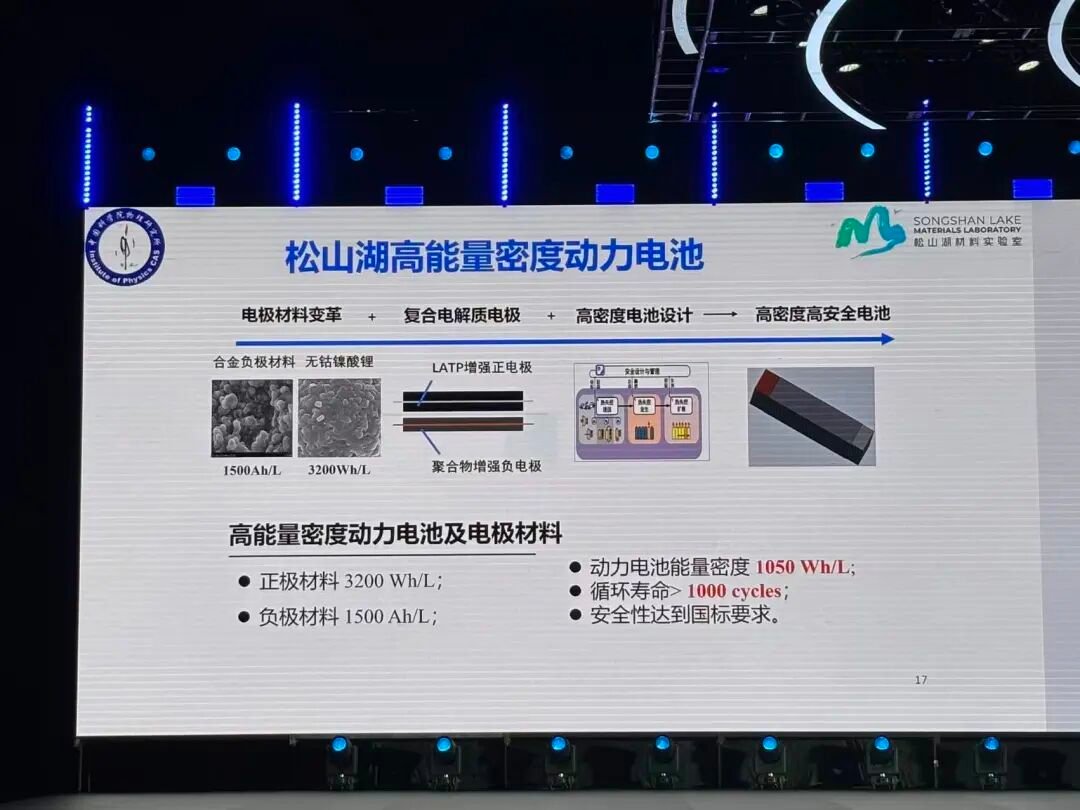
On the positive side, ternary material has high energy density but is expensive because of high cobalt. Cut cobalt to under 3 per cent, even 1 per cent, and add nickel. But nickel-rich is dangerous. solid-electrolyte introduction is key. Over eight years, the physics institute’s Songshan Lake lab developed a high-density positive material: cobalt under 1 per cent, nickel over 95 per cent, the rest manganese. The new material is dense, takes triple the pressure, and at 1C delivers 220 mAh per gram with long life.
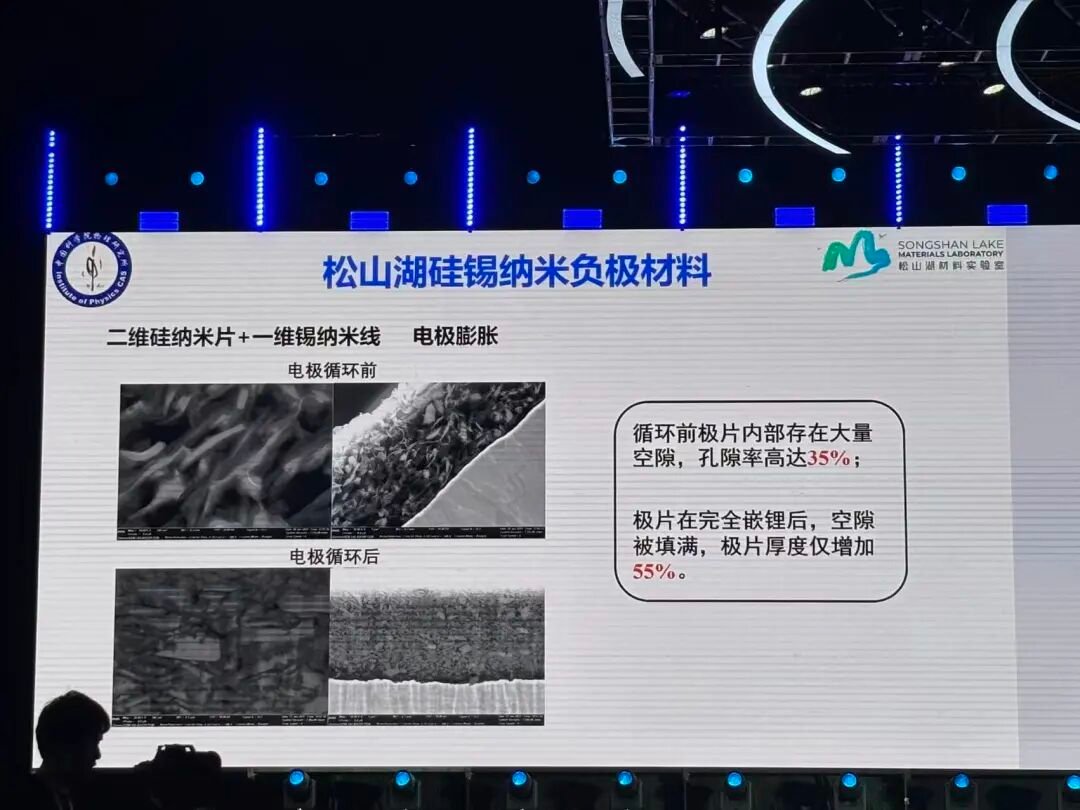
On the negative side, silicon-based material has ten times graphite’s capacity. The team combined silicon alloy with tin alloy, with tin, about 5 per cent, as nanowires raising ion speed over 100-fold. The negative material already serves semiconductors, near 1,500 cycles at 1C with 80 per cent capacity retention, volume change like today’s graphite cells.
Solid electrolyte helps: a lithium-titanium-aluminium-phosphate layer on the positive, lithium-iron-phosphate electrolyte inside, polymer on the negative. The result: energy density about 1,050 Wh, cycle life over 1,000.
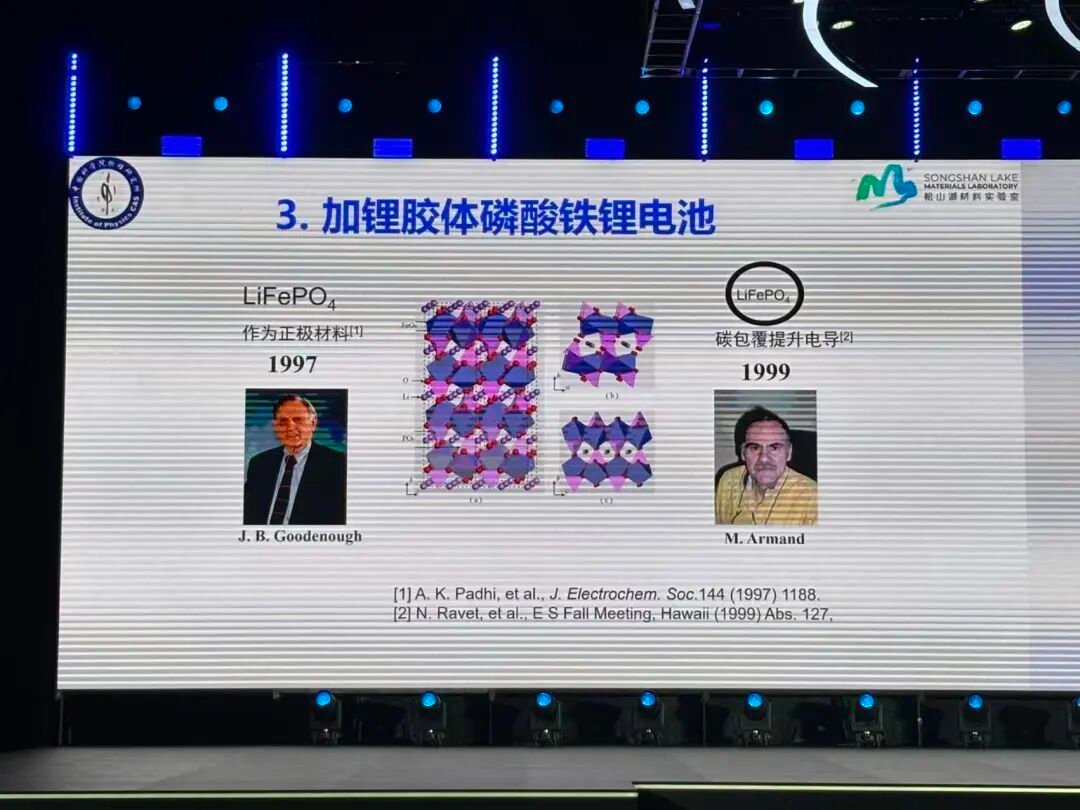
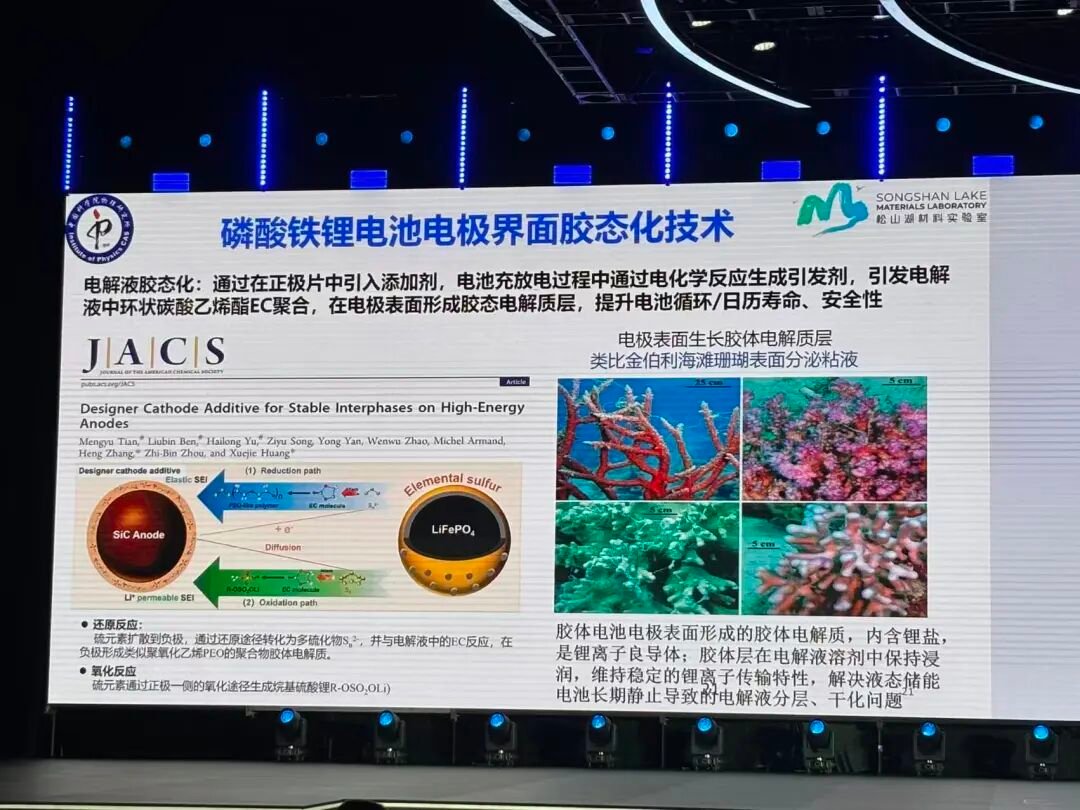
LFP also goes hybrid, for storage For LFP, hybrid matters too. Almost all China storage cells and over 80 per cent of power cells use LFP. BYD’s full line uses it. For storage, cells may sit 10 or 20 years. electrolyte stratifies under gravity, like salted duck eggs in a jar. The fix: a coral-like gel oozing from the electrode keeps a thick colloidal electrolyte, forming a gel cell stable for 20 years.
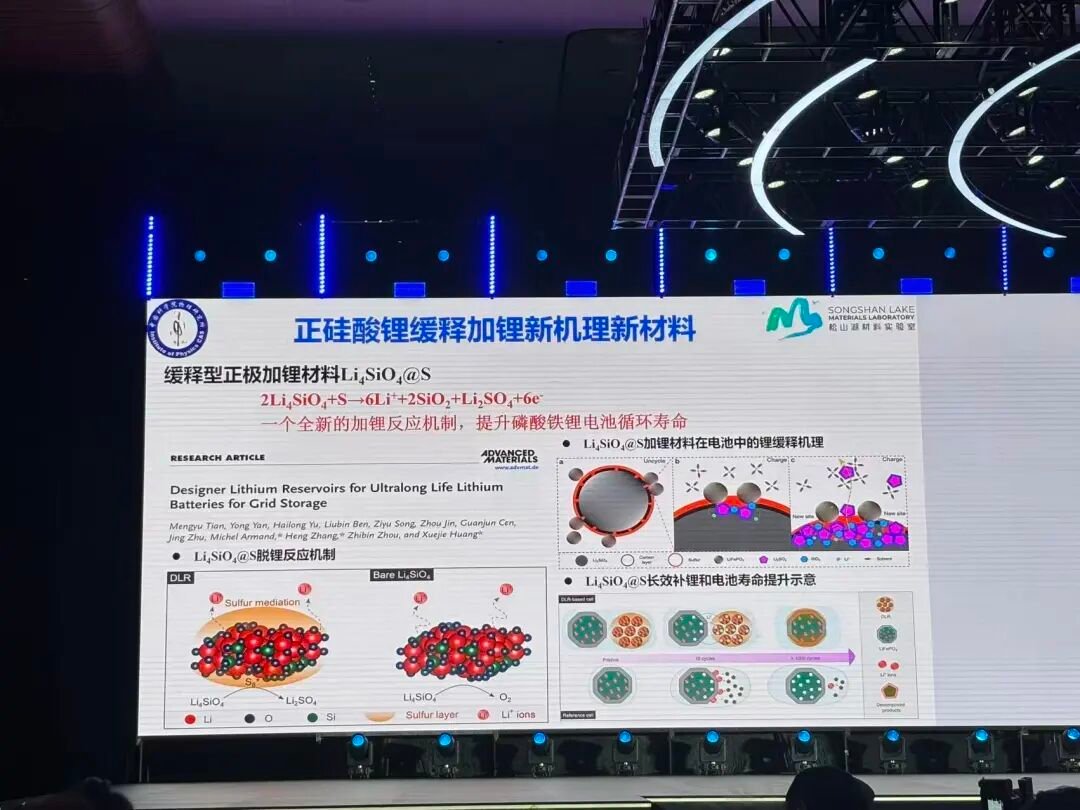
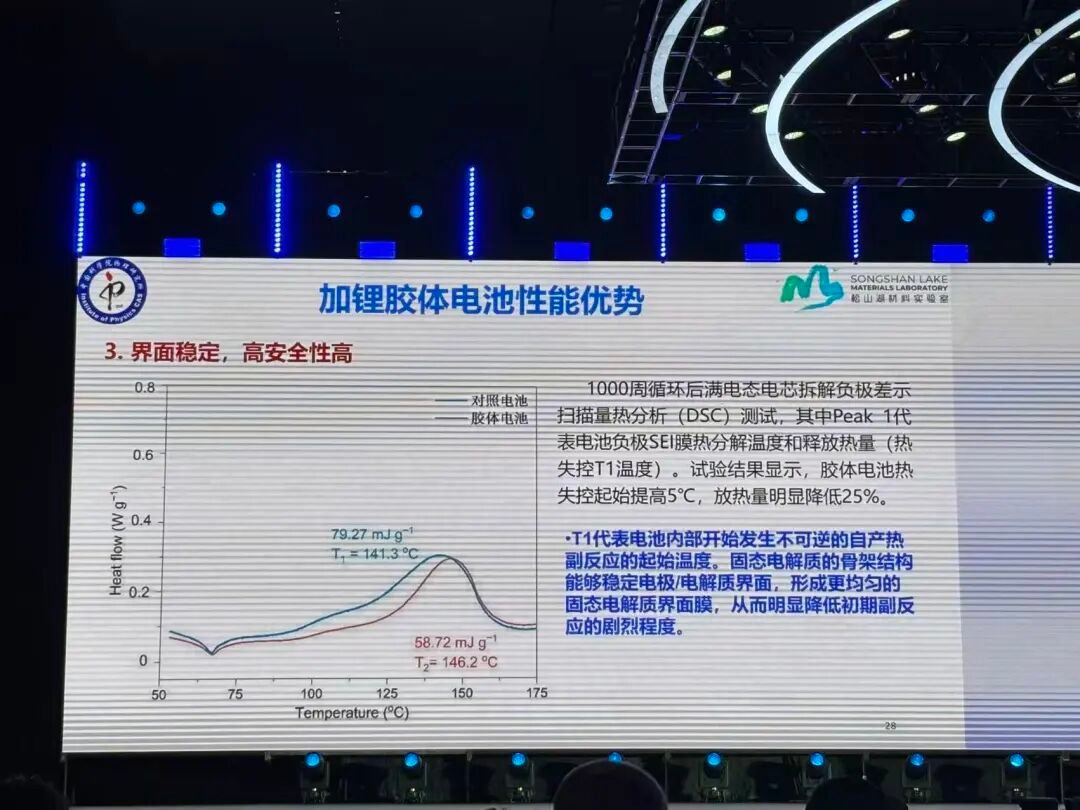
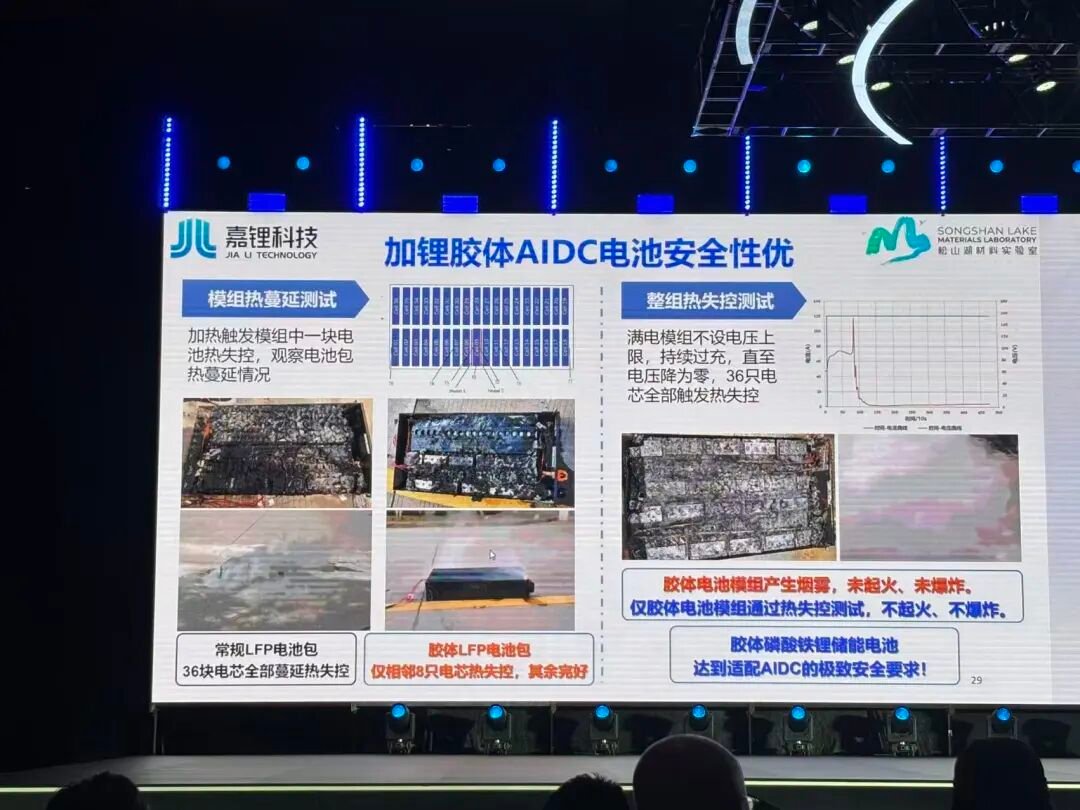
Ultra-fast charge needs heating to 60 to 70C to move lithium quickly, but heat eats life, so more lithium is released from a silicon-based solid electrolyte. A 320 Ah LFP cell in a 55C oven for 90 days held stable. even one cell’s thermal runaway did not ignite neighbours. In a Singapore data-centre fire case, the new standard required 36 cells all in thermal runaway without fire. using both inorganic and organic gel electrolytes, the 36 cells smoked slightly with no open flame.
Huang’s team, at Songshan Lake, built an open pilot line and innovation community for industry collaboration.
Images
Editor’s note: This is an adapted translation of the original LeiFengWang report. It has been trimmed and restructured for readability for an international business audience.