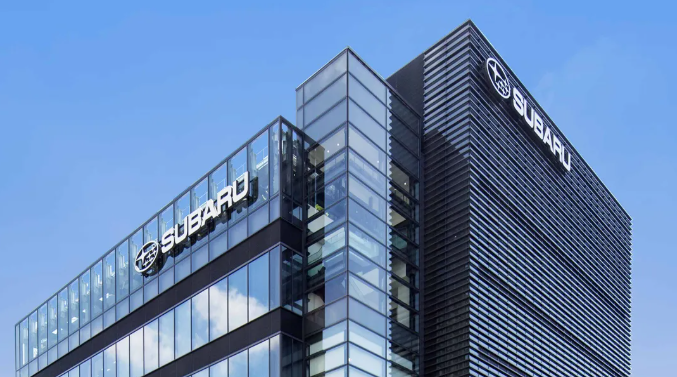
Subaru intends to stop selling combustion-engined cars in Europe from as early as 2028 and to sell battery-electric vehicles only in the region. If the plan holds, it would be the first Japanese carmaker to convert an entire regional business to battery power.
https://robotbelt.com/wp-content/uploads/2026/10/14_0-4.pngThe sequence
Subaru plans to begin winding down combustion sales from 2027, model by model, as existing inventory sells through. The withdrawal covers the vehicles that carry Subaru’s signature horizontally opposed engines, including the Forester and the Crosstrek SUV. Unlike in Japan and several other markets, Subaru does not currently offer a full hybrid in Europe.
The compliance arithmetic
The driver is cost. In the financial year ended March, Subaru sold about 23,000 vehicles in Europe, less than 3 per cent of its 890,000 global volume. Against that base, the regulatory burden is now disproportionate.
The Euro 7 emissions standard is scheduled to apply to all new cars from November 2027, including models already in showrooms, and CO2 requirements tighten further in 2030. Meeting both would require additional engineering spending spread across a small volume, which raises unit cost at exactly the moment the market is moving away from the product.
The market has already turned
European demand for electric vehicles has resumed growth after a flat period. According to European carmaker association ACEA, European EV sales rose 60 per cent year on year in September. Battery-electric cars took 31 per cent of the month’s new-car sales, ahead of petrol at 18 per cent and closing on hybrids at 34 per cent. Rising fuel prices have added to the shift.
A regional retreat dressed as a strategy
Nissan and Honda both announced battery-only pivots in Europe and China earlier, then adjusted course when demand did not cooperate. Subaru’s decision is a narrower bet. With 23,000 units at stake, exiting combustion entirely costs less than defending a residual share of a shrinking segment, and it removes a compliance obligation that cannot be amortised at that scale.
The precedent matters more than the volume. A Japanese manufacturer with a distinct engine identity has concluded that in Europe, the engine is now a liability rather than a selling point.
Editor’s note: This is an adapted translation of the original Gasgoo report. It has been trimmed and restructured for readability for an international business audience. The full original (in Chinese) is at https://auto.gasgoo.com/news/202610/29I70476298C101.shtml.