On 8 October the US Patent and Trademark Office published a Tesla application numbered US 2026/0310299 A1, titled Three-dimensional flexible tactile sensor array with multimodal sensing and scalable manufacturing methods. The applicant address is Austin. The inventor list runs past a dozen names. The first Optimus patent filing in four months.
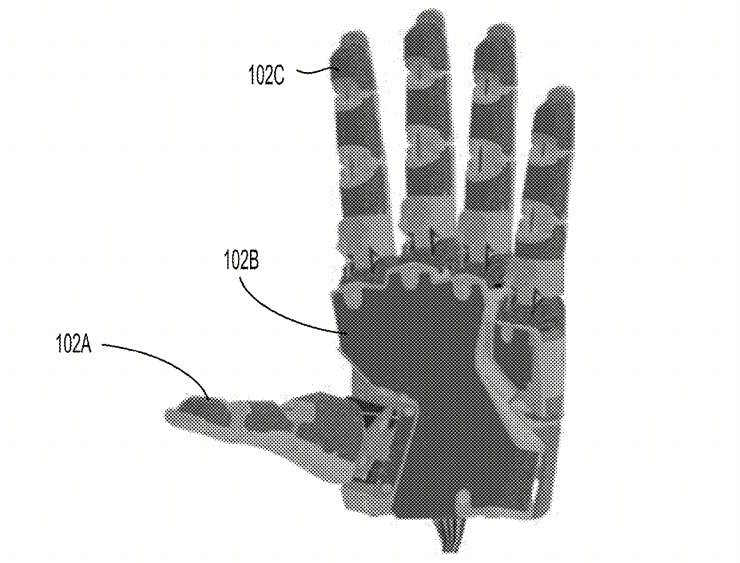
The substance is a skin that conforms to the curved surfaces of a finger, a thumb and a palm. Conductive areas are printed on flexible film and sandwiched around a dielectric or piezoresistive layer, and where the conductive regions overlap they form an independent sensing pixel. With enough pixels, the filing argues, a robot can identify the type of object from touch alone, not merely register that contact happened.
The timing matters more than the claims. This is not a document about building a more capable hand. It is a document about building that hand on a production line.
Why the hand is the bottleneck
Elon Musk has said human-level dexterous manipulation is harder than the Cybertruck or the Model X, and placed it somewhere between the Model X and Starship in difficulty, with hand work accounting for roughly 60 per cent of the Optimus challenge. The reason is supply chain: there is no established vendor base for precision tendon hardware at robot volumes.
The Information has reported that Optimus suffers from difficult manual assembly and durability problems in its touch sensors, with more than 100 small parts in a single hand, currently put together by people. The body carries 28 or more actuators. One hand carries 22 degrees of freedom.
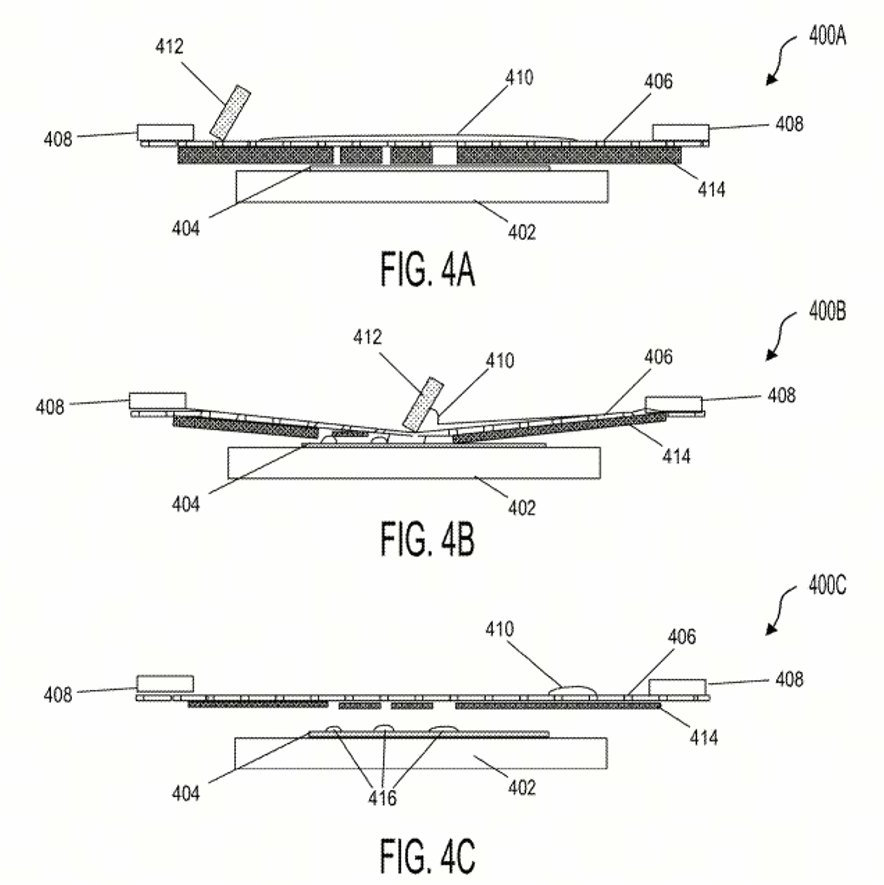
Print flat, then thermoform, or thermoform, then print
Most tactile sensors are built first and attached second. Tesla inverts it. The filing describes two routes. In the first, conductive regions are laid down on thermoplastic polyurethane, PET or polyimide film by screen printing, laser etching, 3D dispensing or pad printing, then a second patterned film is laminated around a dielectric or piezoresistive membrane, and the whole stack is thermoformed into a mould above its glass transition temperature. Cool it, and the sensor holds the shape of the palm it was moulded for.
The second route thermoforms the substrate first, then defines conductive areas on the finished curve by 3D dispensing, laser direct structuring, plating or pad printing, which suits more complex geometry. Both capacitive and resistive modes are covered, and the description extends the sensor beyond the hand to a flexible skin layer over the robot, or a vehicle, or any other surface.
Every process named is decades old in consumer electronics and automotive manufacturing. That is the argument. Tesla is reclassifying a hand from precision instrument to printable electronic product, which is the difference between a bespoke tailor and a factory.
What would prove it
The company said on its second quarter call that Optimus Gen 3 will start production at Fremont by the end of 2026, on a line planned for one million units a year, with a second Texas line aimed at ten million in the long run. Musk also warned that early output will be slow, because Optimus contains about 10,000 unique parts and each needs a supply chain built from nothing.
A patent does not shorten that. What it does is tell you where Tesla thinks the hardest unsolved part sits, and that its answer is not a better tendon but a printed skin. The verification is physical: how many tactile pixels ship on a Gen 3 hand, and whether those pixels can be printed at rate.
Editor’s note: This is an adapted translation of the original OFweek report. It has been trimmed and restructured for readability for an international business audience. The full original (in Chinese) is at https://robot.ofweek.com/2026-10/ART-898890-8110-30706244.html.