The last redoubt of the German premium trio in China was the 56E class, the trio of the BMW 5 Series, Mercedes E-Class and Audi A6L that anchored the RMB 400,000 to 600,000 band for two decades. It is now trading below RMB 300,000.
Dealers are offering discounts of up to RMB 100,000 across all three models, which means the money that once bought a 3 Series, C-Class or A4L now buys a segment above it. Discounting clears stock for the dealer and protects registration volumes for the brand, but it removes the pricing power that funded the whole German cost base in China.
The volume is still there, the premium is not
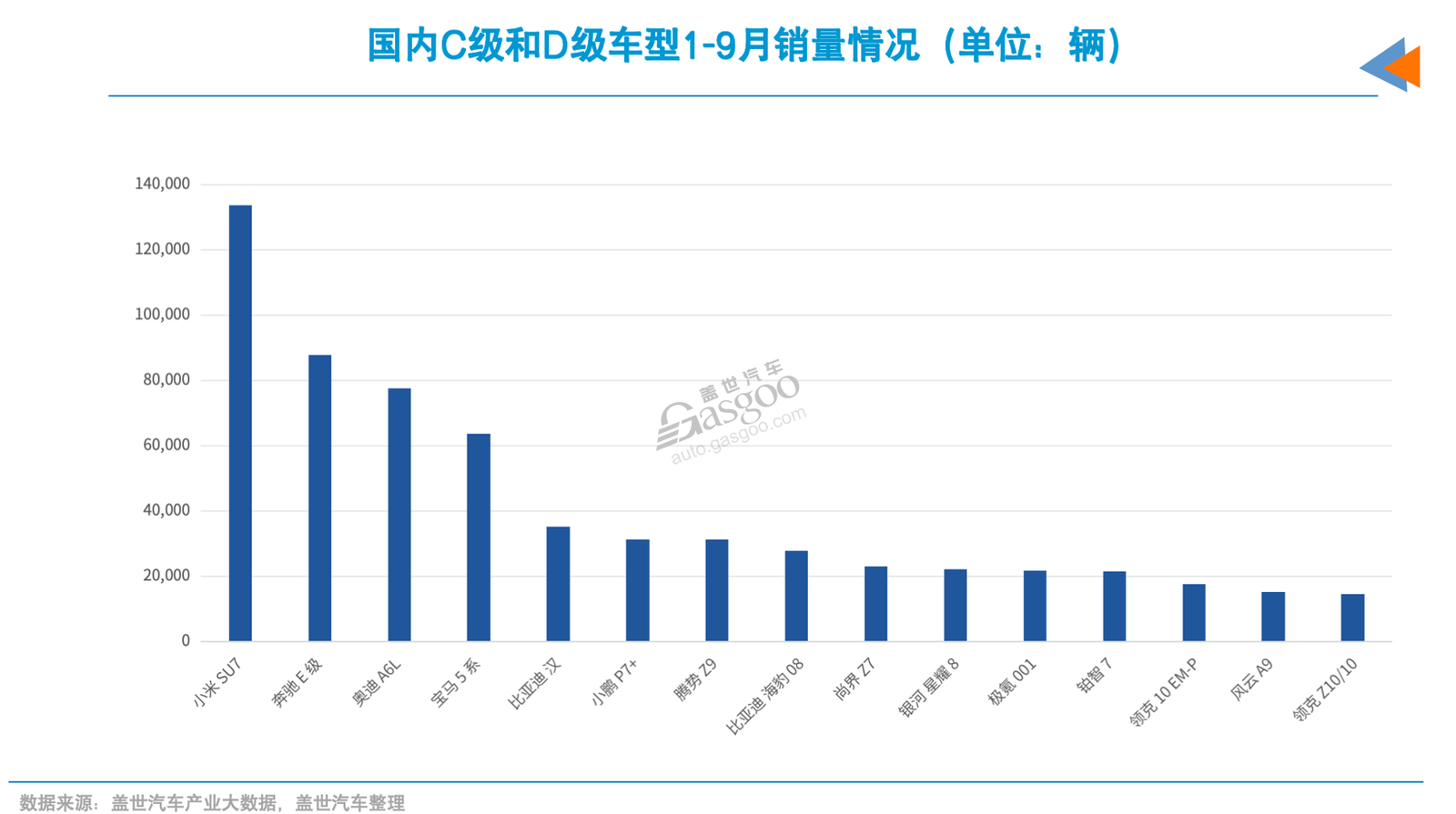
Between January and September 2026 the Mercedes E-Class sold 88,000 units in China, the Audi A6L 78,000 and the BMW 5 Series 64,000, about 230,000 cars in total. On scale alone the segment still matters.
September tells a different story. All three fell below 10,000 units for the month. The E-Class only just cleared 8,000 and the 5 Series dropped to a little over 6,000. Five years ago both nameplates were steady at around 15,000 retail units a month.
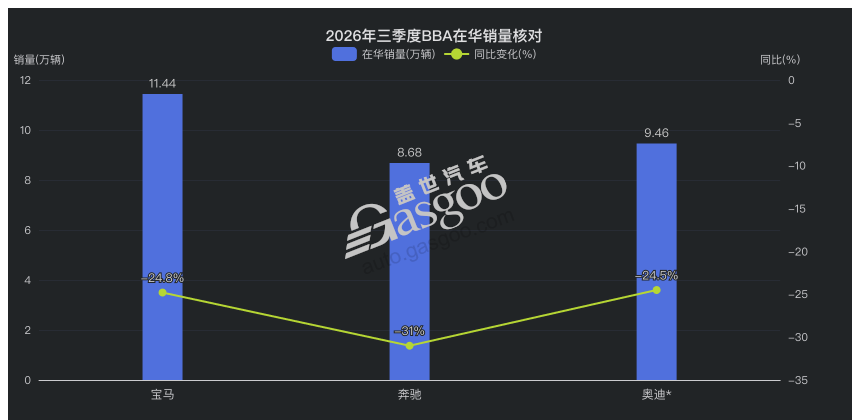
At group level, BMW sold 114,000 passenger vehicles in China in the third quarter, down 24.8 per cent year on year, and Mercedes sold 87,000, down 31 per cent. The contraction is not confined to the three brands. Passenger car association data show luxury retail down 29 per cent in September with the luxury share of the market at 11 per cent.
What the buyer now measures
Battery electric penetration in China reached 67 per cent in September. Even inside the luxury segment, electrified models accounted for 45 per cent of sales, and that is precisely where the German trio is weakest, since their volume base is still combustion.
The EQE and the i5 have shown that a badge earned on engine refinement does not transfer to a battery platform. Chinese manufacturers meanwhile pushed into the C and D sedan segments with hardware that used to sit only on flagship cars: air suspension, rear wheel steering, lidar, massage seats and rear entertainment screens.
Seven of the ten best selling C and D sedans in the first nine months were Chinese. The Xiaomi SU7 led with 133,800 units, and in September alone it moved 16,000. The BYD Han, Xpeng P7+, Denza Z9 and Shangjie Z7 also made the list.
Two routes into the flagship market
The BYD Dahan takes the downward route, priced at RMB 235,900 to 275,900 with a 5,256mm body and a 3,130mm wheelbase. It carries dual chamber air suspension, rear wheel steering and lidar, and targets households that had budgeted for a 56E.
The Maextro S800 and Nio ET9 take the frontal route at around RMB 800,000, the same band as the BMW 7 Series, Audi A8L and Mercedes S-Class. The Maextro S800, built with Huawei technology, sold close to 7,000 units between January and September, while the German flagships all posted double digit declines.
McKinsey’s 2025 China automotive consumer survey found the share of German luxury owners placing a domestic high-end electric model on their shortlist has risen sharply, and that half of respondents are no longer willing to pay an extra brand premium for a foreign high-end electric vehicle, citing intelligence features and cabin specification as the reason to switch.
One owner of a Mercedes S450 who compared the market and bought a Maextro S800 still rates the Mercedes interior. He had simply grown used to voice control, driver assistance and the service package that came with the Chinese car.
Editor’s note: This is an adapted translation of the original Gasgoo report. It has been trimmed and restructured for readability for an international business audience. The full original (in Chinese) is at https://auto.gasgoo.com/news/202611/3I70476620C109.shtml.