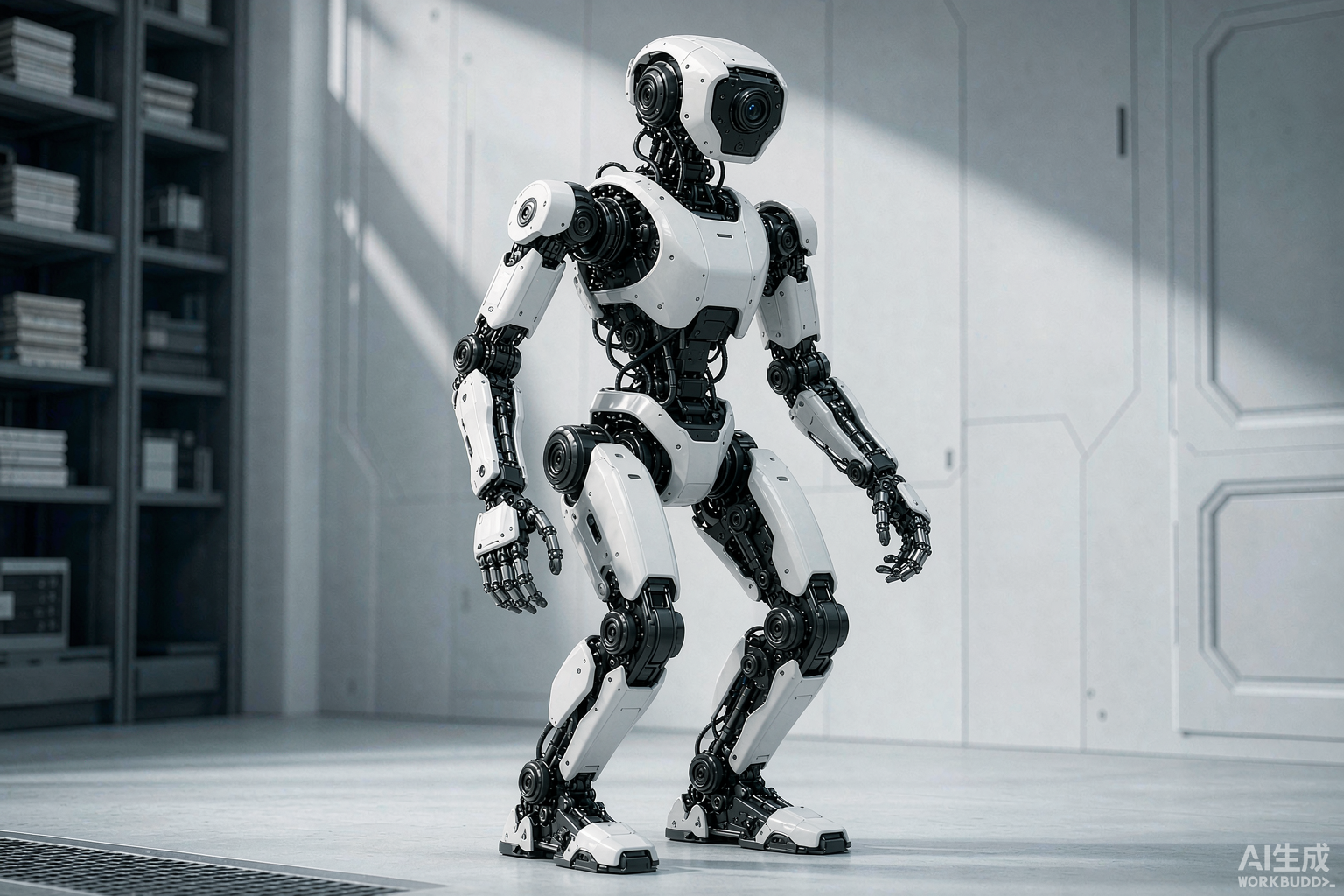
At the 26th China International Industry Fair (CIIF), Wang Xingxing, founder of Unitree, offered a candid self-assessment that few hardware founders volunteer. “The biggest mistake I made over the past decade was not believing in AI enough,” he said.
Speaking to the Science and Technology Innovation Board Daily on the sidelines of the fair, Wang argued that AI progress worldwide is now moving at extraordinary speed, with major updates arriving every one to two months. The recent release of GPT-6, he noted, sharply lifted the entire embodied-intelligence community’s understanding of what is possible.
Unitree has been mounting the new models onto its robots and running a range of task tests. The results, Wang said, are “actually quite good.” His personal read is that the sector’s tipping point could arrive sooner than many expect, potentially within one to two years.
The reason for his bullishness: GPT-7, expected next year, may directly “pierce” the core problems of embodied intelligence. In his words, the next model generation could break straight through the barriers that have kept general-purpose robots from working reliably in the open world.
Today, Unitree and other robot makers are running pilot deployments inside factories. But Wang cautioned that large-scale application still demands further gains in both generalisation and efficiency. He believes those gaps are very likely to close within the next few years, and his own conviction in AI, he added, “grows every single year.”
One surprise in his forecast: commercial-service deployment may arrive faster than industrial use. While factories are the obvious first battleground, Wang suggested that service settings could reach scale sooner, upending the usual assumption that manufacturing leads the humanoid rollout.