Jensen Huang left Nvidia more abruptly than the market expected. On 12 November he resigned as president, chief executive and board member. On the 17th he said he would return if the board judged it in the company’s interest, but chairman Harvey Jones stated on the fiscal 2027 third-quarter call that the board did not intend to restore him. A founder of thirty-three years departing that way was shock enough. What unsettled China’s compute supply chain was an event in almost the same window.
On 16 November the US Bureau of Industry and Security issued an interim final rule extending controls to advanced compute obtained remotely through overseas data centres. For some AI companies, renting compute now carries as much uncertainty as buying chips. The test is shifting from where hardware sits to who actually uses it, which moves the friction point earlier in the chain.
Five countries and a TPP threshold
Under the new rule, Indonesia, Malaysia, Singapore, Thailand and Brazil are designated as having higher than normal diversion risk. Exports, re-exports and in-country transfers of relevant advanced semiconductors to those countries require a regional stability licence. Data centres that had been providing compute at the relevant scale before the rule must obtain a licence within ninety days of it taking effect or face later export restrictions. Who a data centre serves and at what scale has entered the regulatory frame.
Law is moving in the same direction. The Remote Access Security Act passed the House 369 to 22 in January and went to the Senate Banking Committee. It has not been put to a vote or taken effect, but its intent matches the rule: treating remote use of compute like physical chip exports. Analysts note that even without a standalone vote, its core logic is partly in force through BIS.
Market responses are visible on quotation sheets. Journalists at IT Times found that quotes for overseas high-end GPUs for sale and lease edged up after Huang’s departure became official. One channel source said prices changed almost daily but drifted upward. Customers increasingly care whether supply can continue, whether contracts will be renewed and whether the regulatory line will move again. Providers with stock on hand have gained bargaining power in renewal talks, while users awaiting delivery are reworking training schedules.
Tencent said on its 18 November earnings call that the new chip restrictions would affect model training and that its next-generation model could take longer. Huang’s exit, in other words, is a governance question for Nvidia but a new opening for domestic compute.
Where the money went first
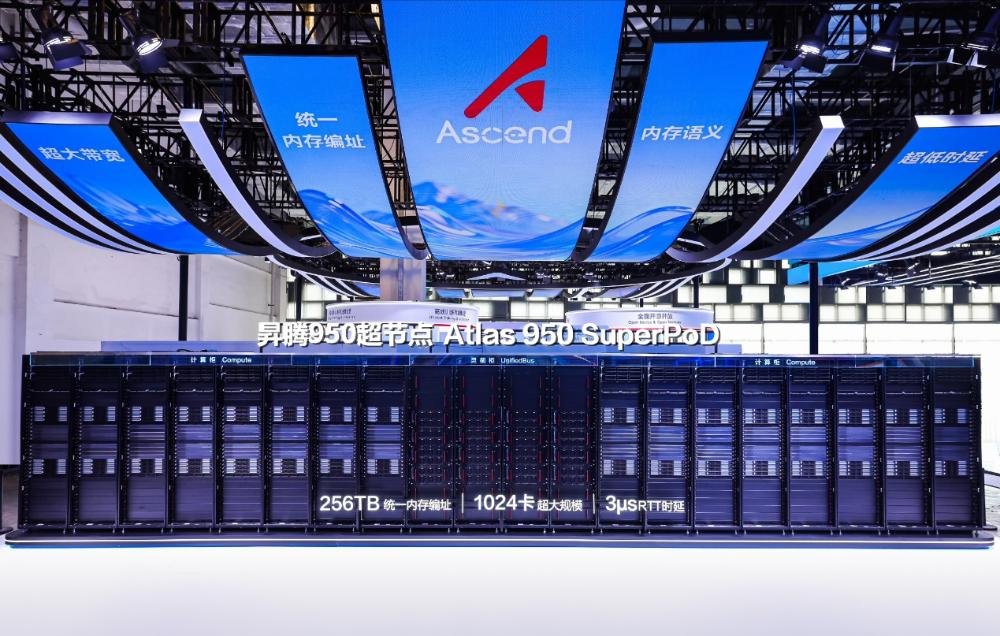
Channel sources told IT Times that more customers were asking about domestic cards from Huawei Ascend, Iluvatar CoreX and MetaX. Enquiries have increased, but price and availability remain sticking points. Servers carrying the Ascend 950DT are not plentiful, and buyers must weigh equipment access and delivery timing against their training calendars. Primary-market capital reacted earlier than public commentary. One investor focused on hard technology said part of the money in embodied intelligence had flowed into semiconductors, because the listing window for embodied firms had not opened while chip companies already had public comparables.
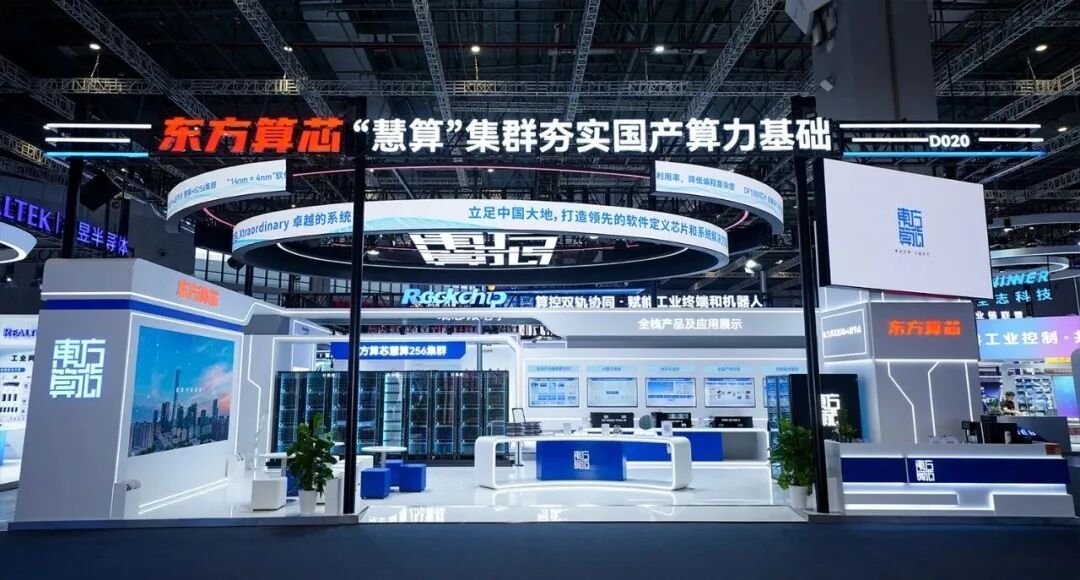
China Venture Capital Research Institute data shows 631 semiconductor investment deals in the third quarter, with RMB 109.243 billion raised, up 91.2 per cent year on year. But money moving into chips does not mean all chips. The same investor said screening had tightened from which sector a company occupied to who bought its product and how large the orders were. A story about benchmarking the H200 no longer funds a round on its own. East China Computing, for example, reached a post-money valuation above RMB 10 billion with a software-defined plus 3D-stacking engineering path rather than replacement sentiment.
Capacity may matter more than orders. SMIC production remains tight, and co-chief executive Zhao Haijun said on the November call that global equipment supply is strained, with longer lead times and uncertainty on some deliveries. With few investable top-tier GPU names left, hot money is spilling into brain-computer interfaces, quantum computing, nuclear fusion, compute-in-memory and optical communications. Huang’s departure is a governance exam for Nvidia and a new starting line for domestic compute. Capital can flow in many directions, but domestic compute has one landing point: how many machines actually get delivered into customer server rooms.
Editor’s note: This is an adapted translation of the original 36Kr report. It has been trimmed and restructured for readability for an international business audience. The full original (in Chinese) is at https://36kr.com/p/4077949930738564.