At the Beijing World Robot Conference in August 2026, the sound in the halls was no longer amazement that a robot could dance like a person. It was founders quietly working out return on investment in their heads, counting the wages a machine could save in a month.
Embodied intelligence is shifting from showing muscle to balancing the books. The first half of the year set the stages: May’s ICRA in Vienna fixated on VLA models, a physics catch-up; July’s WAIC in Shanghai put more than 200 embodied firms on one floor, swapping backflips for folding clothes; late July’s RSS in Sydney centred on open-source hardware, simulation toolchains and teleoperation data. By August’s WRC, every conversation drilled into engineering constraints and commercial bottom line.
ROI becomes the logic brake
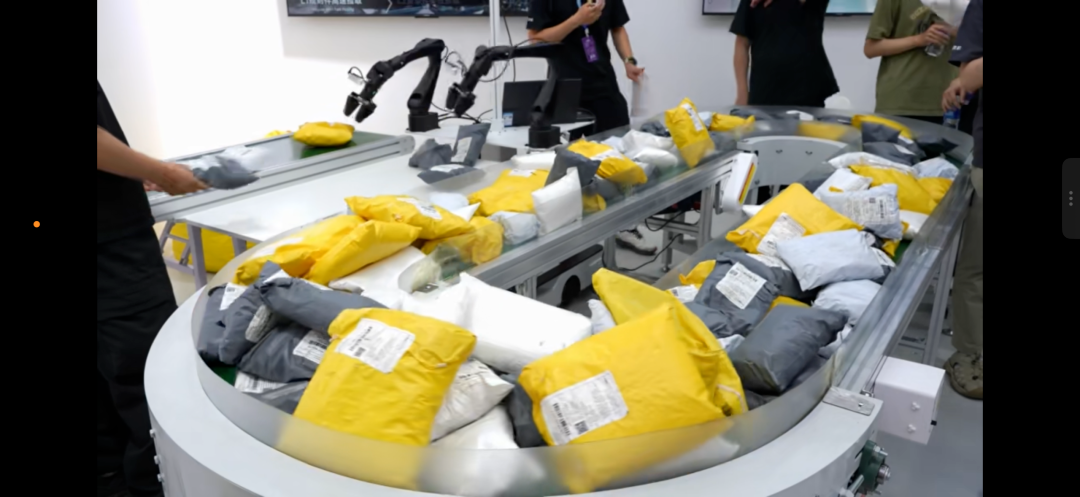
On the show floor, the busiest booth was the one sorting parcels fastest. Logistics sorting is the earliest commercialised and most fought-over scene. Yuanli Lingji showed a dual-arm parcel sorter driven by its DM0.5 generalised model at about two seconds per item, but specialists watched the claim that it needs no system swap and no hard-coded trajectory.
Generalisation, one founder argued, is how you amortise hardware cost. A single model and one set of hardware can hold four scenes in a month, from cucumber slicing to conveyor sorting, because the model can improvise on unseen parcels. Self-variable’s WALL-B model dropped the vision-language-action relay entirely into one network. Pragmatism, not spectacle, is becoming the field’s brake on wasted demo spending.
Data moves from the corner to centre stage
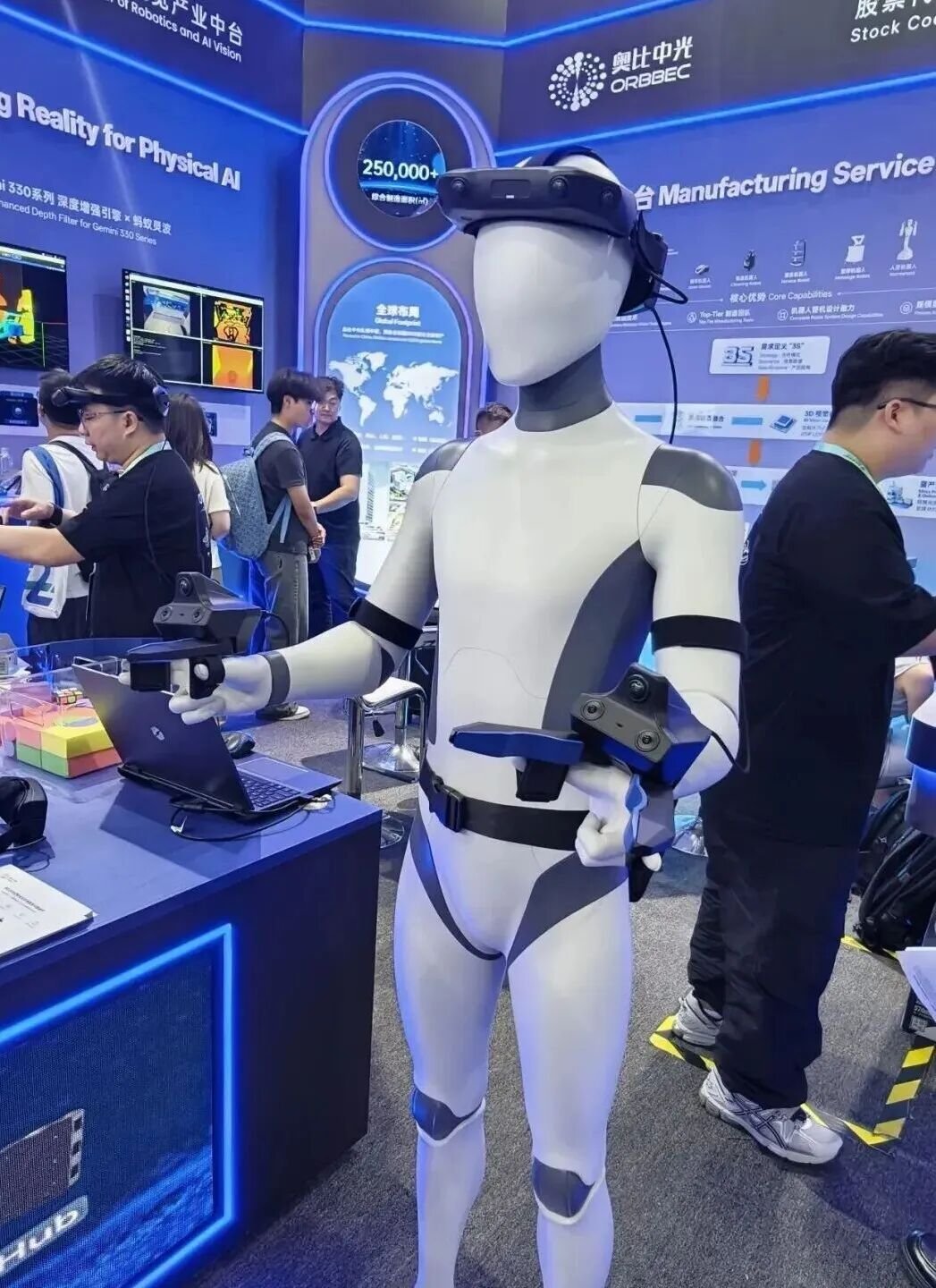
The fastest-growing hardware category this year was collection gear. Orbbec paired its MX6800 depth chip and 3D camera array with Ant Lingbo’s LingBot-Depth 2.0, chasing a threshold below which human-video-to-robot data becomes cheap enough for a GPT-3 moment. Tashan Technology’s tactile finger sleeve captured contact, force and slip aligned with first-person views, on the view that vision deceives but touch reveals friction and rigidity.
Model firms built their own capture hardware around training needs, while pure-play data infra providers such as Guanglun, Kaiwang and ORIGINFLOW entered as a second battlefield without the burden of bodies or models. Whoever produces cheap, high-quality, multimodal training data holds the key from demo to mass production.
Form follows scenario: quadrupeds in, humanoids queuing
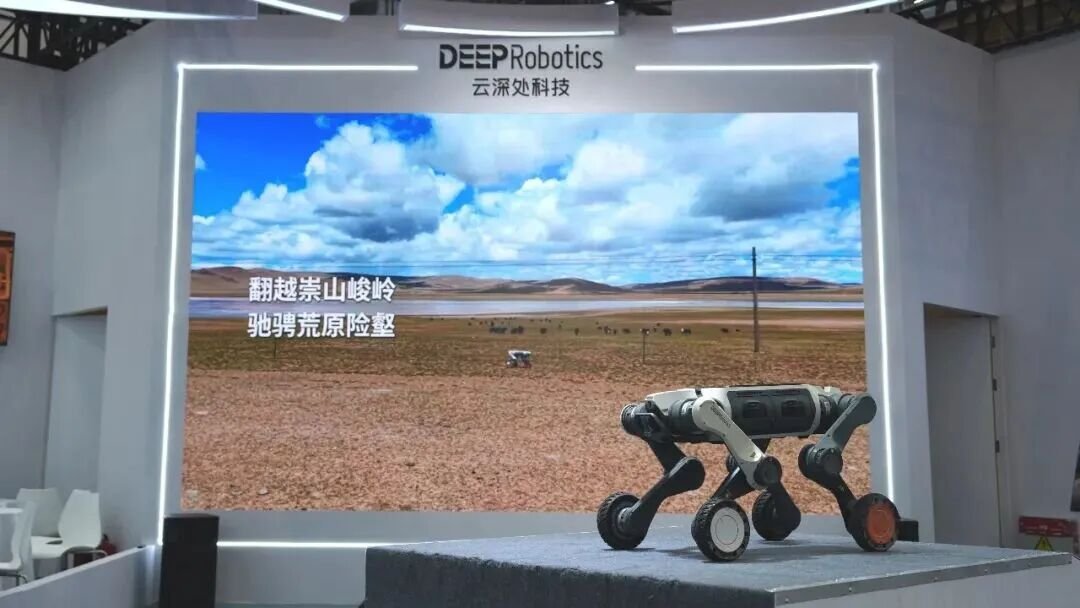
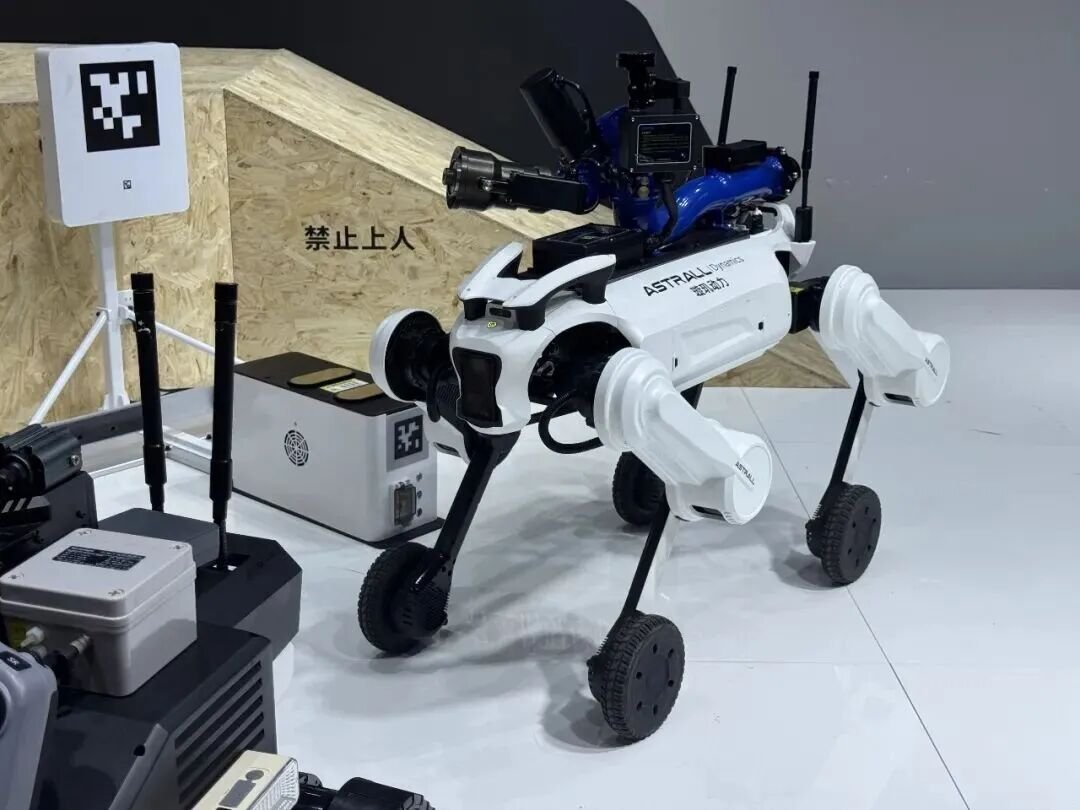
Humanoids stayed the stars, but quadrupeds and wheeled machines did the wage-earning work. Weita Dynamics shipped its consumer quadruped first to validate productisation before migrating to its ATOM biped, and its large quadruped line already logged near 100 million yuan of orders. YunShenChu’s industry-application revenue ranked first globally in 2025, with its X30 inspecting a Swiss nuclear-plant corridor. Zhishen hit monthly capacity above 5,000 units and joint-module capacity above 1 million, while Xuanji lifted inspection efficiency 75 per cent in power-grid and fire scenes.
Perception turns to touch, world model to compiler
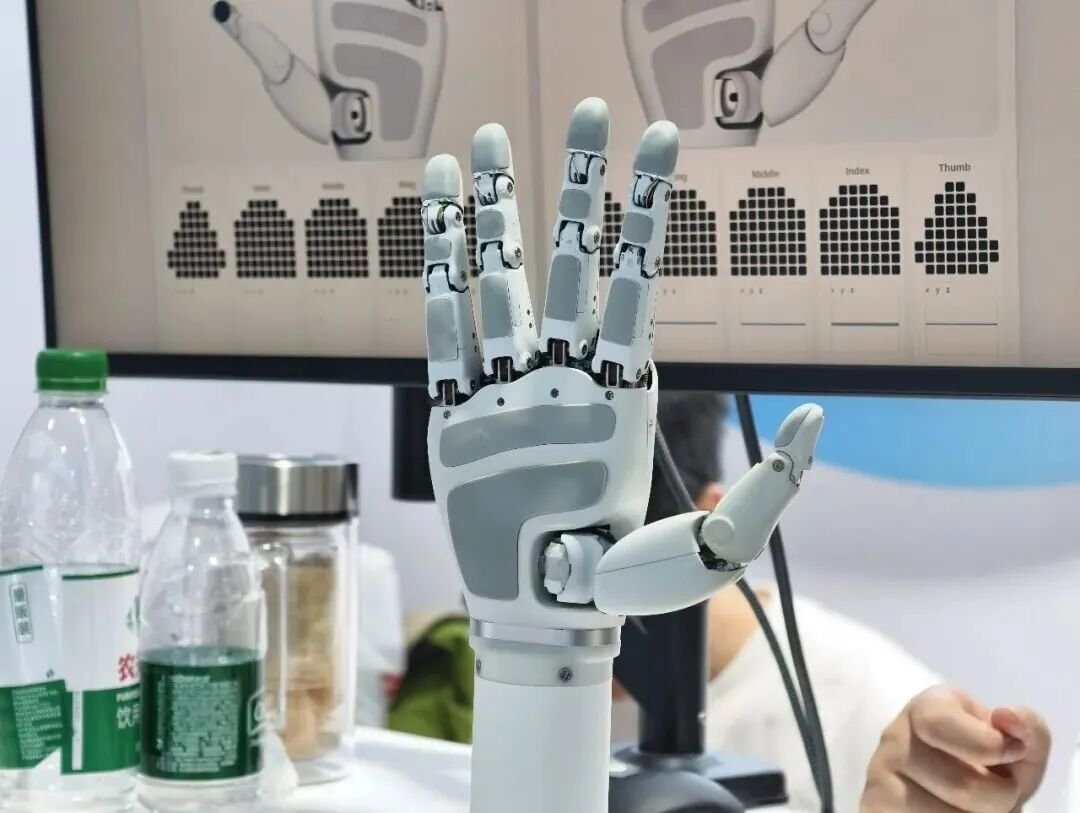
On dexterous hands, the field split across direct, string and hybrid drives, with touch moving from a show feature to a baseline ability. Zhangyu Power packed 1,900 tactile points, Strong Brain covered full palms, and Pasini reached 0.01 N sensing precision. The commercial workhorses were six-degree linkage and three-finger hands, where reliability beats a pretty spec sheet.
World models collapsed from a vague concept into the physical compiler of embodied intelligence, turning a fuzzy intent like peeling into force-feedback and linkage commands. Zaiwu Wuji pushed run cost to 150 yuan, and Zhangyu visualised its prediction. The goal is an automatic loop of collect, train and evolve, where humans set the top-level instruction and the compiler issues safe, physically consistent code.
More images from the source report:
Editor’s note: This is an adapted translation of the original Leiphone report. It has been trimmed and restructured for readability for an international business audience.
Translated and adapted from Leiphone (https://www.leiphone.com/banner/homepageUrl/id/3508).