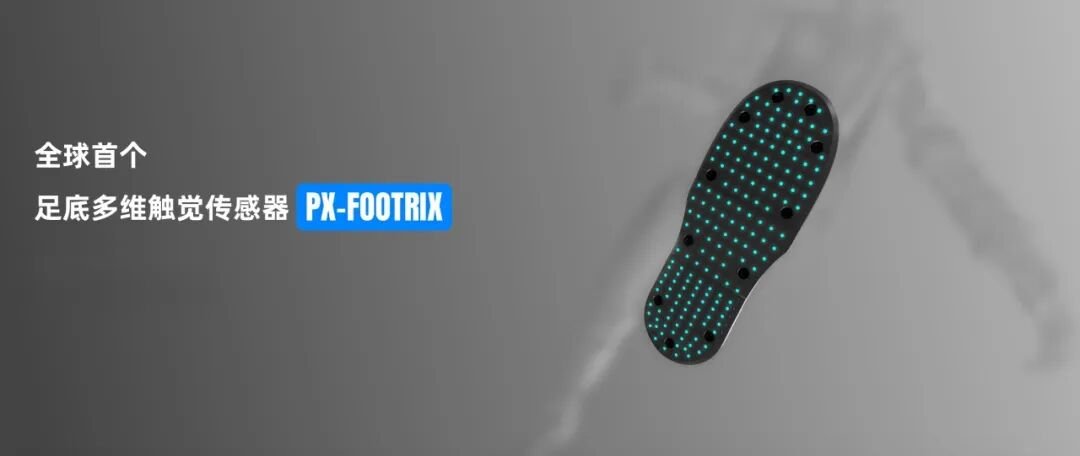
PaXini, the Shenzhen company that has spent the past few years trying to give machines a sense of touch, has launched PX-FOOTRIX, which it describes as the world’s first multi-dimensional tactile sensor for the sole of a robot foot.
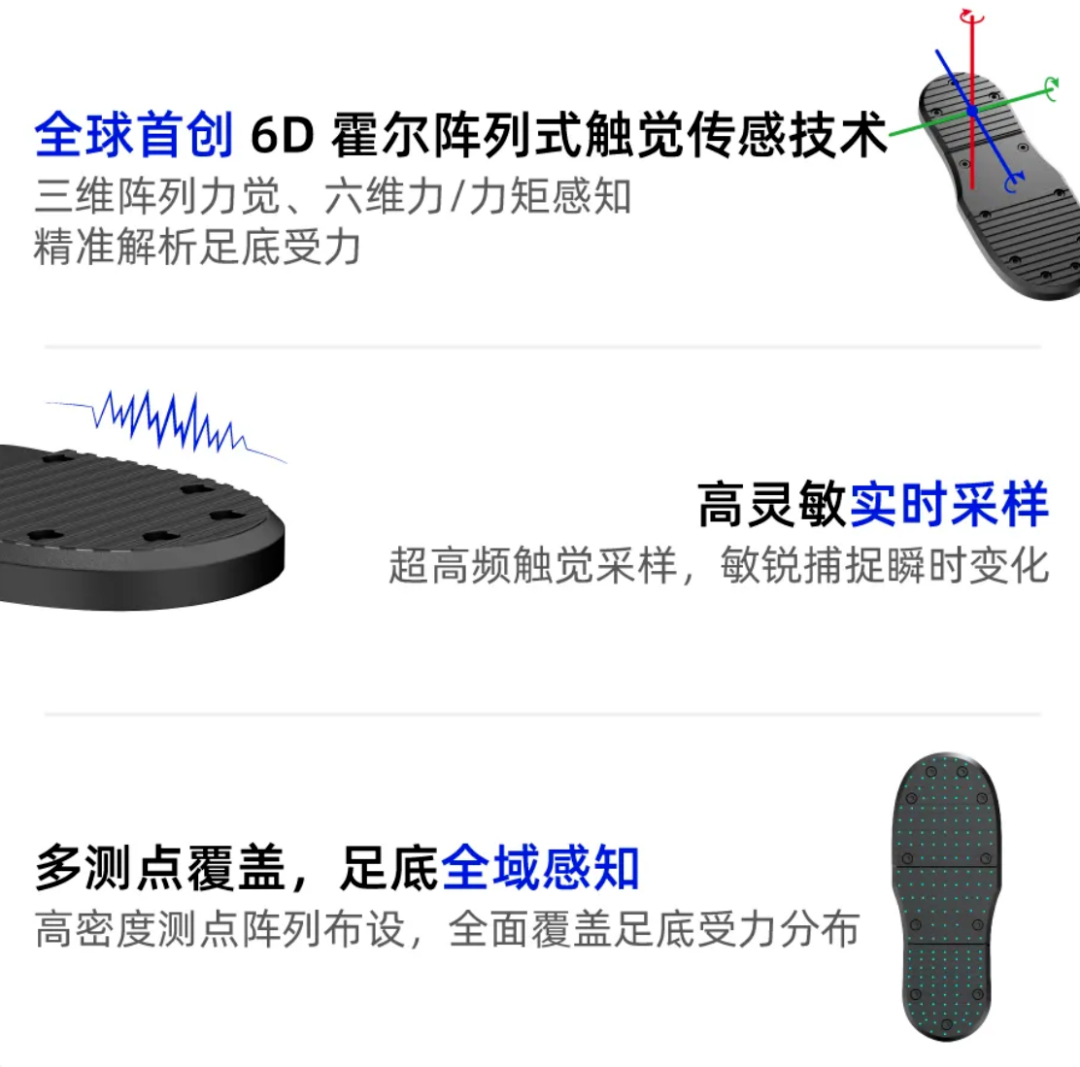
The product is built on a 6D Hall-effect tactile array that the company says is the first of its kind. It delivers three-dimensional force sensing across the entire sole together with six-axis force and torque measurement, supplying a bipedal robot with a complete picture of what is happening under its feet. PaXini frames the result as a shift from robots that can walk to robots that understand how they are walking, and claims it defines gait perception for the first time.
Why the sole became the bottleneck
As embodied intelligence moves from demonstration to deployment, bipedal machines are being pushed into industrial manufacturing, logistics delivery and public service work. Compared with the flat, controlled floors of a laboratory, real terrain is variable and unforgiving. A robot in those settings does not only need motion control. It needs to sense the ground beneath it in real time and adjust its gait as loads change, which is what stable, safe and efficient movement actually requires.
The sole is the interface where a robot meets the physical world, so its sensing capability feeds directly into gait control, movement stability and the ability to handle complex terrain. For a long time, bipedal robots have had only limited access to that contact information. They could not fully perceive how force was distributed across the foot or what kind of surface they were standing on, and their performance in awkward environments suffered accordingly.
PX-FOOTRIX upgrades the foot from a passive support component into an intelligent sensing terminal. By capturing richer and more precise tactile information in real time, it gives gait control a more reliable data foundation.
What the sensor measures
The device combines high-frequency tactile sampling with a high-density array of measurement points, producing full-sole three-dimensional force data alongside six-axis force and torque readings. PaXini says it can accurately resolve load distribution, contact state and pressure change, capture dynamic force information as it happens, and output a continuous stream of high-precision tactile data for gait decisions, motion control and terrain adaptation.
On the gait side, the multi-dimensional data allows a robot to distinguish soft ground from hard, interpret changes in terrain as they occur, and reinforce its native gait algorithms. The company describes stable control across the full cycle, from foot strike through support to the next step, so that the machine keeps moving smoothly on difficult surfaces.
Built to survive a factory
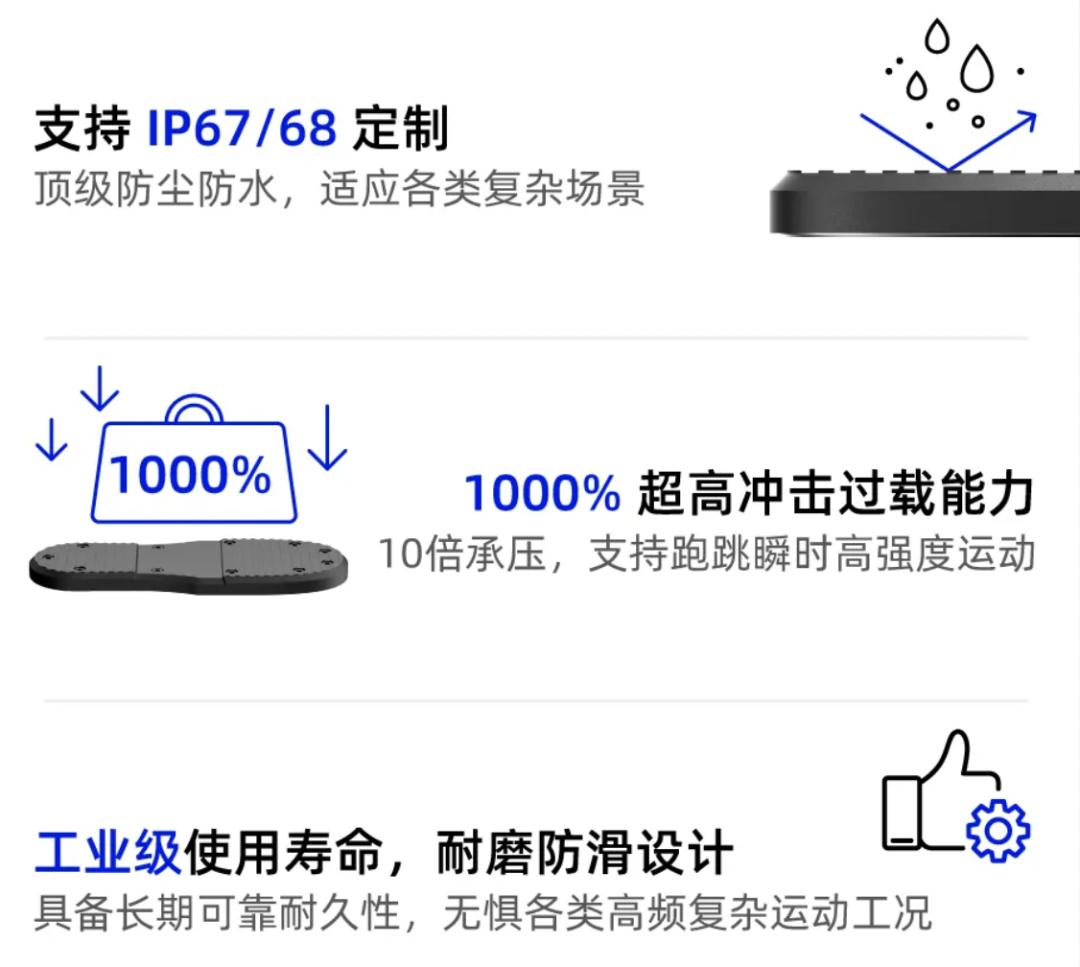
The hardware specification is closer to industrial equipment than to a research prototype. PX-FOOTRIX uses industrial-grade durability design with customisable IP67 and IP68 protection, and offers dust and water resistance along with abrasion and slip resistance. PaXini rates it for 1,000 per cent impact overload, which it says covers running, jumping and other high-dynamic movement as well as sustained high-frequency operation.
Integration has clearly been considered as well. The sensor supports SPI, UART, RS485, USB, I2C and CAN FD, which the company presents as the most complete protocol coverage in the industry, and is designed to fit different robot bodies and development platforms. It ships factory calibrated for plug and play use. An ultra thin design allows fast assembly, easy maintenance and installation that leaves no visible trace, while a rubber surface with anti-slip treatment handles long-term wear.
Perception as infrastructure
PaXini’s argument is that improvements in robot mobility will not come from stronger actuation and control alone. They also need a more complete picture of the environment, and foot-level touch is becoming a primary channel through which a machine connects to the physical world. Tactile and force fusion, the ability to genuinely feel contact rather than infer it, is widely regarded as one of the hardest problems in current robotics, and considerably more difficult than motion control.
The company takes its name from the Pacinian corpuscle, the biological starting point of touch, with the X standing for the open-ended interactions possible in the physical world. It works along a perception, data and manipulation axis, accumulating multimodal interaction data internally and turning it into generalisable manipulation capability externally, with the aim of handling unstructured environments and dynamic operating conditions that have resisted automation.
PX-FOOTRIX will make its formal public appearance at the World Robot Conference 2026, where PaXini is exhibiting at booth B203 in hall B.
Editor’s note: this English report is an adapted translation of a Chinese-language original published by OFweek Robotics (robot.ofweek.com). Figures, dates and direct quotations follow the source.