Future MCU competition is not just about performance, but who understands the application better, said Yang Ping, marketing director of Nation Technologies, at the Munich Shanghai Electronics Fair.
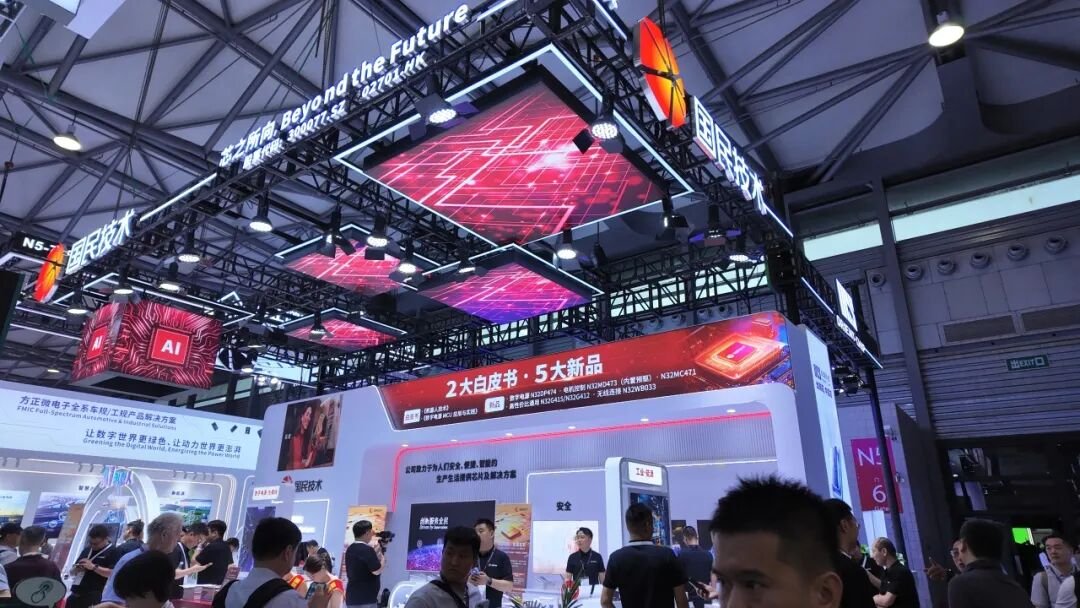
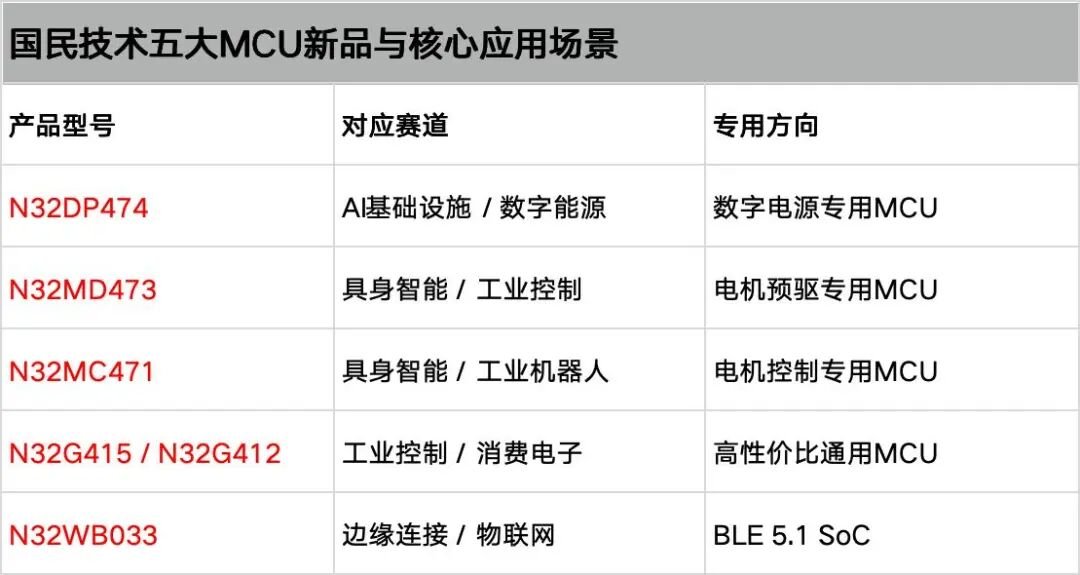
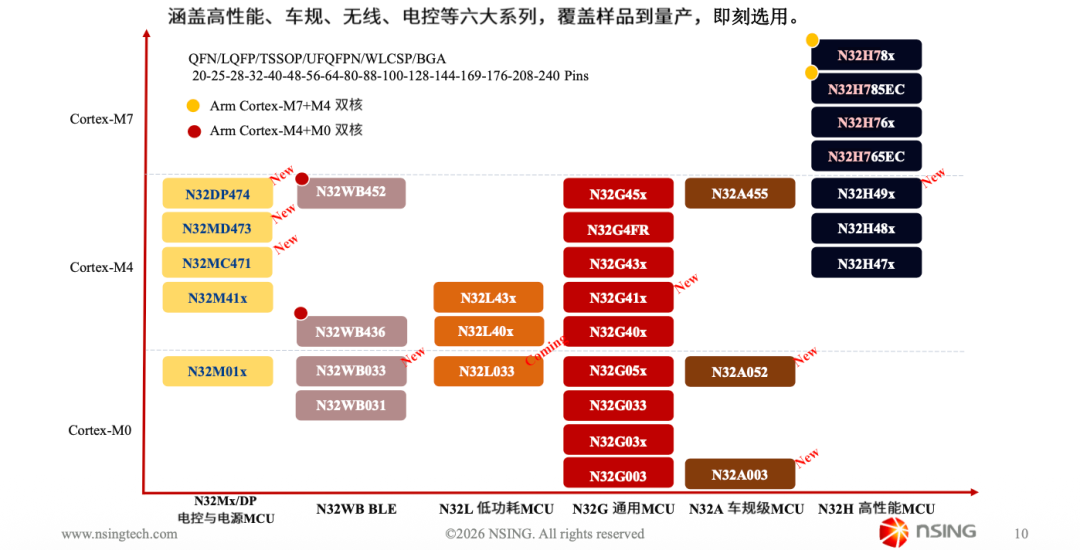
The fair opened on 1 July in Shanghai. Amid the displays, control-chip innovation around robots and AI infrastructure stood out. As an MCU leader in AI, Nation Technologies showed five new MCU lines, digital power, motor pre-drive, motor control, general industrial control and BLE SoC, and released a Robotics White Paper and a Digital Power White Paper. It was the firm’s first concentrated showing after its Hong Kong listing, entering an A plus H dual-platform era.
OFweek spoke with Yang Ping and senior engineer Ma Xudong on what next-generation MCUs the robot and AI-infrastructure boom is creating, and where local chipmakers find room.
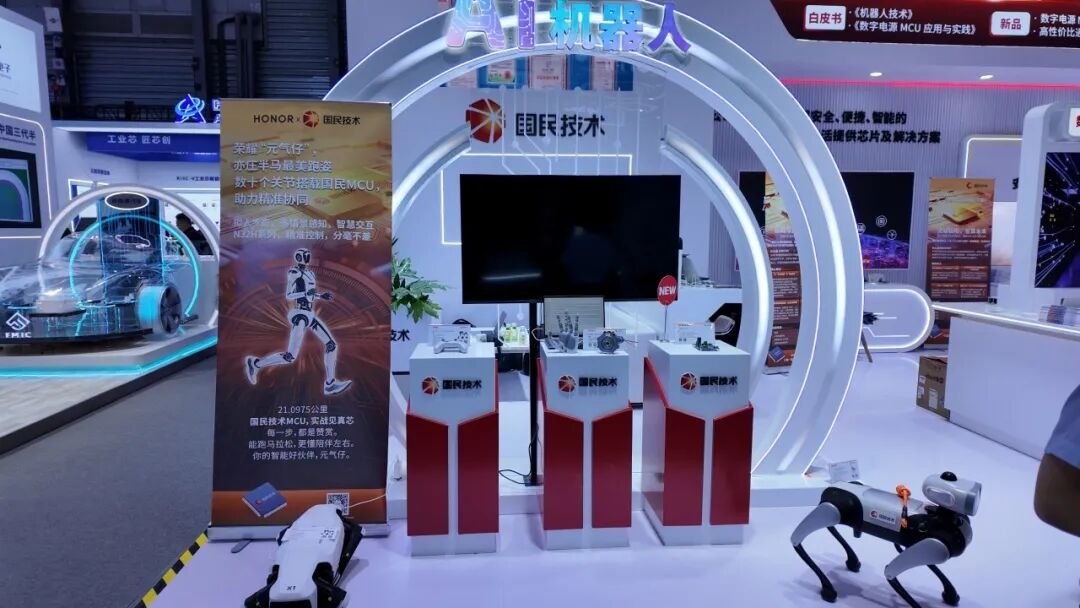
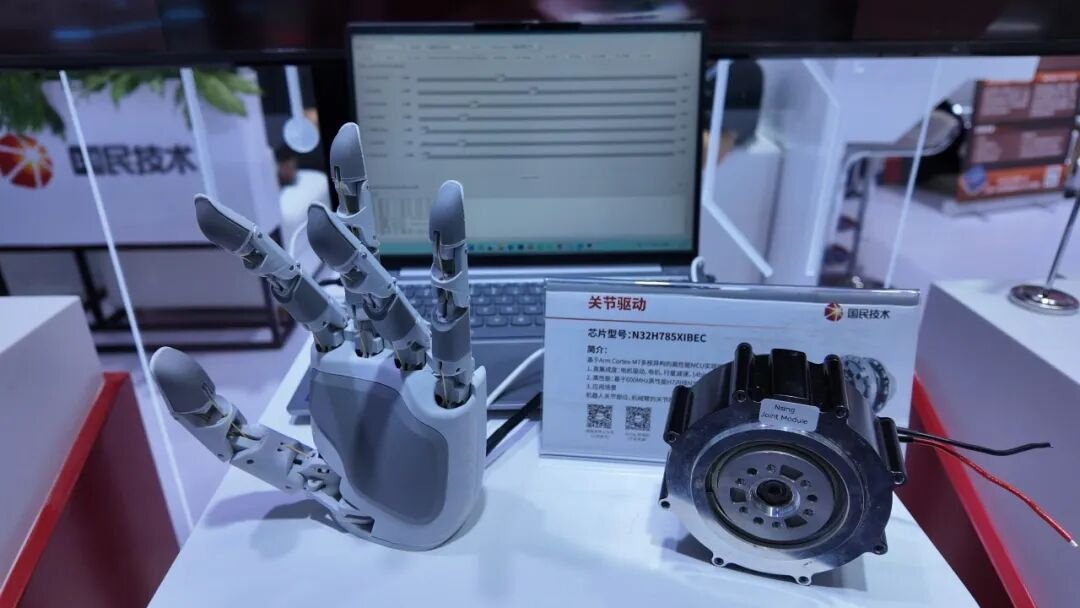
High-value dedicated tracks become the new MCU direction System complexity is rising, pulling the MCU back to a key industry position. High-end MCU competition is moving from generic-spec comparison to scenario fit, heterogeneous computing and system coordination. Nation Technologies’ booth shifted from chip models and frequencies to showing, via embodied-robot joints and robot dogs, how chip arrays solve real pains.
After its March 2026 Hong Kong listing, R&D and product expansion sped up. Yang said resources now concentrate on AI data centres and embodied intelligence, with the N32H493, optical-module MCU, N32H7 series, robotics, and edge-AI chips as growth peaks.
Three certain tracks: AI compute infrastructure, high-speed optical-module MCUs and AI-server power management. embodied intelligence, humanoid joint control and dexterous-hand drive. digital energy, comms-server power and photovoltaic storage. Their hard requirements, high performance, high real-time, high integration, high security, define next-generation high-end MCUs.
Dual-core heterogeneous to crack the dexterous-hand problem The N32H7 high-performance control MCU uses an Arm Cortex-M7 plus M4 dual-core heterogeneous design. the M7 reaches 600 MHz and 1,284 DMIPS, for robotics, motor control and industrial automation. Dual-core splits tasks: M7 on compute and complex algorithms like kinematics and edge ML inference. M4 on real-time control and communication like motor closed-loop. A CORDIC co-processor handles trigonometric and coordinate transforms.
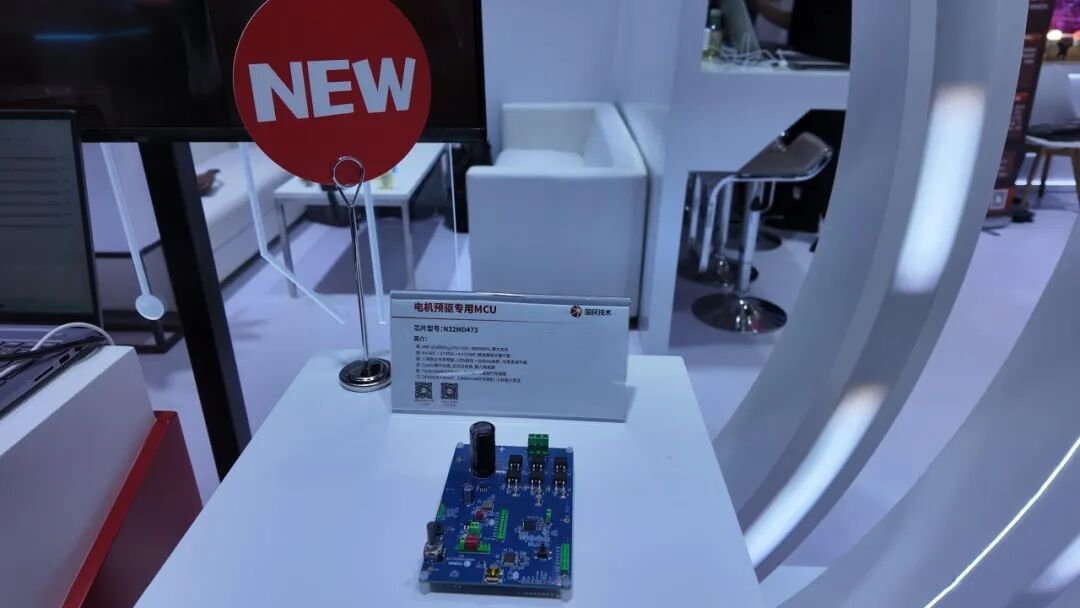
For precision, traditional high-end MCUs sit at 150 to 200 ps. N32H7 supports high-resolution PWM. On communication it integrates an EtherCAT slave controller for real-time industrial networks. The N32MD473 motor pre-drive MCU uses Cortex-M4F at 240 MHz with built-in 220V three-phase half-bridge pre-drive, cutting PCB area and bill of materials for small servos, collaborative-robot joints and 220V industrial actuators.
For dexterous-hand multi-degree control, Nation offers a one N32H7 plus four N32H4 scheme, one N32H7 with four N32H4 building a distributed multi-MCU architecture, up to 22 degrees of freedom. Ma noted the hardest part is precise time sync across joints. N32H7’s on-chip EtherCAT with distributed-clock sync achieves under 1 microsecond, keeping complex dynamic tasks coordinated.
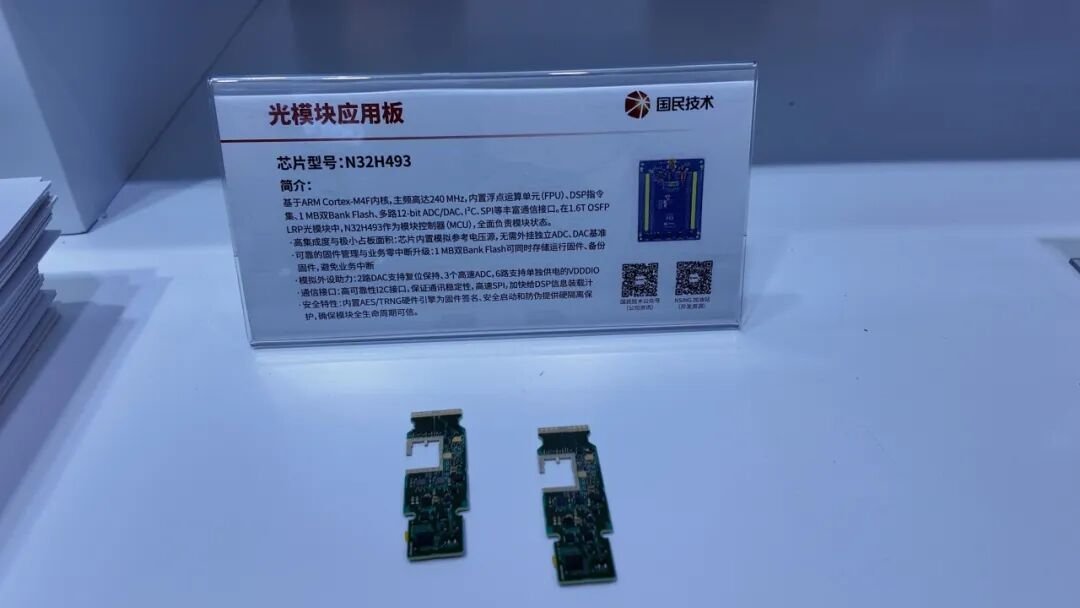
High-precision control for AI infrastructure AI infrastructure needs high-speed optical modules and digital power. The N32H493 optical-module MCU uses Cortex-M4F, dual-bank flash for non-stop firmware upgrade, 1.8V I/O to link DSP directly, high-precision ADC and DAC for status monitoring. optical modules run 7×24, so chip stability drives comms reliability.
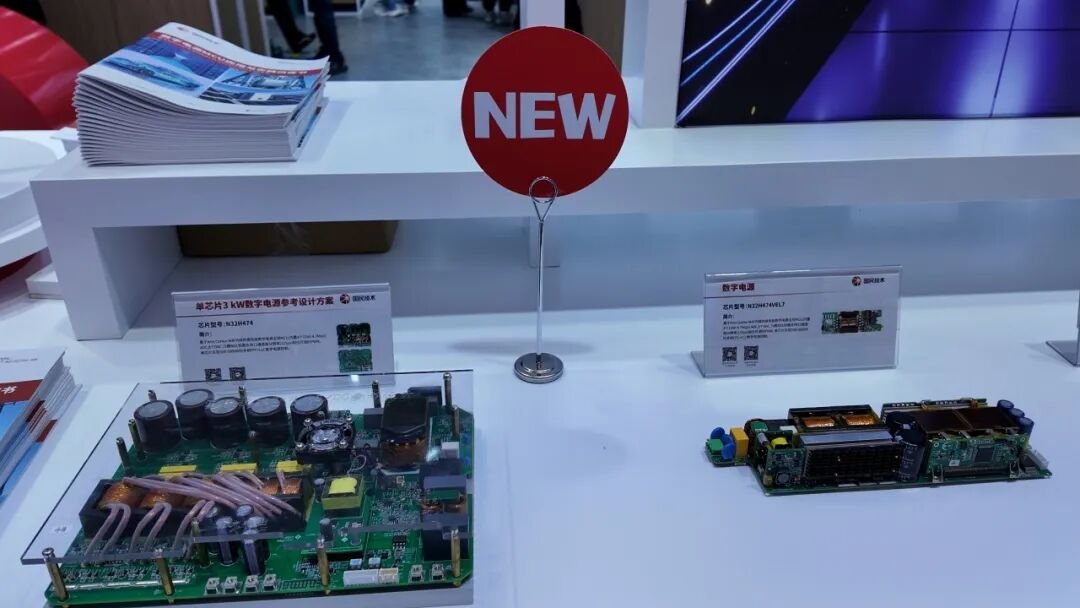
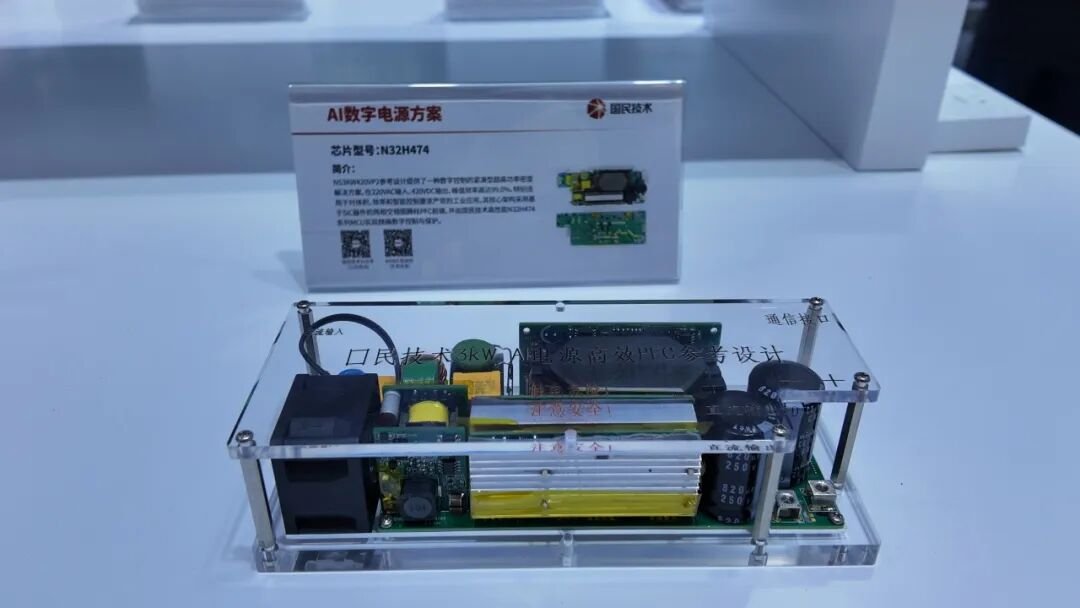
Digital power needs faster sampling and feedback as AI-server power rises, especially with SiC and GaN. The N32DP474 and N32H47x digital-power MCUs at 240 MHz with FPU give ample compute, with 125 ps ultra-high-resolution PWM and four 4.7 Msps 12-bit ADCs plus differential amplifiers for microsecond closed-loop control of LLC and PFC topologies.
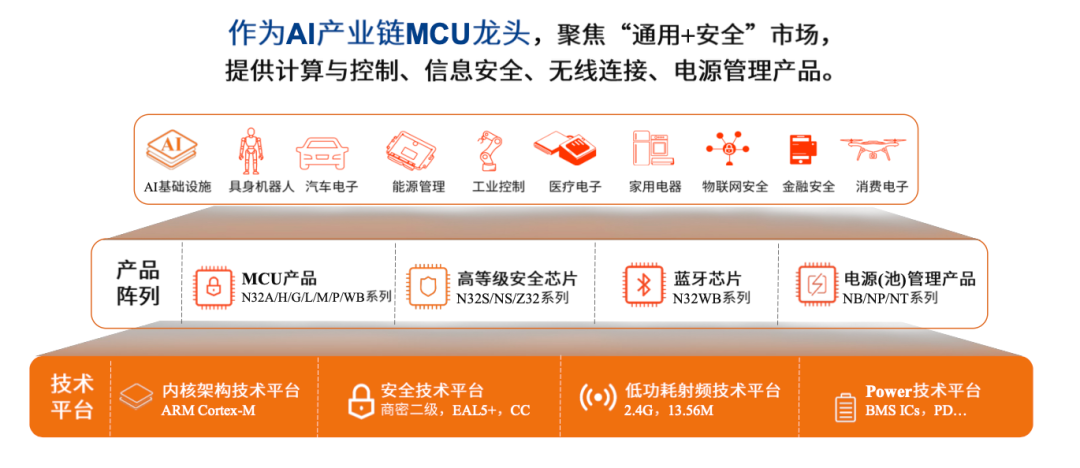
From chip vendor to system-solution enabler The two white papers lower customer development complexity. Nation began MCU in 2017 and pushed dedicated MCUs after 2022. Beyond control chips it showed automotive-grade MCUs, security chips and wireless products. for smart hardware, control, connection and security are merging.
Technical breakthroughs are a start. the real contest is ecosystem breadth, supply-chain resilience and global delivery. The Robotics and Digital Power white papers signal Nation’s shift from pure chip vendor to system-solution enabler. Its moat is a diversified matrix and closed development ecosystem: full-stack from MCU, high-grade security chips, BLE SoC to power and battery management.
Images
Editor’s note: This is an adapted translation of the original OFweek report. It has been trimmed and restructured for readability for an international business audience.