In 2026, America’s humanoid robot industry stopped showing off and started defending itself.
Against whom? The United States now fields at least six serious robot companies: Tesla, Figure, Boston Dynamics, Agility, Apptronik, plus Norway-born, US-landed 1X. Six firms, six completely different technical routes.
Rankings are easy to fake. What matters is the choices each company made on three questions: who buys the robot, factory or home. Which technical path, electric or hydraulic, tendon-driven or modular. And where commercialisation lands, on its own line or sold to outside customers.
A turning point arrived in 2026. Several companies’ machines entered real production lines, some with real revenue. That pushed the field from technology demonstration to commercial validation.
01 Tesla Optimus Gen 3: moving car-making into robots
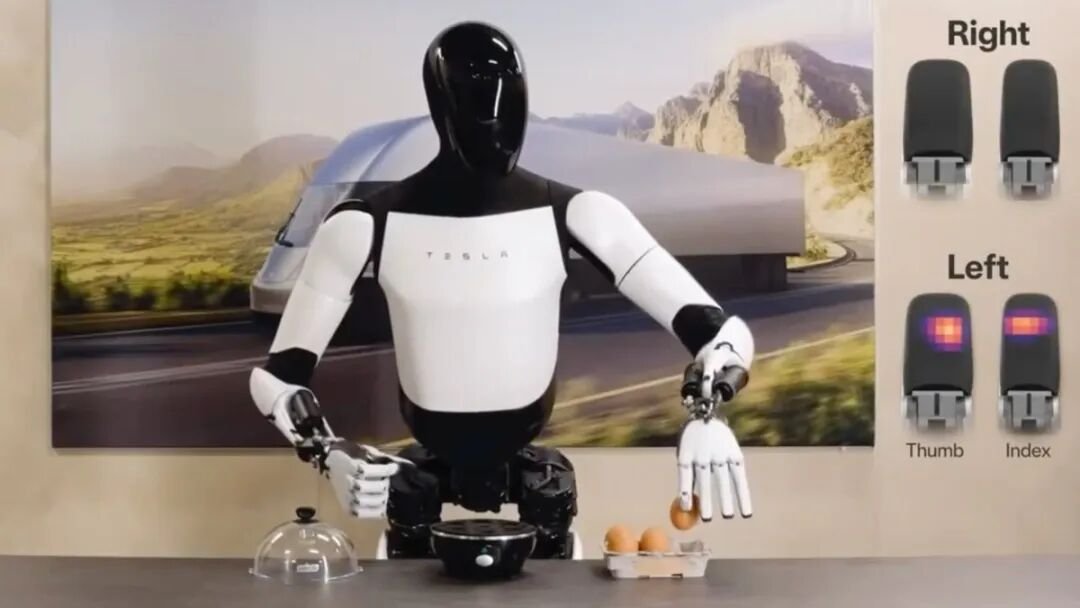
Tesla is moving the scale and vertical integration of car-making into robots, something no one else can copy. Optimus Gen 3 began mass production in January 2026 at the Fremont plant in California, on a line that once built the Model S and Model X. Tesla stopped those two cars and converted the building into robot manufacturing.
Musk was blunt on the first-quarter call: Optimus contains about 10,000 individual parts, and line speed depends on the unluckiest, slowest, dumbest part. Gen 3 weighs 57 kg, 22 per cent lighter than Gen 2’s 73 kg, and stands 173 cm tall. The hands are the big upgrade: 22 degrees of freedom per hand, double Gen 2’s 11, with 25 actuators per forearm and 50 across both hands, using tendon-like drives that pull fingers from the forearm, mirroring human hand structure.
That lets Gen 3 perform more than 3,000 fine manipulation tasks, against about 500 for Gen 2. Fingertip force-feedback sensors handle eggs and glass bottles without crushing them. Compute comes from Tesla’s self-built AI5 chip, with memory bandwidth about five times that of the AI4 generation. Eight self-driving-grade cameras give pure-vision sensing, no lidar. Local inference runs xAI’s Grok voice model. Dynamic payload is 20 kg, it can deep-squat roughly 68 kg, and battery lasts over 8 hours.
Commercially, Tesla uses it first. By March 2026, more than 1,000 Optimus units were sorting batteries, moving parts and doing basic inspection at Fremont and the Texas gigafactory. External sales wait until after 2027. The long-term price target is US$20,000 to 30,000, conditional on reaching one million units a year.
Tesla’s real edge is a flywheel: millions of miles of FSD training teach spatial understanding, Cortex 2.0 supercomputers amplify it, and robots in the factory feed real manipulation data back. No pure robot startup can replicate that loop.
02 Figure 03: the first return-on-investment case validated
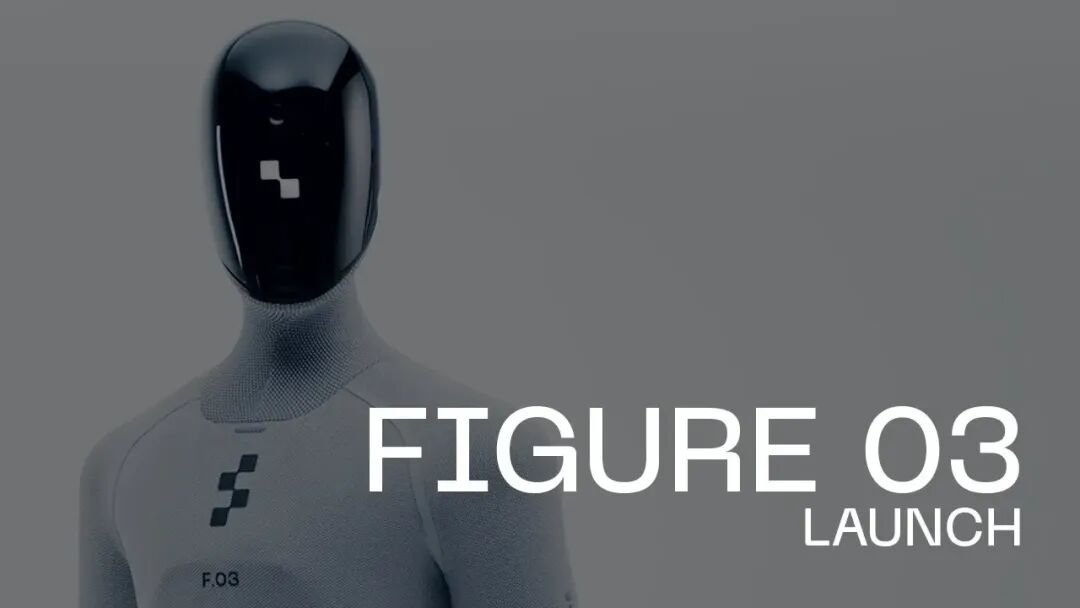
If you pick one factory-proven example, Figure 03 is the most convincing. Founded in 2022 by Brett Adcock, its latest round valued it at US$39 billion with over US$2.4 billion raised, backed by OpenAI, Microsoft, NVIDIA and Bezos. The capital lineup is itself a signal.
Figure 03 stands 1.70 m, weighs about 57 to 61 kg, carries 48 to 50 degrees of freedom, a 25 kg payload and 5 to 6 hours of battery. Its celebrated hands sense pressure changes at the 3-gram level, the weight of a feather landing on the palm, and each palm carries a wide-angle low-latency camera to close near-range visual blind spots.
The brain is Figure’s self-built Helix vision-language-action model. Helix 02, released January 2026, extended control from the upper body to the whole body across three coordinated layers. The top System 2 is a 7-billion-parameter vision-language model running at 7 to 9 Hz, deciding what to do next. The middle System 1 is an 80-million-parameter visuomotor policy network at 200 Hz turning semantic goals into whole-body joint trajectories. The bottom System 0 is a 10-million-parameter base control module at 1 kHz holding balance and contact.
Validation came from BMW. At BMW’s Spartanburg plant in the US, Figure machines worked 11 months across more than 30,000 vehicles at 99 per cent task accuracy. That is the industry’s first scaled return-on-investment case inside a real car factory. In March 2026, Figure 03 also appeared at a White House AI education event, a heavy policy signal. Figure’s own BotQ factory is planned at 12,000 units a year.
03 Boston Dynamics Atlas: the ceiling of motion capability
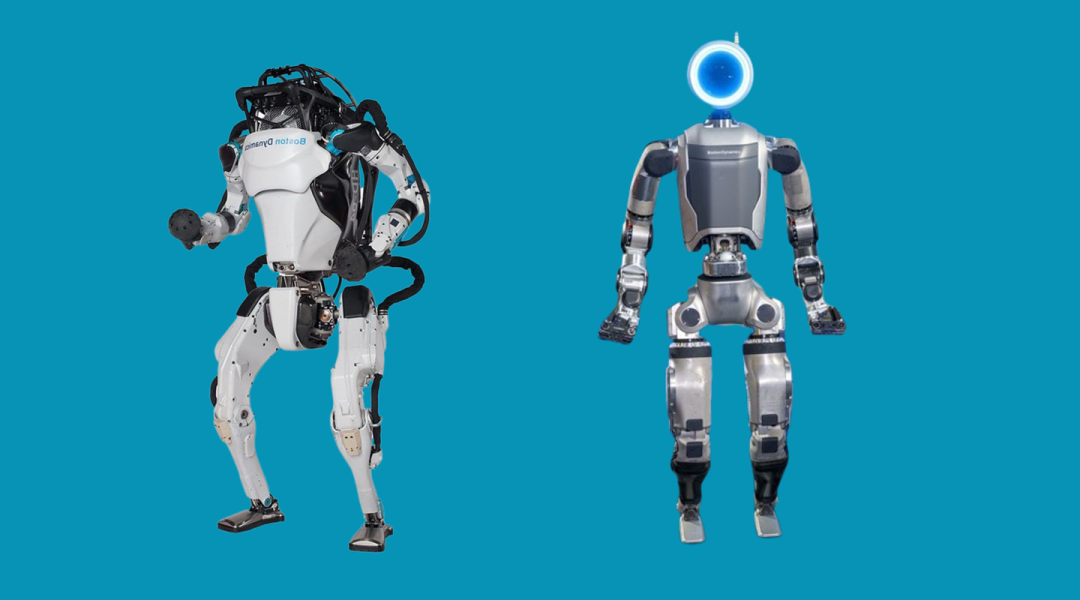
Boston Dynamics’ new Atlas has the strongest motion capability of the six. It does not chase the home first, nor rush to prove ROI. It pushes what a robot can move and carry to the limit.
On 5 January 2026 at CES, Boston Dynamics released the production version of its fully electric Atlas and began production that day at its Boston headquarters. It stands 1.9 m, weighs about 89 kg, has 56 degrees of freedom, full-orientation rotating joints, a 2.3 m arm span and a 50 kg lift. Most distinctive is self-swapping batteries: the robot navigates to a charger, pulls the old pack, slots in a new one, all in under 3 minutes, enabling uninterrupted operation. Working temperature spans minus 20 to 40 degrees Celsius, and it is waterproof.
The route moved from hydraulic to electric. In April 2024 Boston Dynamics retired the hydraulic Atlas for a full electric redesign. Electric freed the hips, waist and neck to rotate 360 degrees, impossible for humans. Actuators come from Hyundai Mobis, on an automotive-grade supply chain.
All of 2026’s capacity is locked to Hyundai’s RMAC plant and Google DeepMind. Hyundai, the controlling shareholder, bought SoftBank’s remaining 9.65 per cent stake in June 2026 and announced a US$26 billion US investment plan, including a robot factory at 30,000 units a year. The Atlas and Google DeepMind tie-up connects frontier foundation models to the robot to lift cognition.
Boston Dynamics does not win on flash. It wins on industrial reliability and uninterrupted work. It is the hard floor at the table.
04 Agility Digit: the only one already earning in warehouses
Of the six, Agility’s Digit is the only one generating real revenue in real warehouses. The others are still catching up.
Digit spun out of Oregon State University in 2015, built for logistics from birth. It stands about 1.55 to 1.75 m, weighs 42 to 65 kg, carries a 16 to 18 kg payload and lasts 4 to 8 hours. It does not attempt to be everything. It does one thing: move totes in warehouses.
The commercial numbers are concrete. By April 2026, Digit reached 75 units deployed at Amazon’s Spanaway, Washington fulfilment centre, the largest single humanoid deployment to date, having moved over 100,000 totes. Agility charges about US$25 an hour under a robots-as-a-service model, while US warehouse labour costs about US$30 or more an hour. The company target is to push operating cost to US$2 to 3 an hour at scale.
Customers beyond Amazon: Toyota Canada signed a robots-as-a-service deal in February 2026. GXO and Latin American e-commerce firm Mercado Libre use it too. On the manufacturing side, Agility runs RoboFab in Salem, Oregon, nominally 10,000 units a year, with about 75 per cent of 6,000 parts sourced in the US. CEO Peggy Johnson said the first collaborative safety version, which drops rather than risks a human nearby, ships by end of 2026.
Digit does not flash, does not backflip. It works steadily in the most boring environment. And boring is where the cash flow actually is.
05 Apptronik Apollo: the NASA-blooded pragmatist
Apptronik is the quietest and most enterprise-like of the six. It grew out of the Human Centered Robotics lab at the University of Texas at Austin and carries NASA collaboration DNA.
Apollo stands 1.73 m, weighs 73 kg, carries a 25 kg payload, 4 hours of battery and 32 to 36 degrees of freedom. Its core move is modularity: legs to walk, wheels to roll, or a fixed base for repeat tasks. Hot-swappable batteries, 4 hours per pack, under 5 minutes to swap, 22 hours a day. Swappable hands, so Tuesday’s machine does bin picking and Wednesday’s does machine loading. Modularity exists for one practical reason: commercial landing.
The backing is serious. Mercedes-Benz, GXO and Jabil are pilot customers. A strategic tie-up with Google DeepMind uses Gemini Robotics for cognition. In February 2026, Apptronik closed a US$520 million Series A-X round, total funding over US$935 million, at a US$5.5 billion valuation, with new investors John Deere, AT&T Ventures and the Qatar Investment Authority. In Mercedes-Benz pilots, logistics efficiency rose about 40 per cent.
The neatest move is robots building robots at Jabil: a fresh Apollo does inspection, sorting and delivery inside Jabil’s own line, validated, then shipped to customers, a flywheel of falling cost and rising scale. Apptronik does not chase traffic. It chases factory contracts. If reliability beats speed, this may be the dark horse.
06 1X NEO: the only soft companion aimed at the home
The first five watch the factory. Only 1X aims at the home.
1X started in Norway in 2014 as Halodi Robotics, pivoted to consumer humanoids in 2022 and is now dual-based in the US and Norway. The OpenAI Startup Fund was an early lead investor. Its NEO Gamma weighs 30 kg, stands 165 to 168 cm, has 22 hand degrees of freedom, lifts about 68 kg and runs at just 22 decibels, quieter than a fridge.
The technical route differs from everyone else. 1X uses a self-built tendon system mimicking human tendons and muscles, wrapped in a custom 3D lattice polymer soft shell for safety and cushioning. The brain is Redwood AI, a 160-million-parameter vision-language-action model running on-board on an NVIDIA Jetson Thor at 2,070 TFLOPS, no cloud needed. It also trains a world model for simulation.
Price is US$20,000 outright or US$499 a month, with US deliveries starting in 2026. Reservations opened October 2025 and the first year’s 10,000 units sold out in five days. The Hayward, California NEO factory is ramping to 10,000 a year, and the San Carlos plant targets 100,000 a year by end of 2027.
A Morgan Stanley analyst bought one to test at home and concluded it is more a financing strategy than a genuinely useful house tool for now, still needing human remote assistance early on. The verdict is a cold shower, but it points at a real problem: the home is harder than the factory, with open environments, fuzzy tasks and high safety bars. Yet is the home finale really easier to win than the factory?
1X is betting on the home as the ultimate market. The factory is the poker table. The home is the end game.
Images
Editor’s note: This is an adapted translation of the original OFweek report. It has been trimmed and restructured for readability for an international business audience.