Northern lights, dark factories
The Prime Minister’s “Dark” Ambition
Ford is right: Mark Carney is about to destroy the Canadian auto industry. And the PM plans to rebuild it at the same time.
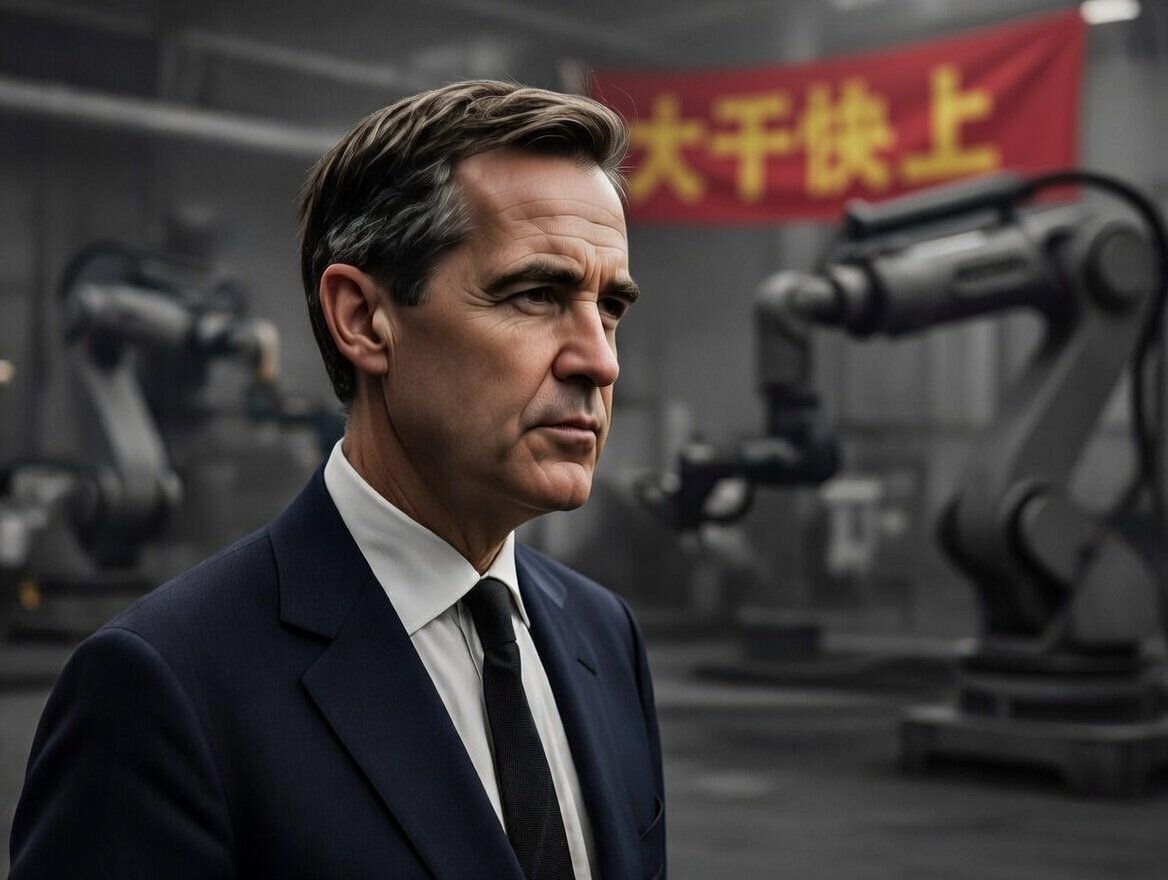
The architect in the shadows. Prime Minister Mark Carney’s plan relies on replacing old labour with new code.
IN THE UNION halls of Windsor and the assembly lines of Oshawa, the mood is febrile. Doug Ford, the populist Premier of Ontario, has been sounding the alarm with the subtlety of a foghorn, warning that an influx of Chinese electric vehicles (EVs) will “destroy” the Canadian automotive sector. To Mr Ford, and indeed to the executives of Detroit’s Big Three, the barbarian is not just at the gate; he is being handed a set of keys.
They are half right. The North American auto industry, as it has existed since the post-war boom—built on unionised labour, petrol engines, and protectionism—is indeed facing extinction. But the executioner is not in Beijing. He is in Ottawa.
Mark Carney, Canada’s Prime Minister, appears to be engaged in a gamble of breathtaking audacity. Whilst America builds tariff walls to keep the Chinese “Robot Belt” out, Mr Carney is quietly building a bridge to bring it in. His recent manoeuvre to scrap the federal EV sales mandate was greeted with cheers from legacy automakers, who saw it as a reprieve from burdensome regulation. Alas, they missed the pincer movement. By removing the artificial targets, Mr Carney has cleared the way for a far more ruthless disciplinarian: Darwinian competition.
The revelation from Mélanie Joly, the Industry Minister, that Canada is pursuing joint-venture assembly plants pairing domestic stalwarts like Magna, Linamar, and Martinrea with Chinese EV giants, constitutes the reveal of this strategy. The deal—a quota of 50,000 vehicles at a paltry 6% tariff, in exchange for lowered barriers on Canadian canola and crab—is a diplomatic hors d’oeuvre. The main course is the factory itself.
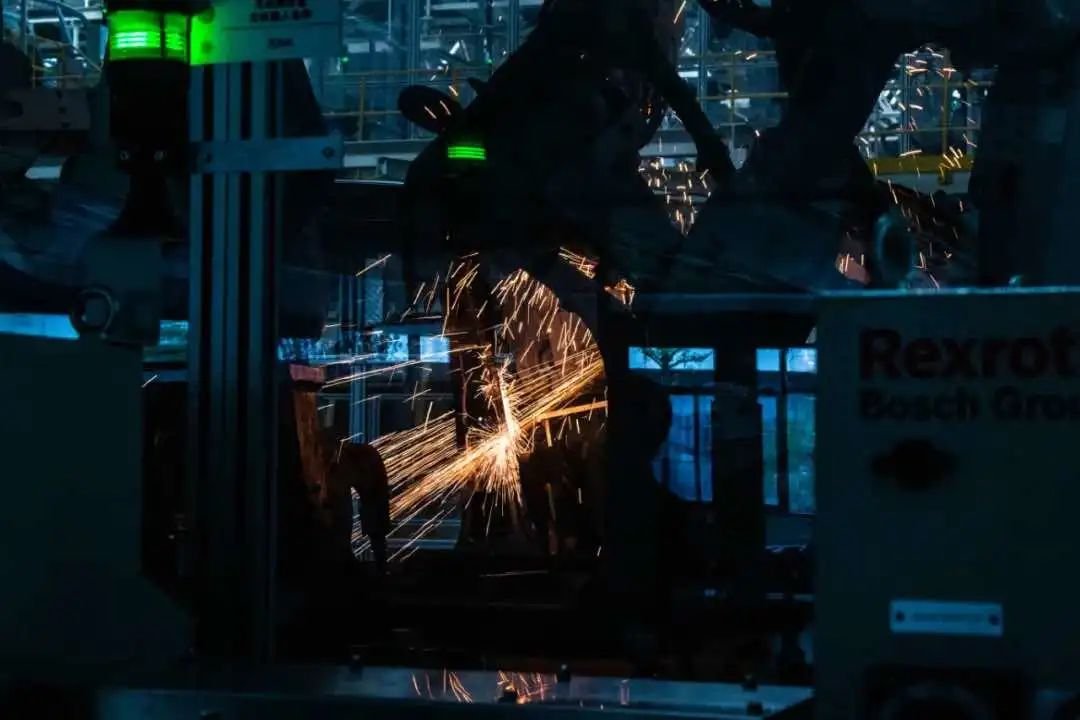 To understand Mr Carney’s “dark ambition”, one must look past the bonnet of the car and at the floor of the factory. For decades, Western manufacturing chased “labour arbitrage”, moving production to wherever hands were cheapest. That era is dead. The new game, mastered by the industrial clusters of Guangdong and Jiangsu, is “automation arbitrage”.
The “Robot Belt” does not rely on cheap sweat; it relies on cheap electrons and expensive capital. It utilises “dark factories”—fully automated nodes that run 24 hours a day, unbothered by pension liabilities, tea breaks, or the United Auto Workers (UAW). These facilities require no lighting for human eyes, hence the moniker. They are creatures of pure efficiency.
This is the “operating system” Mr Carney intends to download. By inviting Chinese and Korean capital to build on Canadian soil, he is attempting the G7’s first major industrial transplant. The logic is coldly rational. Canada cannot compete with the US on subsidies (the Inflation Reduction Act’s largesse is a game for deeper pockets), nor with Mexico on wages. But it possesses a unique alchemy: the hydro-electric abundance of Quebec and Ontario, combined with the trade access of the CUSMA agreement.
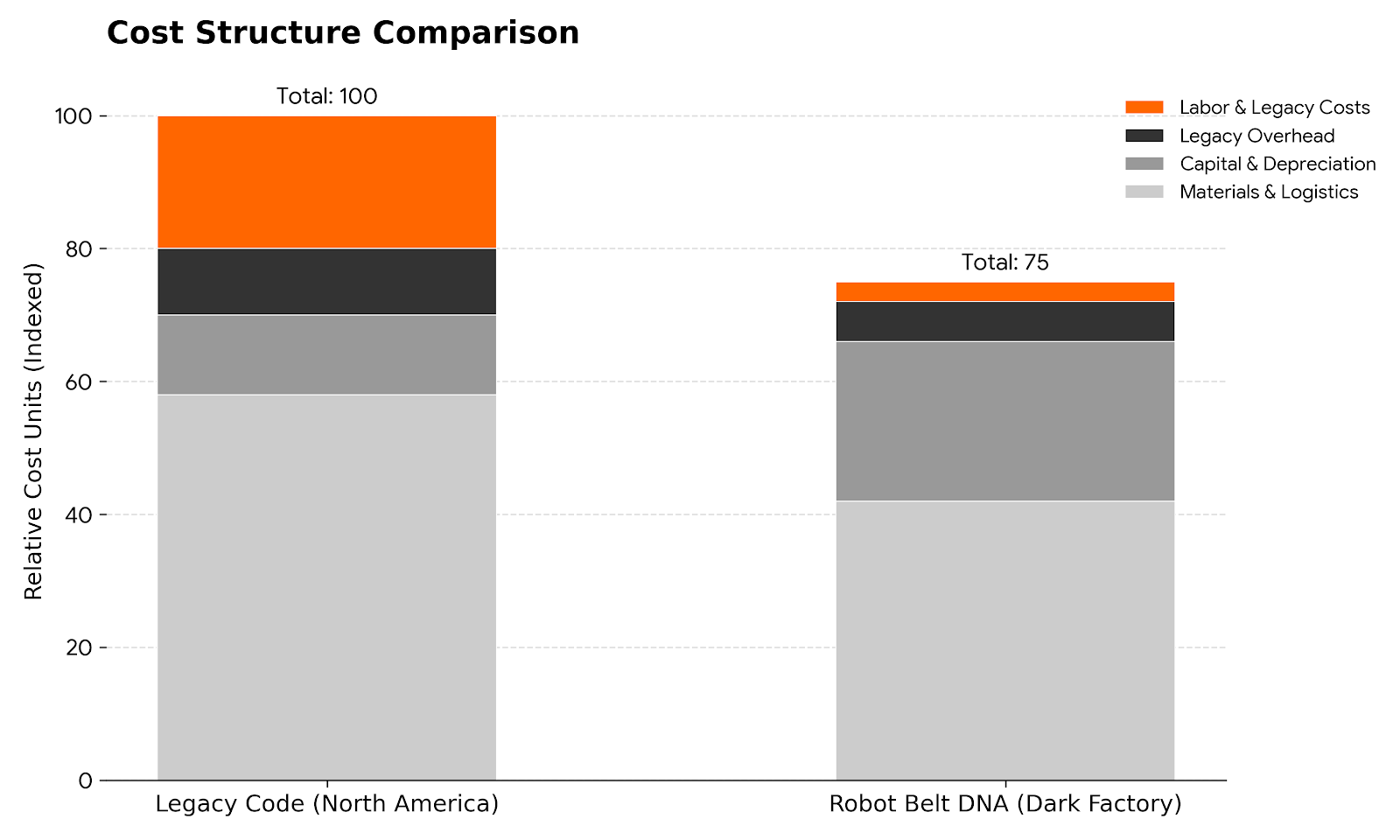
If one pairs Chinese process intellectual property (95% automation density) with Canadian clean energy, the result is a production cost structure that Detroit’s legacy plants simply cannot match. Mr Carney is not importing cars so much as he is importing a cure for “Baumol’s cost disease”—the tendency of labour-intensive sectors to see rising costs without rising productivity.
Mr Ford and the union bosses are right to be terrified. This strategy renders the old labour model obsolete. A “dark factory” employing 200 engineers and 2,000 robotic arms has little need for the legions of assembly workers that constitute Mr Ford’s electoral base. Yet, from Ottawa’s perspective, the alternative is not the status quo; it is irrelevance. The American strategy of shielding inefficient producers behind 100% tariff walls may buy time, but it guarantees stagnation. It creates a zoo for dinosaur industries, fed by the taxpayer.
Mr Carney’s wager is that the only way to save the Canadian car industry is to sever its reliance on the North American labour model. It is a tacit admission that the “Robot Belt” has won the argument on efficiency. Rather than fighting gravity, Canada is choosing to harness it.
To understand Mr Carney’s “dark ambition”, one must look past the bonnet of the car and at the floor of the factory. For decades, Western manufacturing chased “labour arbitrage”, moving production to wherever hands were cheapest. That era is dead. The new game, mastered by the industrial clusters of Guangdong and Jiangsu, is “automation arbitrage”.
The “Robot Belt” does not rely on cheap sweat; it relies on cheap electrons and expensive capital. It utilises “dark factories”—fully automated nodes that run 24 hours a day, unbothered by pension liabilities, tea breaks, or the United Auto Workers (UAW). These facilities require no lighting for human eyes, hence the moniker. They are creatures of pure efficiency.
This is the “operating system” Mr Carney intends to download. By inviting Chinese and Korean capital to build on Canadian soil, he is attempting the G7’s first major industrial transplant. The logic is coldly rational. Canada cannot compete with the US on subsidies (the Inflation Reduction Act’s largesse is a game for deeper pockets), nor with Mexico on wages. But it possesses a unique alchemy: the hydro-electric abundance of Quebec and Ontario, combined with the trade access of the CUSMA agreement.
If one pairs Chinese process intellectual property (95% automation density) with Canadian clean energy, the result is a production cost structure that Detroit’s legacy plants simply cannot match. Mr Carney is not importing cars so much as he is importing a cure for “Baumol’s cost disease”—the tendency of labour-intensive sectors to see rising costs without rising productivity.
Mr Ford and the union bosses are right to be terrified. This strategy renders the old labour model obsolete. A “dark factory” employing 200 engineers and 2,000 robotic arms has little need for the legions of assembly workers that constitute Mr Ford’s electoral base. Yet, from Ottawa’s perspective, the alternative is not the status quo; it is irrelevance. The American strategy of shielding inefficient producers behind 100% tariff walls may buy time, but it guarantees stagnation. It creates a zoo for dinosaur industries, fed by the taxpayer.
Mr Carney’s wager is that the only way to save the Canadian car industry is to sever its reliance on the North American labour model. It is a tacit admission that the “Robot Belt” has won the argument on efficiency. Rather than fighting gravity, Canada is choosing to harness it.
 The political optics are, naturally, treacherous. Washington will view this as a backdoor for Chinese manufacturing to enter the American market—a Trojan Horse filled not with soldiers, but with software and sensors. Ms Joly’s assurances about data security are intended to soothe these jitters. She speaks of software firewalls and labour standards, but the economic signal overrides the diplomatic noise: the rust belt is dying. Mark Carney intends to build a robot belt in its place.
Consider the “compliance trap” that the Big Three automakers found themselves in. They argued that Ottawa’s mandates forced them to sell EVs they could not profitably make. They were right. But their solution was to ask for the rules to be bent. Mr Carney’s solution is to change the physics of production. By inviting the competition onto Canadian soil, he shifts the pressure from artificial targets to survival. He is effectively saying to Ford and GM: “Fine, I won’t force you to sell EVs. But you now have to compete with a BYD factory down the street that runs on Canadian hydro and Chinese automation.”
This is the “Great Upgrade”. The North American auto sector is currently running on “legacy code”—bloated by pension costs, healthcare inflation, and outdated processes. Mr Carney’s gamble is to inject the DNA of the Robot Belt directly into the Canadian host. It is an industrial policy that looks less like protectionism and more like an organ transplant.
Critics will call it a betrayal of the western alliance. They will argue that allowing Chinese firms to set up shop in the heart of the North American industrial base is strategic suicide. Yet, one might ask what the alternative is. Is it strategic wisdom to let the Chinese monopoly on efficient manufacturing go unchallenged? Or is it smarter to internalise that efficiency, to learn from it, and eventually to rival it?
The “dark” strategy is also a political one. Mr Carney knows that announcing “I am replacing union jobs with automation” is electoral suicide. Thus, the tactical silence. He removes the noisy mandates to calm the unions and legacy OEMs, giving them a short-term victory. Meanwhile, he signs the investment deals that will make their current business models obsolete in the long term. It is a classic Carney manoeuvre: looking past the immediate horizon to the structural shift beyond.
In the end, Doug Ford is fighting to protect the jobs of the past. Mark Carney is positioning Canada for the margins of the future. It is a vision of a post-labour industrial base, where value is created not by the sweat of the brow but by the hum of the server and the whir of the servo-motor. It may be a “dark” ambition, but in a world of fierce industrial rivalry, it is the only way to keep the lights on.
The risk is that the transplant is rejected by the host. The unions may revolt; the Americans may close the border; the technology may not transfer as smoothly as hoped. But the status quo was a slow death by asphyxiation. Mr Carney has chosen a different path: a radical, high-stakes operation to replace the failing heart of Canadian industry. It will destroy the old way of doing things. But if it works, it might just build something capable of surviving the twenty-first century.
The political optics are, naturally, treacherous. Washington will view this as a backdoor for Chinese manufacturing to enter the American market—a Trojan Horse filled not with soldiers, but with software and sensors. Ms Joly’s assurances about data security are intended to soothe these jitters. She speaks of software firewalls and labour standards, but the economic signal overrides the diplomatic noise: the rust belt is dying. Mark Carney intends to build a robot belt in its place.
Consider the “compliance trap” that the Big Three automakers found themselves in. They argued that Ottawa’s mandates forced them to sell EVs they could not profitably make. They were right. But their solution was to ask for the rules to be bent. Mr Carney’s solution is to change the physics of production. By inviting the competition onto Canadian soil, he shifts the pressure from artificial targets to survival. He is effectively saying to Ford and GM: “Fine, I won’t force you to sell EVs. But you now have to compete with a BYD factory down the street that runs on Canadian hydro and Chinese automation.”
This is the “Great Upgrade”. The North American auto sector is currently running on “legacy code”—bloated by pension costs, healthcare inflation, and outdated processes. Mr Carney’s gamble is to inject the DNA of the Robot Belt directly into the Canadian host. It is an industrial policy that looks less like protectionism and more like an organ transplant.
Critics will call it a betrayal of the western alliance. They will argue that allowing Chinese firms to set up shop in the heart of the North American industrial base is strategic suicide. Yet, one might ask what the alternative is. Is it strategic wisdom to let the Chinese monopoly on efficient manufacturing go unchallenged? Or is it smarter to internalise that efficiency, to learn from it, and eventually to rival it?
The “dark” strategy is also a political one. Mr Carney knows that announcing “I am replacing union jobs with automation” is electoral suicide. Thus, the tactical silence. He removes the noisy mandates to calm the unions and legacy OEMs, giving them a short-term victory. Meanwhile, he signs the investment deals that will make their current business models obsolete in the long term. It is a classic Carney manoeuvre: looking past the immediate horizon to the structural shift beyond.
In the end, Doug Ford is fighting to protect the jobs of the past. Mark Carney is positioning Canada for the margins of the future. It is a vision of a post-labour industrial base, where value is created not by the sweat of the brow but by the hum of the server and the whir of the servo-motor. It may be a “dark” ambition, but in a world of fierce industrial rivalry, it is the only way to keep the lights on.
The risk is that the transplant is rejected by the host. The unions may revolt; the Americans may close the border; the technology may not transfer as smoothly as hoped. But the status quo was a slow death by asphyxiation. Mr Carney has chosen a different path: a radical, high-stakes operation to replace the failing heart of Canadian industry. It will destroy the old way of doing things. But if it works, it might just build something capable of surviving the twenty-first century.
Lights out. The “Robot Belt” model relies on automation arbitrage, not cheap labour.
A necessary transplant. Shielding legacy industries creates a zoo for dinosaurs; Mr Carney prefers evolution.
■