Wuhan Qizhi Huoxing Denglu Technology has closed two consecutive rounds worth tens of millions of yuan, with Lihe Venture, Optics Valley Capital, Ruijiang Investment and Wuhan Hi-Tech investing and early backer MiraclePlus re-upping. While the sector piles into large-parameter embodied base models, this Optics Valley startup took a different lane, building spatial intelligence for a brain-inspired robot scheduling architecture.
The funding raises a harder question for the field: is the bottleneck in embodied intelligence a weak model, or a missing centre that organises tasks?
Why a very young team went against the trend
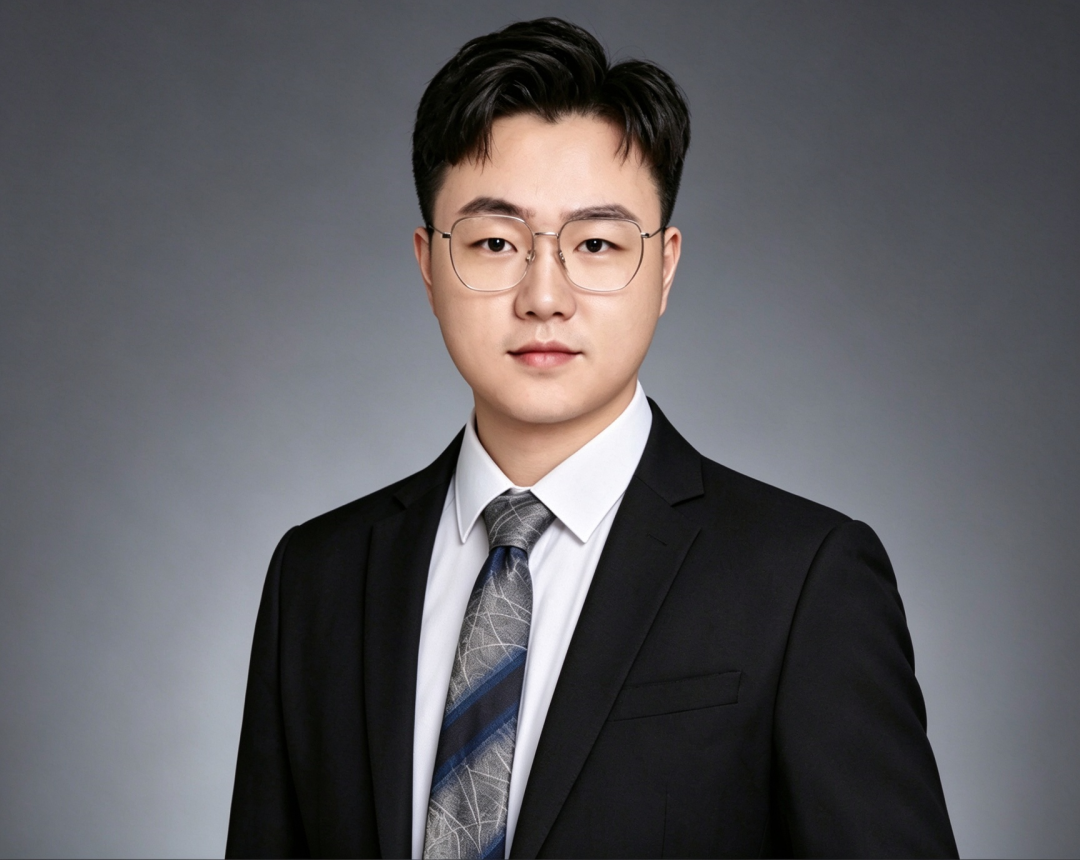
Huoxing Denglu registered in April 2025. Founder Zhu Yuhan, born in 2001, is a Wuhan University master’s student who took leave in March 2025 to build the company, turning competition-era technical insight into a commercial project. As an undergraduate he led teams to multiple national innovation-competition wins, and in late 2024 the commercialisation of four-legged robot dogs showed him an ignored gap: single-action demos dazzle, yet over hours of dynamic real tasks whole-machine stability drops fast.
The startup began with five members, mostly post-2000 researchers averaging 26 years old and largely holding master’s or doctoral degrees, based in the Modal Space community on Optics Valley’s Guanshan Avenue alongside other teams betting on differentiated routes. The investor list mixes an Optics Valley state platform with market venture funds, a bet on the path that skips parameter-only thinking. Where most projects iterate vision-language action models and equate model ability with complete machine intelligence, Huoxing Denglu from day one focused on the task-orchestration and memory-scheduling layer above the model.
What the brain-inspired architecture fixes
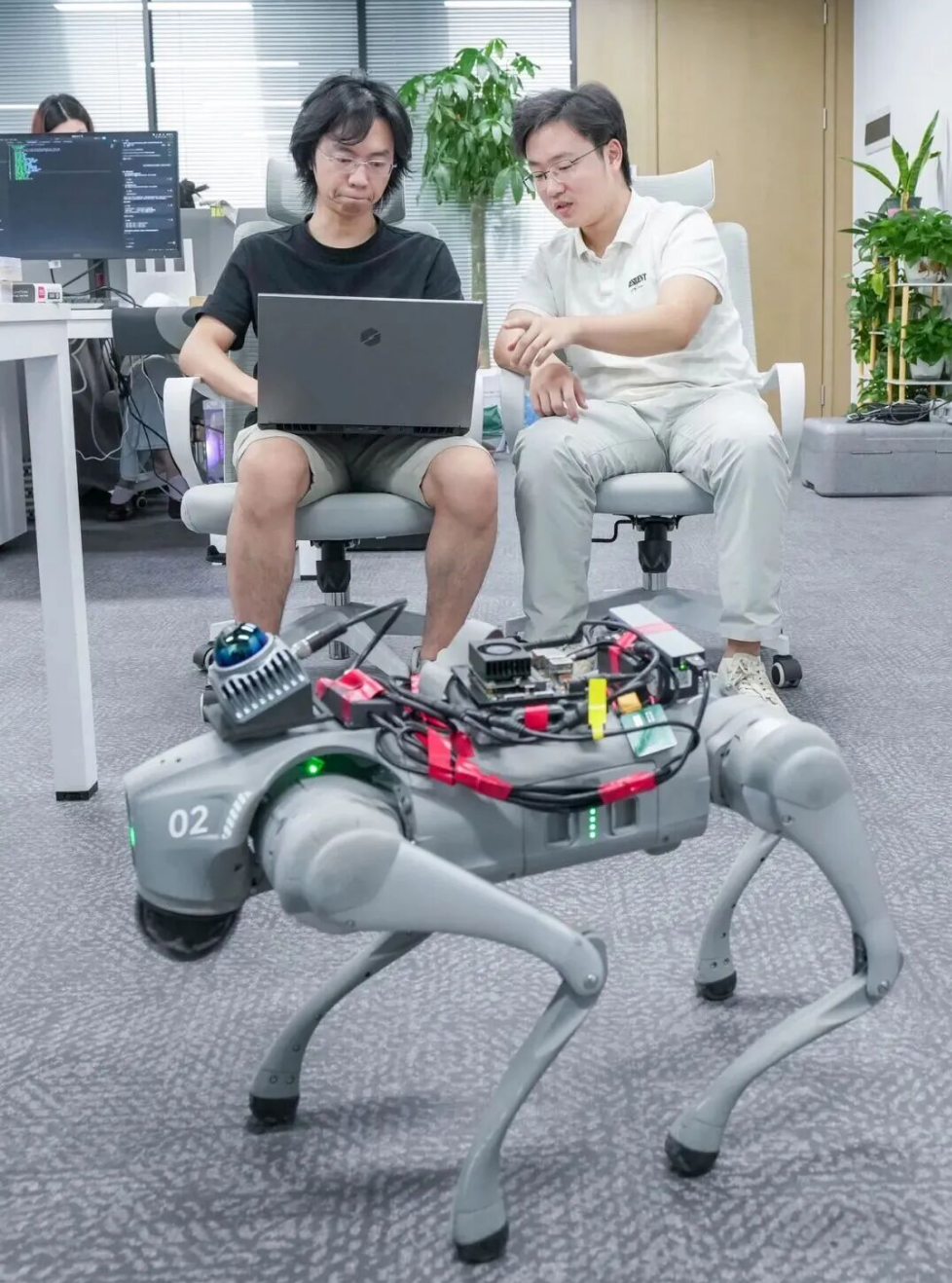
An industry habit holds that more parameters equal human-like intelligence, yet practitioners find simulation task success near 90 per cent collapses to 12 per cent after moving to real homes and open scenes. Stacking data and parameters cannot close that gap. Huoxing Denglu’s self-developed architecture does not copy neuron structure but builds an independent intelligent-organisation system atop base models.
The large model outputs single skills such as grasping, moving and recognising. This architecture acts as commander, holding spatial memory, recording task progress and self-adjusting when the environment shifts or execution fails, closing a loop of perceive, remember, orchestrate, call skills, correct from feedback. The firm has shipped three products, the Xingqing M1 spatial knowledge base, the Xingqun M2 coordination platform and the Xingmang M3 agent skill engine, and plans a full spatial-agent upgrade by late 2026.
From real-machine experience the team proposes Experience Scaling, refusing to treat the real world merely as a test ground after training. Mainstream training leans on simulation datasets that idealise friction, light and sensor noise, exactly the disturbances reality cannot fully fake. Huoxing Denglu has robots accumulate valid experience directly through real interaction, cutting reliance on massive simulation labels while keeping simulation useful rather than deploying straight from it.
Why not rush the factory floor
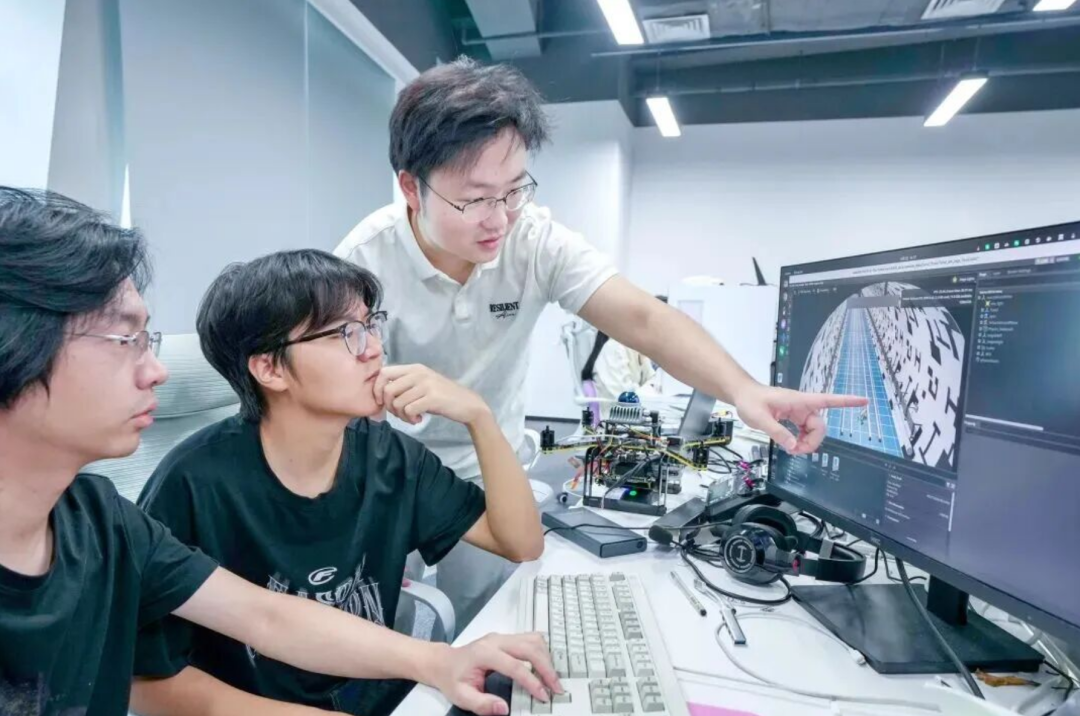
A common view holds that factories cash out first for embodied AI, since their structured space and preset tasks suit traditional automation. Huoxing Denglu counters that a robot entering a factory is not the same as embodied intelligence landing, because many factory jobs need no complex long-horizon self-organisation. The true test is commercial spaces, public areas, tunnels and forests, open non-standard scenes with random obstacles and shifting goals and no fixed script, the hardest slice of the field.
That is the core split from single-task robot schemes built for one fixed station and needing heavy re-debug on scene change. Huoxing Denglu reserves scene-extension ability from the base through spatial memory, letting a robot attempt complex long-horizon tasks with no human-written flow. The trade is higher real-machine iteration cost and a longer commercial proof than the factory allows.
What the funding signals
The tens-of-millions funding is a ticket on the surface and, beneath it, proof that embodied AI is leaving its frenzied parameter race. For two years many copied the large-language-model scaling logic, assuming bigger parameters meant stronger physical problem solving, yet physical interaction data costs far more to collect and each gain in task success multiplies that cost. Huoxing Denglu stands for a domestic architecture-first force that deepens memory, scheduling and task organisation above the model rather than chasing a larger base, complementing the model-first mainstream.
The route’s uncertainty is real: a brain-inspired scheduling architecture must prove itself through massive real-scene real-machine data, and open-environment commercialisation and cost control still lie ahead. Capital’s willingness to back a non-mainstream path shows the field now accepts multiple technical approaches. The finale of general robots will weigh not only model size but whether a system can steady run a full complex task loop in a noisy, uncertain physical world, and a 2001-born founder’s answer, whatever its fate, gives the sector a reference worth holding.
Editor’s note: This is an adapted translation of the original OFweek report. It has been trimmed and restructured for readability for an international business audience. The full original (in Chinese) is at https://robot.ofweek.com/2026-09/ART-8321205-12003-30704748.html.