On 23 September, Dongfeng Motor said its general manager Feng Changjun had travelled to Shenzhen on 22 September to meet Huawei founder Ren Zhengfei and senior Huawei representatives.
The two sides exchanged views on strategic new models jointly developed under the Huawei intelligent-automotive solution, including the Yijing X9, the Mengshi X700 and the Lantu Dreamer 9, and discussed deepening cooperation on future product definition, smart-technology deployment and marketing.
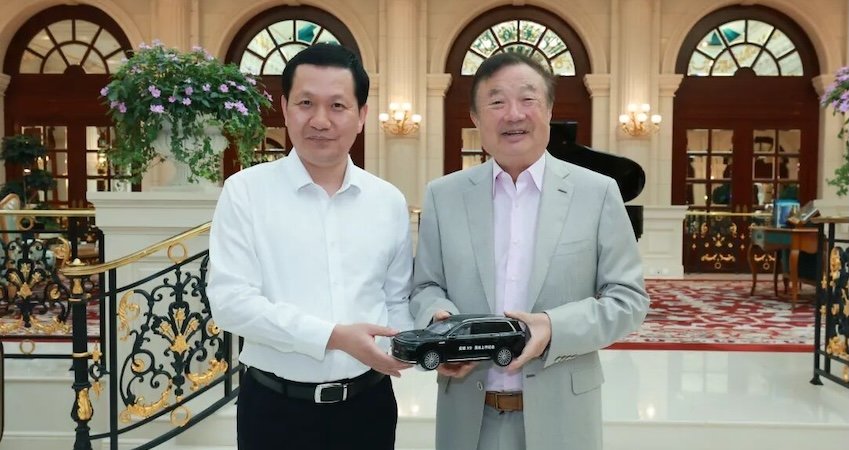
Ren told Dongfeng it had a strong car-making foundation and heritage, and that Huawei would not build cars itself but was glad to apply its strengths in intelligence to help Dongfeng build better vehicles. He also pressed the carmaker to improve customer service and its warmth toward buyers.
Dongfeng signalled the strategic partnership would continue to deepen, with the stated aim of building future smart vehicles and intelligent-mobility solutions together.
The meeting carries weight because of its timing. After Huawei adjusted its cooperation model with Seres on 15 September, Feng is the first carmaker executive to make a public visit to Ren, a signal that the Huawei ecosystem remains the anchor for several Chinese brands even as terms shift.
Four other partners responded. Jianghuai said it would firmly build good cars with Huawei and supply-chain partners. On 22 September its share price hit the daily limit, closing at 21.32 yuan, up 10.01 per cent, with market value back at 48.06 billion yuan. BAIC BlueValley said its positioning with the Xiangjie brand was unchanged and that an independent sales channel had already opened. SAIC said it would keep its model with the Shangjie brand while increasing resources. Lantu chief business officer Shao Mingfeng said the best cooperation was a strong-strong pairing that stays different in character, citing Huawei Qiankun assisted driving working with Lantu manufacturing.
For European carmakers and suppliers, the takeaway is that Huawei is hardening into the default intelligent-driving and cockpit platform across a widening set of Chinese brands, and that the competition is moving from who builds the car to who controls the software stack and the ecosystem around it. Non-Chinese incumbents face a partner whose standard, not any single model, is becoming the measure of a smart vehicle in China.
Editor’s note: This is an adapted translation of the original chedongxi report. It has been trimmed and restructured for readability for an international business audience. The full original (in Chinese) is at https://chedongxi.com/p/376738.html.