Four rounds in seven months
Euler Everything is moving at a speed that breaks the industry’s habits. On 12 October, the company confirmed it had closed a several-hundred-million-yuan angel-plus round with Chengyuanxiang Fund, Xineng Ventures, Xizhou International, Topband and Hony Capital. Since its March 2026 founding it has raised four times, with investors including Hillhouse Ventures, 5Y Capital, China Merchants Venture, SAIF, Jiuhe Ventures and Baidu Ventures.
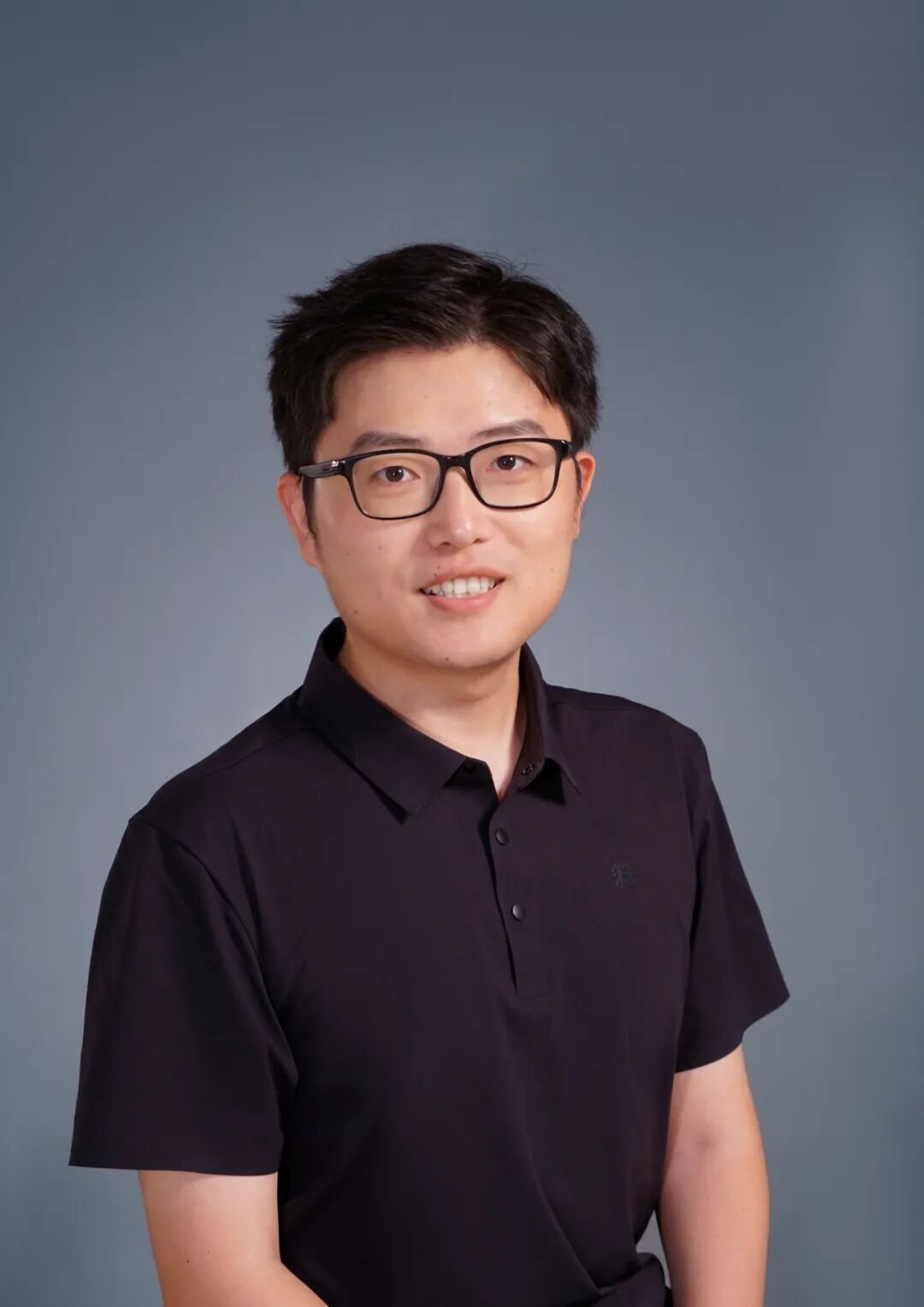
Founder Zhou Shunbo was the first lead of Huawei’s embodied-intelligence innovation lab and built its CloudRobo platform from zero to one. After leaving the big company he chose the most demanding route: send the robot home.
Why the home, and why so early
The decision is hard for outsiders to read. For years commercialisation circled industrial manufacturing, warehousing and commercial service, while the home offered the most complex environment, the most trivial tasks and the lowest tolerance for error. Toys on the table, clothes on the sofa, a misplaced item are all “accidents” a robot must handle. And the home ships no pre-written task list: every family’s layout, objects and habits differ.
Zhou’s counter-view is that the home and near-home scenes are the ideal place to gather the diverse data, long-horizon tasks and real human-physical feedback that embodied intelligence needs. Rather than promise a robot that does every chore on day one, Euler Everything wants a “raisable” product where willing early users train it and feedback turns into model and product ability.
Where the data comes from
Zhou, a robotics PhD from the Chinese University of Hong Kong, had built a hospital companion panda and worked on heavy-duty unmanned tug systems, then joined Huawei through its “Genius Youth” plan in 2020. At Huawei he touched 3C manufacturing, material transfer and picking with customers like SF Express and BYD. That taught him a lesson: a POC makes both sides happy, but the factory immediately asks about reliability, success rate, cycle time and ROI.
He argues industrial logic is all accounting and customisation and can never walk from factory to home, so someone must go deep on the home from day one. Euler Everything is building several data sources: human-centred capture where wearers record real actions, and industry partnerships that bridge hotel and home. China Merchants Venture’s apartment assets become a transition scene closer to a real home, and a 2027 partnership with professional home-service firm Hao Kang will produce high-quality home data using Hao Kang’s cleaning, storage and cooking SOPs.
From ready-made to raisable
The product logic splits in two. One school ships a fully trained robot. The other lets users teach new skills as they go. Euler Everything chose the second. A geek who wanted the robot to tap a wooden fish for stress relief is a perfect example of a personal task absent from any base-model list, yet valuable to that user.
For tasks inside the base model, Zhou has said a user may need only ten to a few dozen demonstration samples and some post-training to lift success to about 90 to 95 per cent. For tasks fully outside it, a smaller policy model handles the specific action. The first batch of ready tasks the team picked shares three traits: high frequency, low cost of failure and technical feasibility today, with flat-surface tidying as the priority.
Editor’s note: This is an adapted translation of the original OFweek Robotics report. It has been trimmed and restructured for readability for an international business audience. The full original (in Chinese) is at https://robot.ofweek.com/2026-10/ART-8321203-12005-30706768.html.