Maibu Robotics, a Shenzhen maker of rehabilitation exoskeletons, has closed a strategic round of close to RMB 100 million from a CITIC Securities investment vehicle, according to 36Kr. The money goes into product iteration, brain-computer interface work and coverage of the last mile from hospital to community to home.
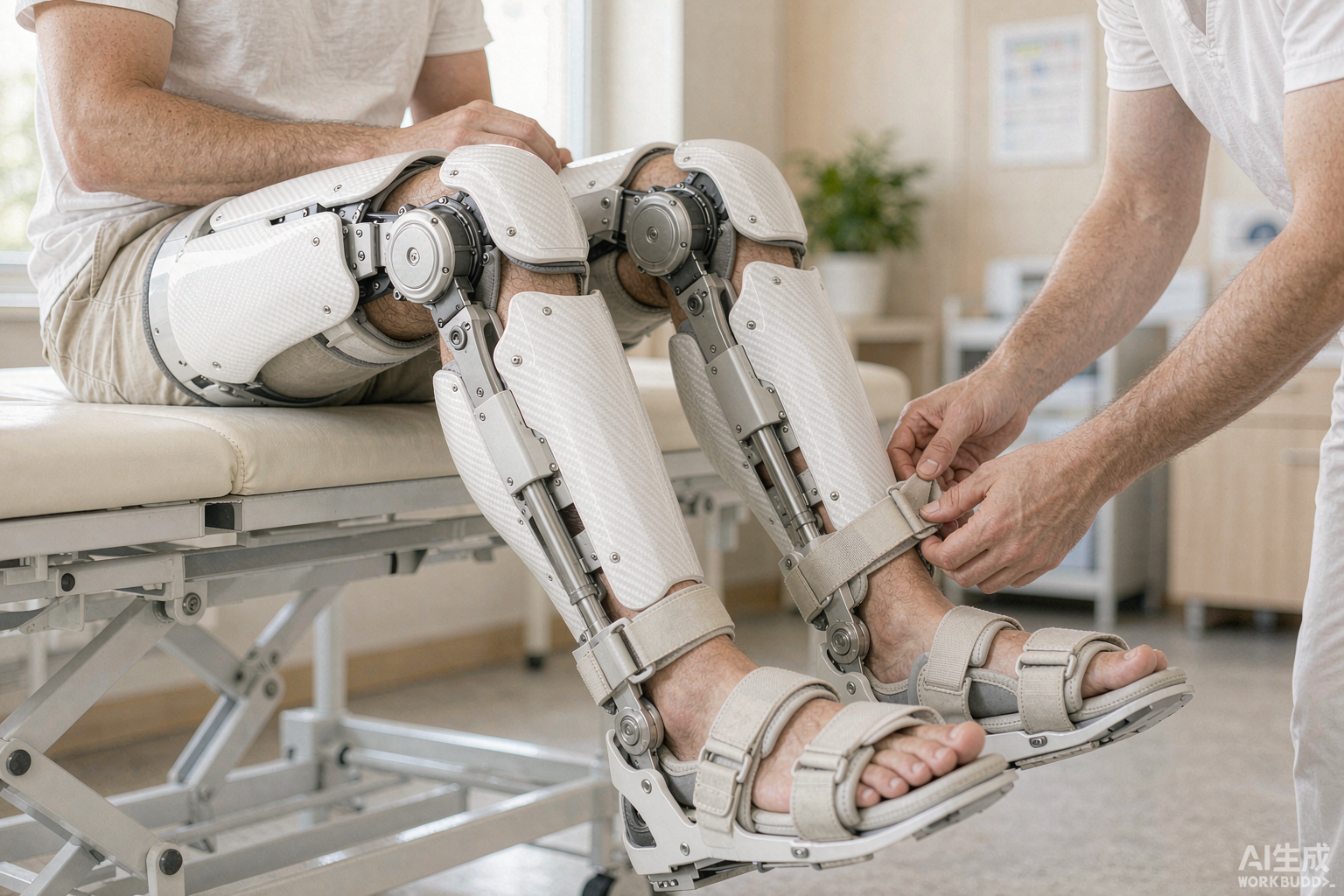
The company was founded in 2016 by a team of returning overseas PhDs and builds around flexible actuator human-machine interaction. Its range covers the H and A series, a C series for paediatric lower-limb rehabilitation, a 3,000-step wellness line and a daily walking MAX line, spanning in-hospital rehab, home care and everyday mobility. It holds more than 200 patents, its core products carry Class II NMPA registration and are in volume distribution.
Lenovo Capital has invested in four consecutive rounds. Taiyou Fund, Sihuan Pharmaceutical, Xingchen Fund, Dening Industrial and Shangshan Capital are also shareholders. Chen Kangning, the new chief executive, came from Johnson & Johnson and other multinational medtechs, with a record in product registration and channel building.
The demand numbers are the argument
Revenue grew close to 200 per cent in 2025, and overseas markets supplied more than a third of it. IDC puts China’s exoskeleton market above RMB 1.6 billion in 2025 on shipments of about 26,000 units, with consumer assistance taking more than 70 per cent of volume and medical rehabilitation carrying most of the value. The Ministry of Commerce reports demand for smart exoskeleton devices up 458.4 per cent year on year in the first half of 2026, and JD’s retail data shows transaction value up more than 15,000 per cent over the same period.
Policy moved with the market. The National Healthcare Security Administration’s 15th Five-Year Plan for medical security names smart exoskeletons among the devices to be promoted in long-term care.
Exoskeletons are one of the few robotics categories where the buyer, the payer and the user can all be satisfied today. Hospitals pay for rehabilitation outcomes, families pay for mobility, and the device has a regulator-approved route into reimbursement. That is a better commercial position than most humanoid companies hold.
The constraint is not demand. It is fitting a device to a body in a clinic that has fifteen minutes and one physiotherapist.
Editor’s note: This is an adapted translation of the original OFweek report. It has been trimmed and restructured for readability for an international business audience. The full original (in Chinese) is at https://robot.ofweek.com/2026-08/ART-8321203-8120-30700672.html.