Hai Robotics updated its Hong Kong listing application on 13 September, seven months after its first filing in February. If it clears the hearing it becomes the first case-handling robot company listed in Hong Kong.
The numbers behind the filing are the story.
Fifteen rounds and a RMB 4.1 billion war chest
Before reaching the exchange, Hai Robotics closed 15 equity rounds totalling about RMB 4.13 billion, the last a Pre-IPO+ in January 2026. The seed cheque came from XBOT PARK, the fund set up by Li Zexiang, Gao Bingqiang and Gan Jie. Best Inc, Legend Star, Source Code Capital, Sequoia China, DG Capital, Walden International and General Atlantic followed. The E round left the company with a post-money valuation of RMB 10.9 billion.
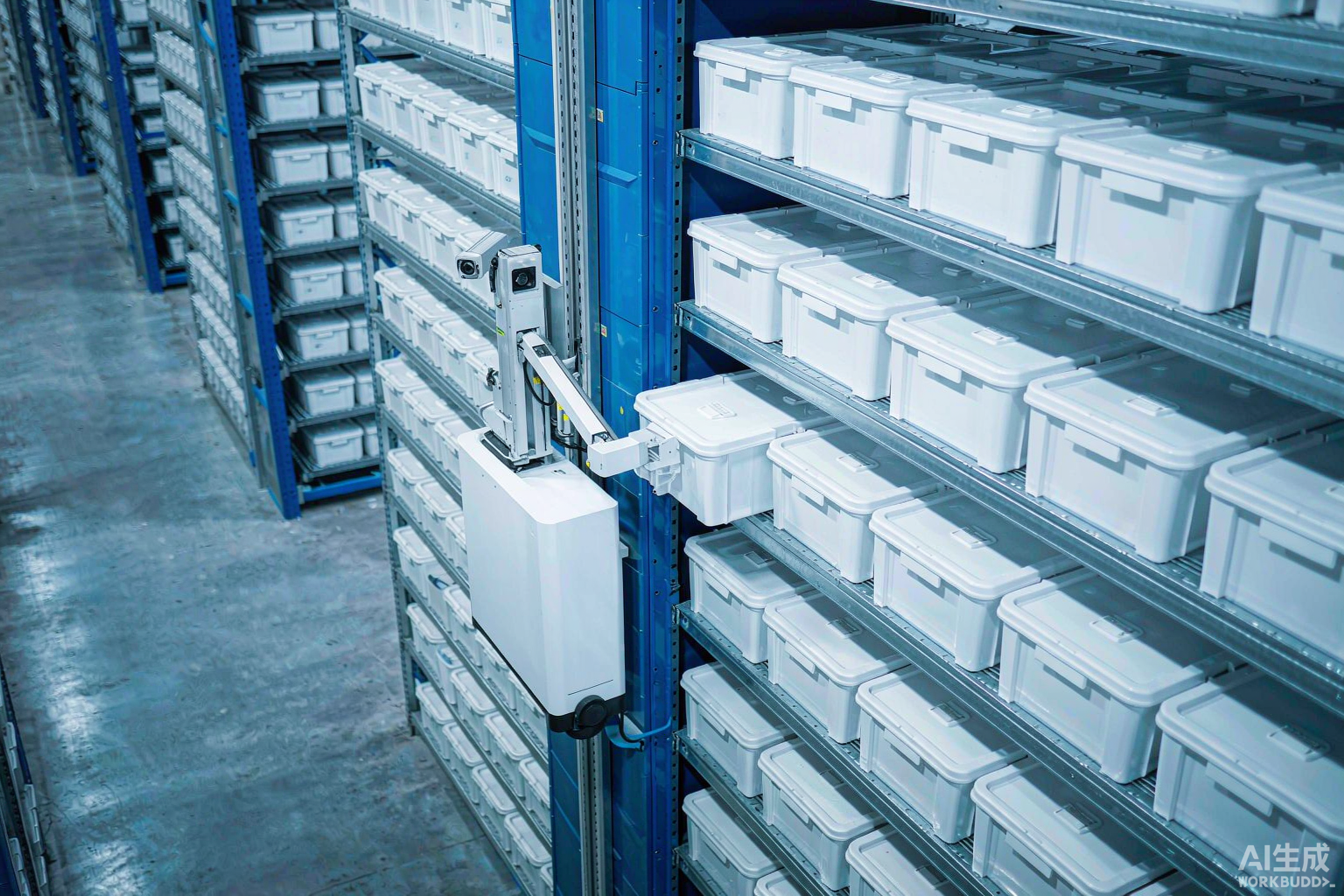
Founded in 2016 by Chen Yuqi with Fang Bing and Xu Shengdong, whom he met at Hong Kong Polytechnic University and ETH Zurich, the company pioneered the autonomous case-handling robot: a machine that climbs the racking face and pulls one tote at a time, so a warehouse gains density without a structural rebuild. Li Zexiang is chief adviser.
The product ladder runs from HaiPick System 1 in 2017 to HaiPick Climb in 2025, which reaches 15 metres of storage height and was the first single-side climbing ACR in volume commercial use. Research spending was RMB 1.03 billion across 2023 to 2025 and another RMB 249 million in the first half of 2026. Patent applications reached 2,495 by the end of June.
Growth and losses, both improving
Revenue moved from RMB 807 million in 2023 to RMB 1.36 billion in 2024 and RMB 2.02 billion in 2025, then RMB 1.12 billion in the first half of 2026, up 70.2 per cent. New orders in that half reached RMB 2.35 billion, up 48.8 per cent and close to 80 per cent of the whole of 2025. The order book passed RMB 4.1 billion.
Net losses ran at RMB 1.01 billion in 2023, RMB 1.26 billion in 2024 and RMB 828 million in 2025. Adjusted losses were RMB 695 million, RMB 544 million and RMB 468 million in those years, and RMB 208 million in the first half of 2026 against an unadjusted RMB 431 million. The cumulative loss over three and a half years is RMB 3.52 billion.
Product mix has rotated quickly. System 1 supplied 92.8 per cent of revenue in 2023; in the first half of 2026 it was 29.7 per cent on RMB 332 million, while System 3 delivered RMB 607 million, or 54.3 per cent, and the newer Climb contributed RMB 149 million.
Customers include seven of the world’s ten largest apparel and fashion groups and seven of the ten largest third-party logistics providers, among them Anta, Li Ning, L’Oréal, Kohler, Philips, Maersk and Panasonic Logistics. More than 2,000 projects have been signed and more than 1,600 delivered.
Warehouse automation is a working business with a punishing capital cycle. A decade of equity bought density, patents and a customer list. The listing is the point where that trade has to convert into operating cash.
Fifteen rounds of private money is a vote on a market. A public filing is a price on the company.
Editor’s note: This is an adapted translation of the original OFweek report. It has been trimmed and restructured for readability for an international business audience. The full original (in Chinese) is at https://robot.ofweek.com/2026-09/ART-8321202-8120-30703100.html.