UBtech and Xiamen C and D signed a strategic cooperation agreement in Xiamen on 11 October to form a joint venture and build a Fujian headquarters for the company’s U-Science technology centre. The stated target is no fewer than 10,000 UBtech humanoid robots sold by 2030.
The number is the least interesting part of the deal. What matters is who is buying and how the sale is structured.
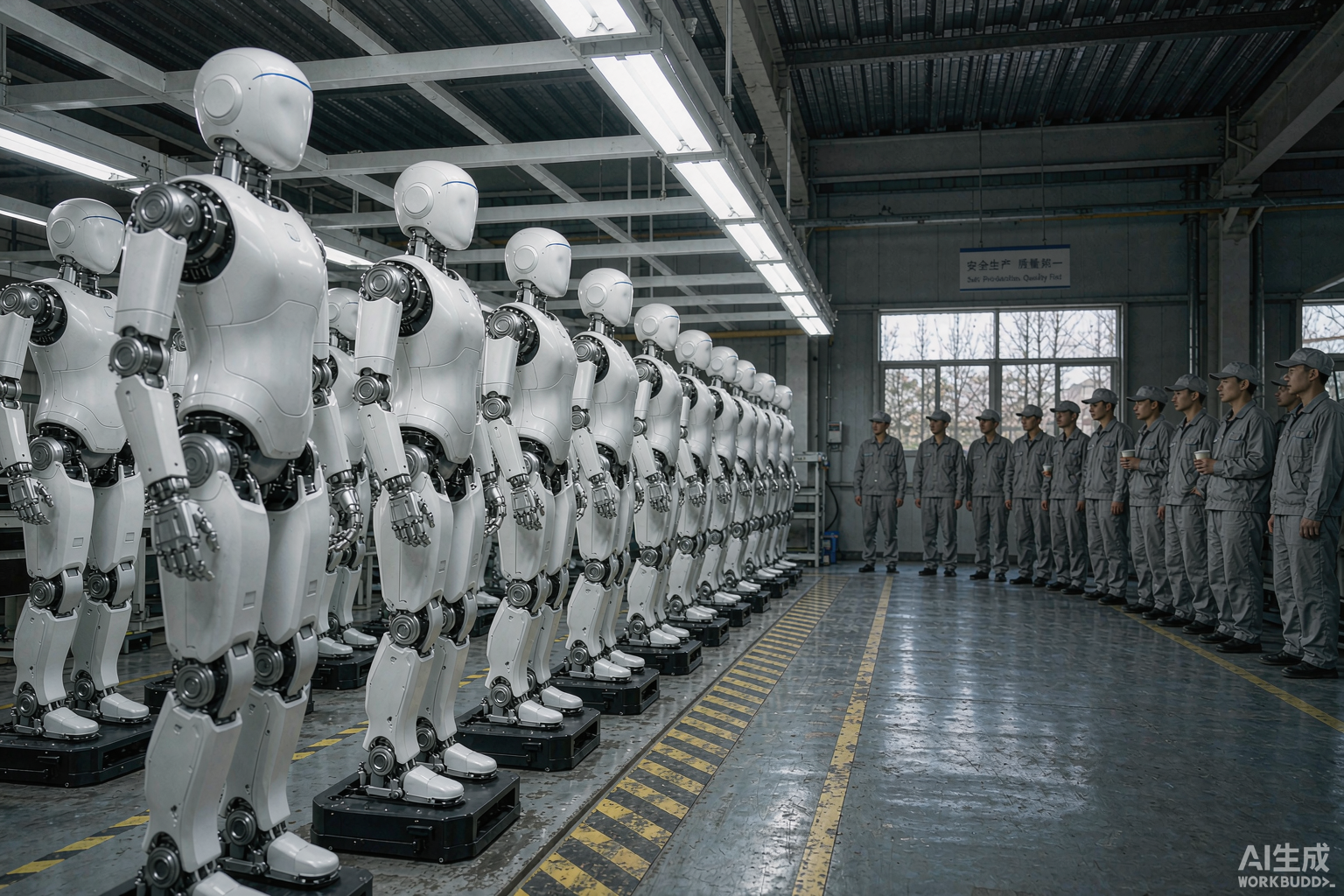
The old model was a door-to-door business
For years, humanoid robots were sold one customer at a time. UBtech founder Zhou Jian personally toured dozens of factories to put Walker S units into real production trials. The model worked, slowly, because a full-size humanoid costs several hundred thousand yuan at the low end, decisions take months and the customer needs a plan for operating it.
The numbers explain the friction. UBtech sold 921 full-size embodied humanoid robots in the first half of 2026 for RMB 590 million of revenue, an average of roughly RMB 640,000 each.
What the joint venture actually sells
The joint venture wraps hardware in a service stack: maintenance, technician training, application development, shared leasing and event operations, run as a single industrial platform. Leasing lowers the entry cost, maintenance answers the service worry, training answers the staffing worry. The pitch is the question every buyer asks: who operates it, how, and what happens when it breaks.
That framing reflects an industry consensus. Volume delivery is no longer the constraint. Scenario fit and software capability are. The winners will be the companies that can put a robot into a job and keep it there.
A company deliberately shrinking its old self
UBtech’s first half shows how far the pivot has gone. Full-size humanoid revenue rose 1,445 per cent year on year and its share of group revenue climbed from 6.1 to 46.5 per cent, making it the largest source of income. Education robots fell about 49 per cent.
Management called 2026 the year of large-scale commercialisation and raised the Walker S shipment target from 2,000 to 3,000 units up to 5,000, with capacity planned for 10,000 a year. The cost is visible: a RMB 339 million interim loss, following large cumulative losses in prior years. Huatai and JPMorgan cut target prices, with JPMorgan moving from overweight to neutral and cutting its target from HK$118 to HK$74.
The counterparty has its own reasons. Xiamen C and D booked RMB 275.3 billion of supply chain revenue in the first half, but property revenue fell more than 40 per cent and net profit attributable to shareholders was negative RMB 162 million. Humanoids give a pressured conglomerate a policy-aligned growth story plus a use for its logistics, security and public-space assets.
Ten thousand units against a 432 per cent market
Ten thousand units by 2030 averages about 2,500 a year. Global humanoid shipments reached close to 25,000 units in the first half of 2026, up 432 per cent, and Frost and Sullivan puts UBtech first worldwide with a 24.8 per cent revenue share, so the target is not outlandish against the market.
The harder test is conversion. Shipment statistics still include research purchases and demonstration units, and paid commercial orders are a smaller subset. Generalisation in real scenes is harder still: one reported trial had a humanoid tightening nuts for three hours at a 90.2 per cent success rate, against above 99 per cent for a skilled worker or a conventional industrial robot.
UBtech has also concentrated its growth on a single model, the Walker S2, while the Walker C1, Walker S3 and consumer U1 have not reached volume. Citi opened a 90-day negative catalyst watch, arguing the company may not turn profitable in 2026 even after including profit contributions.
For Shenzhen’s robotics cluster, the significance is structural. The city’s supply chain is no longer the binding constraint on humanoid output. The constraint sits with customers who must justify a RMB 640,000 machine on a balance sheet, which is why the next phase of this industry will look more like equipment leasing than like hardware retail.
Editor’s note: This is an adapted translation of the original OFweek report. It has been trimmed and restructured for readability for an international business audience. The full original (in Chinese) is at https://robot.ofweek.com/2026-12/ART-898890-12003-30706534.html.