Tesla’s Optimus programme is the most watched robot line in the world and the slowest. Output was a few dozen units a week in the second quarter of 2026 and reached a few hundred a week in August. Management’s target is 1,000 a week by year end against a long-run plan of 20,000 a week.
Upstream, the schedule looks nothing like that. Suppliers in the Yangtze River Delta are already building to a two-year ramp: Tesla has issued formal purchase orders to core transmission suppliers and started volume stocking, with 2026 capacity guidance in the 100,000-unit range and a 2027 plan annualising at 200,000.
The capacity map
Actuator assemblies: Sanhua Intelligent Controls has broken ground on a RMB 3.8 billion base in Hangzhou that is due to reach one million units of capacity in 2026, while Tuopu Group’s RMB 5 billion Ningbo site has two drive lines running at 300,000 sets a year. Both entered customer assembly in August.
Screws: Hengli holds 60 to 70 per cent of large-screw share with Mexican capacity ready in the third quarter. Rongtai carries more than RMB 20,000 of content per unit, and Wuzhou Xinchun shipped 5,000 sets of screws in September alone.
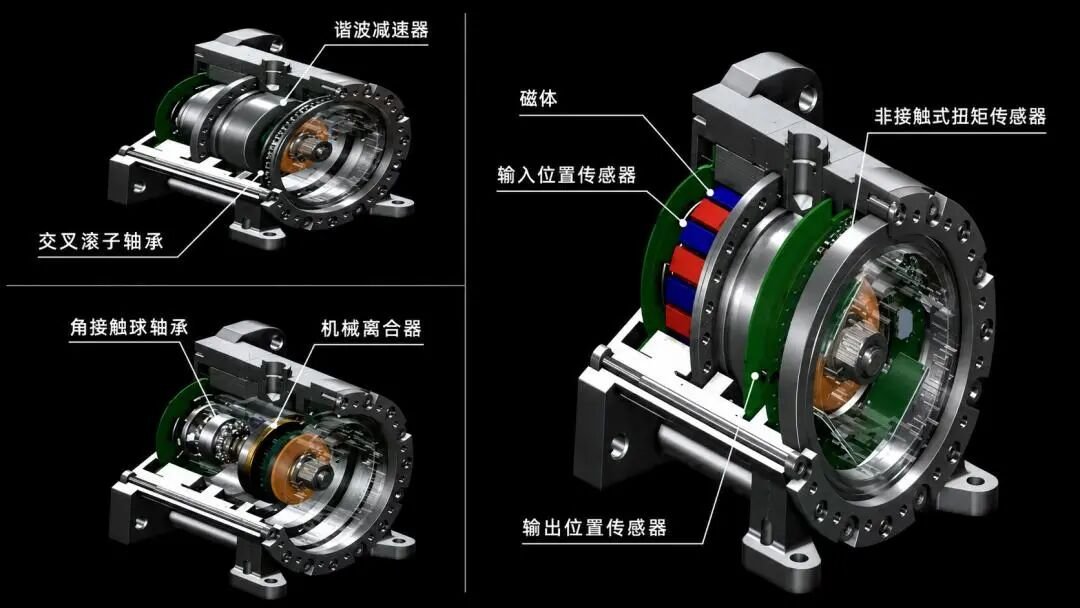
Harmonic drives: Simei Zhiqu’s July order book implied close to 100 units a week, with its Thailand plant starting volume in August and an estimated share above 50 per cent. Structural parts supplier Kesen has been asked to prepare 2,000 to 3,000 units a week of delivery capacity in Texas.
Overseas plants in Mexico, Thailand and the United States have become the entry ticket to holding share, which is a strange outcome for a product that has not yet shipped at scale.
A robot gets 72 per cent cheaper and its parts get more profitable
Unitree’s average humanoid selling price fell from RMB 593,400 in 2023 to RMB 167,600 in 2025, a drop of almost 72 per cent in two years. The G1 base model now sells for RMB 85,000, and the dual-arm R1 starts at RMB 26,900.
That is not loss-leading. Core component localisation climbed from under 20 per cent to between 75 and 90 per cent. For RV reducers, localisation went from 18.7 to 72 per cent and the purchase price for the same specification fell from RMB 1,280 to RMB 410.
Margins at the component level barely moved. Harmonic reducers run 40 to 55 per cent gross margin, planetary roller screws 50 to 70 per cent, six-axis force sensors 50 to 70 per cent, leaving component makers at 40 to 65 per cent overall.
Laifu Harmonic makes the mechanism visible. Shipments reached 239,500 units in the first half, up 112 per cent. Unit cost fell about 27 per cent to RMB 351 from RMB 482, yet gross margin rose from 20.7 to 29.6 per cent. Falling cost with rising margin means bargaining power, not desperation.
Three reasons the parts makers are winning
First, robot design is not standardised. More than 140 complete-robot companies specify different joint modules, actuators and sensor layouts, so every customer needs custom parts while the pool of qualified volume suppliers stays small.
Second, the slow ramp protects order visibility. Tesla’s delays stretch supplier schedules to 2027, and capacity guidance is issued annually, so a slower customer means a longer runway that later entrants cannot easily jump.
Third, capital has already voted. Roughly 70 per cent of 2026 humanoid funding went to component companies rather than complete-robot builders. Gaogong’s review of 27 listed component suppliers found first-half reports replacing sample and small-batch language with volume delivery and order backlog.
Why this is a phase, not a structure
High component margins are a customisation premium, and customisation premiums end when designs converge. Several robot makers are developing motors, reducers and joint modules in-house while still buying externally, which weakens future order certainty. Green Harmonic ran at 67.76 per cent utilisation in 2025, proof that not every supplier is sold out.
The three measures that matter are utilisation, order visibility and the slope of localisation. Localisation has already run from under 20 to 75 per cent, and the remaining quarter sits in high-end sensors and AI training chips, which are the hardest to substitute.
Every robot builder is telling a story about the future. The parts makers are invoicing the present, and that arbitrage closes on the day Optimus reaches tens of thousands of units a week.
Editor’s note: This is an adapted translation of the original OFweek report. It has been trimmed and restructured for readability for an international business audience. The full original (in Chinese) is at https://robot.ofweek.com/2026-10/ART-8321201-8420-30707849.html.