Topstar reported its third-quarter results on 26 October with revenue and profit both up and cash flow improving sharply. For the nine months to September the Shenzhen-listed company posted revenue of RMB 1.969 billion, up 16.68 per cent, net profit attributable to shareholders of RMB 146 million, up 196.38 per cent, and operating cash flow of RMB 352 million, up 88.90 per cent.
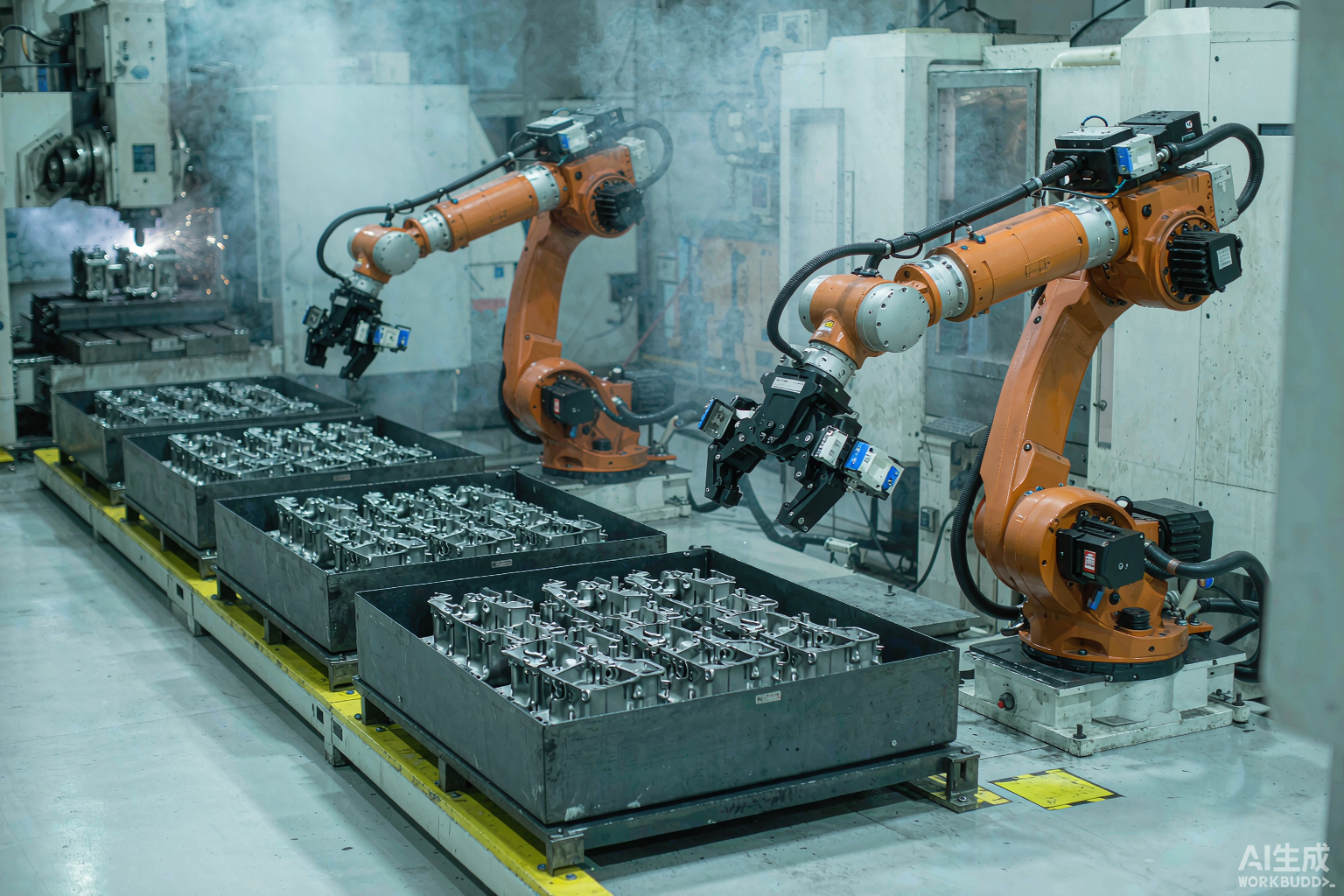
The growth is concentrated in one segment. Industrial robots and automation application systems generated RMB 1.028 billion, up 88.83 per cent, at a gross margin of 31.97 per cent, and now account for more than half of group revenue. Orders came to roughly 10,000 units against about 8,600 shipments. Within that, revenue from self-manufactured multi-joint robots rose 33.25 per cent and order volume rose about 34.44 per cent.
The machine tool segment tells the more interesting story. Order volume reached about 390 units, up 35.89 per cent, and shipments about 350 units, up 57.27 per cent, producing revenue of RMB 339 million, up 50.39 per cent. The driver, in the company’s own account, is machining demand for humanoid robot components: joints, hips, chest cavities and limbs.
The humanoid money is upstream
That is the pattern worth watching across Chinese manufacturing. Before a humanoid can be sold, its parts have to be machined to tolerance, and the machine tool builders are booking that work now. Injection moulding equipment, the third segment, contributed RMB 393 million, up 12.91 per cent, at a 36.85 per cent gross margin, with auxiliary equipment and automated feeding systems up 19.13 per cent on overseas expansion.
Topstar’s positioning rests on a claim about where physical AI actually earns. A 2026 global embodied intelligence commercialisation study cited by the company puts the market at USD 6.2 billion in 2026, rising to USD 119.3 billion by 2035 at a 39 per cent compound rate, with industrial manufacturing taking 75 per cent of order value. The China Robot Industry Alliance has found that roughly 40 per cent of repetitive manual work in manufacturing is still not automated, concentrated in flexible changeovers, sorting and precision assembly.
The company says it has reached more than 200,000 potential customers and served 15,000 manufacturers, which is the asset that matters if the argument is that scene data rather than model architecture decides who wins.
Products follow the scene, not the other way round
Its industrial humanoid, Xiaotuo, is rated at plus or minus 0.05mm repeat positioning accuracy with a 20kg payload, and is in small-batch validation in injection moulding and 3C handling. Its embodied workstations, for flexible sorting and palletising, had generated more than RMB 20 million of revenue according to its Hong Kong filing.
The sequencing is deliberate: workstations that sell today fund humanoids that will sell later, and the cash from mature segments pays for the research. It is a less exciting story than a humanoid demo, and a considerably more durable one.
Editor’s note: This is an adapted translation of the original OFweek report. It has been trimmed and restructured for readability for an international business audience. The full original (in Chinese) is at https://robot.ofweek.com/2026-10/ART-8321206-8120-30708830.html.