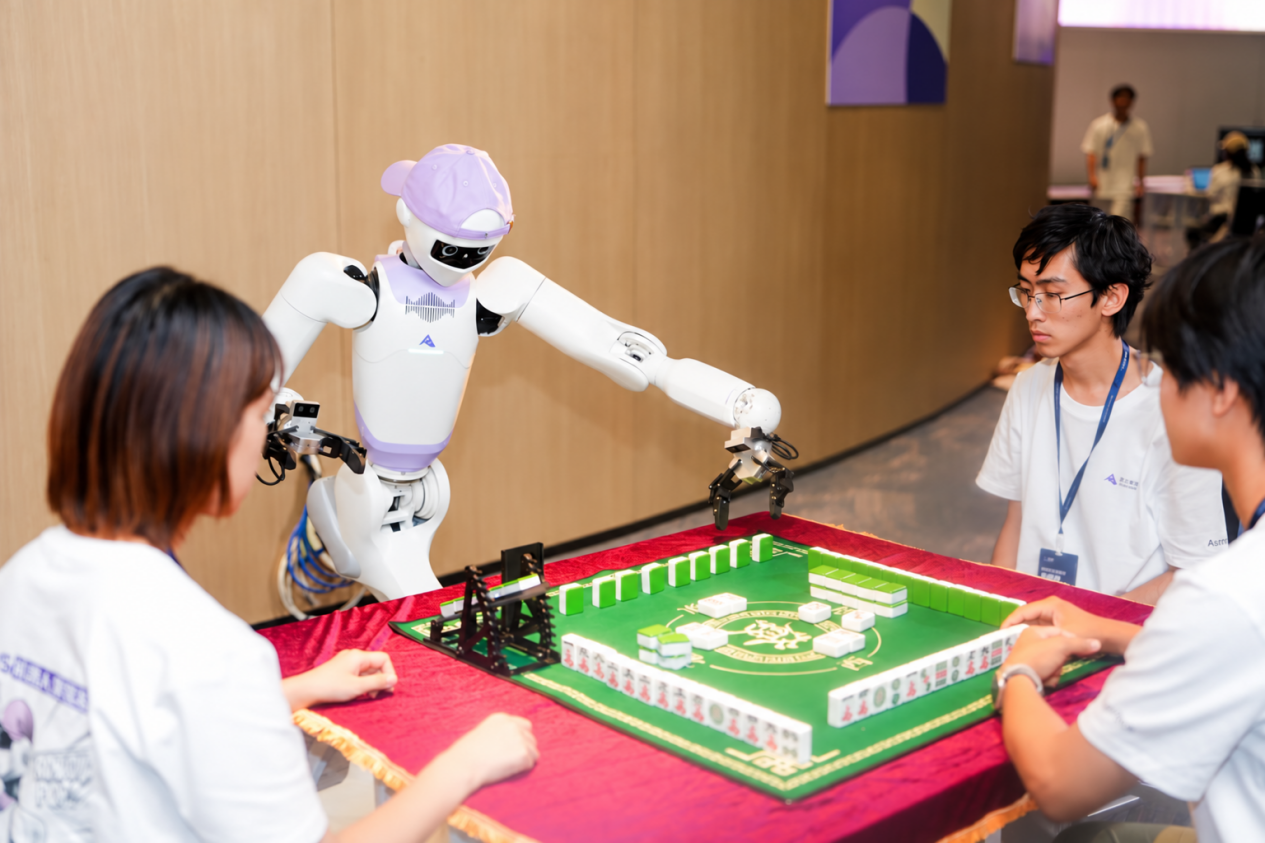
The final of the Astribot OS robot hackathon closed in Shenzhen on 25 October. Seventeen teams worked 36 hours at the final, and 16 apps made it from simulation to a working robot. The real-hardware rate was 94 per cent.
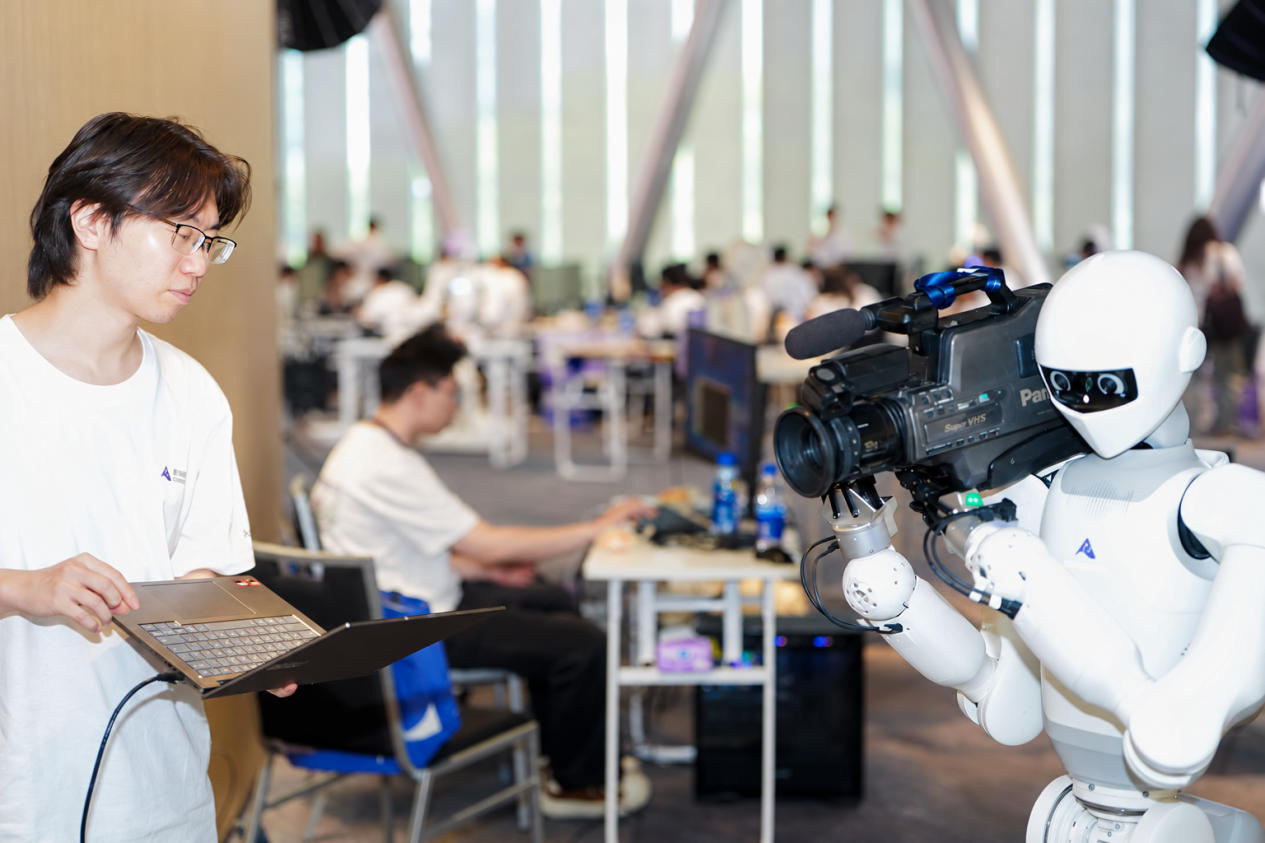
Remote cat-litter scooping, plant watering, camera tracking, brush calligraphy: contestants used the AOS toolkit together with large models such as GPT to turn an idea into an app and then prove it on a physical machine. The organisers read the results as evidence that a one-sentence app is now feasible, and as the first outline of an app-store ecosystem for robots.
What the operating system actually does
Astribot OS packages perception, mobility, manipulation and interaction into Meta packages and Skills that can be called and combined, and keeps them aligned with current AI models and agents. A creator does not write low-level code. Starting from a one-line requirement, they combine capabilities, design a flow, test in simulation and validate on hardware.
Across the Beijing round, the Shenzhen round and the final, 47 teams took part, with creators from Beijing, Shanghai, Shenzhen, Hong Kong and Macao. Students, product managers from large technology firms and independent developers all turned up.
General models have made it easier to understand a requirement, generate code and plan a task, and vibe coding lets more people start from a description. But once the output has to act in the physical world, a simple task still involves task planning, interface adaptation, motion control, exception handling and on-machine debugging. That is the wall most ordinary developers cannot climb.
The winning apps
The champion team, Remote Avatar, used the Meta packages to close a two-way real-time control link between phone and robot in 36 hours, running litter scooping, watering, pouring, parcel collection and conversation on real hardware. The two runners-up, GowithFlow and Brush and Snake, explored robotic camera work and brush calligraphy. Third place went to Undefined, which had the robot collect finished parts from a 3D printer. A popularity award went to CatDance for a travel-care app built after a cat litter box failed at home.
Zhou Daquan, assistant professor and assistant dean at Peking University’s School of AI for Science, judged the final and singled out the calligraphy and 3D-printing projects. He described the combination of general models with a library of packaged atomic skills, organised by an agent, as a development model worth exploring. The key question, he said, is whether the underlying skills generalise well enough.
The iOS comparison and its limits
Astribot wants to follow something like Apple’s path: an operating system and developer tools that let third parties keep creating. Robotics makes that harder, because an app has to run in the digital world and complete work in the physical one. An ecosystem only forms if model capability, body execution, software interfaces, app supply and developer returns all move together.
The company has been building the other layers. This year it advanced Lumo-2, which it describes as the industry’s first household implicit world-action model, launched the second-generation high-precision manipulation robot T1 from RMB 89,900, and laid out capacity for 10,000 units. The stack runs from AI model to embodied operating system to rope-driven body.
Lai Jie, founder and chief executive, frames the design rule as design for AI: models, software and body are designed together around what an AI can understand, decide and do. The interface question is not only whether a developer can read it, but whether GPT can.
He is equally clear that an ecosystem will not appear because an operating system exists. Expanding value starts with expanding the audience, he said. Whether this route works still depends on product iteration, stable capability interfaces, more results on real machines and real user demand.
Editor’s note: This is an adapted translation of the original Shenzhen News report. It has been trimmed and restructured for readability for an international business audience. The full original (in Chinese) is at https://www.sznews.com/news/content/2026-10/28/content_32202363.htm.