Two things happened on the same day in different places, and read together they explain more than either does alone.
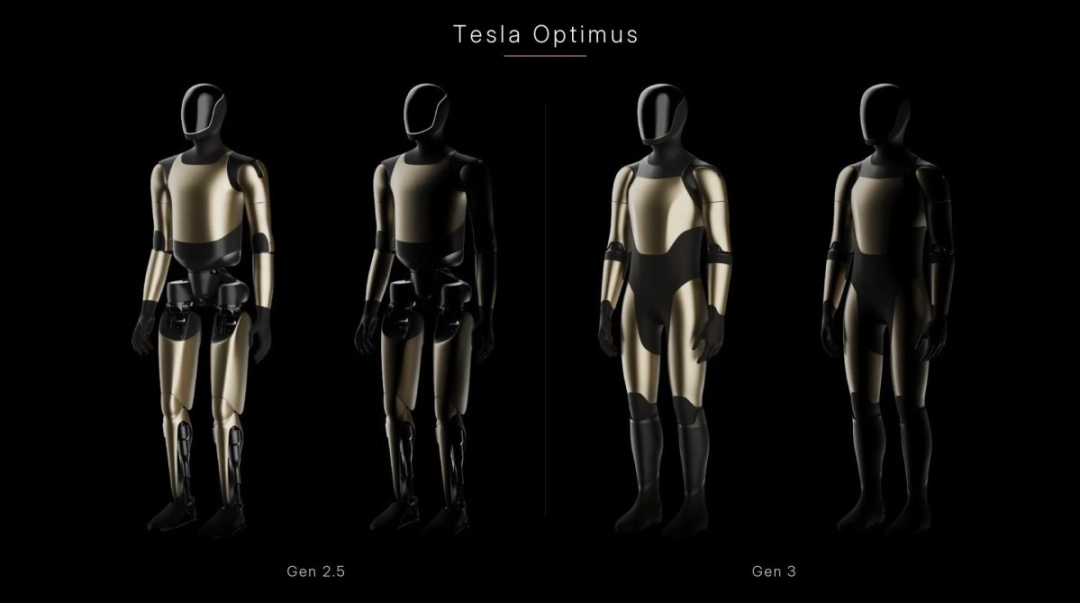
On 23 October JPMorgan published a note titled Tesla Optimus ramp more gradual, selective on humanoid supply chain. Its read on production at the Fremont plant was blunt. Guidance is for 10,000 to 20,000 units. The recent rebound in Chinese humanoid stocks led by Unitree and UBTech is sentiment-driven. Actual demand is buyers purchasing machines to take back and test.
In Shanghai, at the competition floor of the International Embodied Intelligence Skills Contest, 800 teams competed. The organisers said the quiet part plainly. The industry’s collection of real-world scenario data is nowhere near sufficient, and robot generalisation is stuck.
One is a sell-side institution doing the financial arithmetic. The other is engineers on a factory floor doing the engineering arithmetic. They reached the same conclusion. Do not read the limit-up board as readiness. The distance to stable work is still enormous.
Two clocks
Capital and industry are running on parallel clocks in this sector.
From the capital side, a Unitree limit-up and a Songyan filing are enough to suggest the volume inflection from one to ten arrives tomorrow. JPMorgan’s note and the contest floor reset the clock. Between grasping in a laboratory and working in an uncontrolled environment sits a gap built from data, trial and error, and a production line finding its rhythm.
The timescale of the physical world does not negotiate. A better model does not compensate for insufficient sensor precision, joint latency, or a shutdown the moment site lighting changes. Those are physical constraints, not software bugs.
There is a useful comparison from the same week. Mitsubishi Electric’s approach to physical AI is not a general-purpose humanoid that can backflip. It is a robot that does the clamping and cleaning work of a CNC machine operator. For those few dull industrial motions, Mitsubishi’s stated commercialisation date is 2030. That is what decades of industrial automation looks like when it meets manufacturing. No launch-event bravado, only process validation and safety certification. Compared with that, capital expecting to compress several years into several months is in a hurry.
Who gets to set the price
One line in the JPMorgan note carries the most weight. The bank has turned selective on the broad supply chain. That means money will stop paying for the category and start paying for delivery.
Unitree was recently marked at 388 times earnings, forcing the company to issue an after-hours statement cooling the stock. That is the capital clock running so fast it hurts the industry it is pricing. The likely next move is money rotating out of whole-machine sentiment and into the component makers that actually solve data collection and physical alignment. Whichever way unit shipments go, reducers and sensors are needed.
Physical law does not care how excited the market is. Watch two things instead of the candlestick chart. Count how often the words volume delivery appear in component company filings. Check whether task success rates in unfamiliar environments have been disclosed at all.
Until both improve systematically, the gap between sentiment and fundamentals will not close because of a few limit-up days.
Editor’s note: This is an adapted translation of the original OFweek report. It has been trimmed and restructured for readability for an international business audience. The full original (in Chinese) is at https://robot.ofweek.com/2026-10/ART-898890-8420-30708850.html.