San Francisco-based Bedrock Robotics has closed a USD 600 million Series C led jointly by CapitalG, Alphabet’s growth fund, and Emergence Capital, with Temasek, Nvidia and Bessemer participating. The round values the company at USD 4.1 billion, and brings total funding to roughly USD 1 billion in a little over two years.
The obvious reading is that someone put self-driving software on an excavator. The reading that matters is narrower and more useful: autonomy has left the road and found a second, possibly more bankable, place to land.
Why Alphabet’s growth fund wanted a digger
The answer sits in the sentence Bedrock used with investors. The construction industry is being asked to build more than it can currently deliver.
Data centres, chip fabs and manufacturing reshoring are inflating US infrastructure demand at a visible rate. The number of people who can competently run an excavator is falling. Operating one is not a matter of pressing a pedal. It requires judgement about terrain, about the task at hand, about the safety envelope around the machine. Bedrock puts the learning curve at five years or more.
The industry data supports the tension. The US construction sector is short roughly 500,000 workers in 2026. About 80 per cent of contractors report difficulty hiring. Some 83 per cent of construction workers name inexperienced workers as their biggest safety hazard. By 2031 around 40 per cent of the current workforce will have retired.
One investor summarised the thesis with a phrase worth keeping. Capital is betting on the seat, not the steel. Machines can be built on overtime. Skilled operators cannot be batch-produced.
Two failures, one conclusion
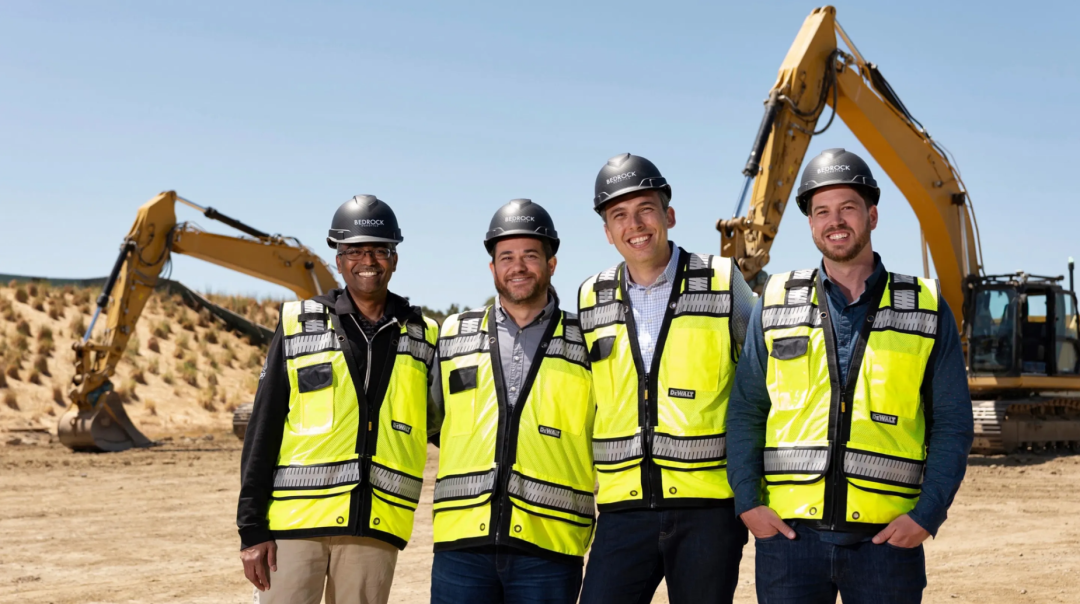
The person holding this opportunity is Bedrock founder and chief executive Boris Sofman, whose record runs through two of the robotics industry’s most instructive failures.
He co-founded Anki, which shipped more than 3.7 million Cozmo and Vector robots and still closed in 2019, putting nearly 200 people out of work overnight. Sofman’s explanation at the time was that a critical funding round collapsed at the last moment. He then went to Waymo to lead its autonomous truck programme, which also did not reach the end of the road. Consumer robotics burned cash faster than it earned it. Autonomous trucking could not find a commercial date.
Both experiences close a loop at Bedrock. Sofman knows how to build hard technology, and he knows, from the inside, that a business nobody will keep paying for will die at the next funding round regardless of how good the technology is.
So Bedrock avoided the Anki trap by design. Bedrock Operator is not a toy sold to consumers. It retrofits machines contractors already own, letting an excavator perceive, plan and dig. No contractor has to replace a fleet. They layer autonomy onto existing assets and pay for the earth actually moved.
What is actually scarce on a site
The commercial logic answers a question the industry has not solved. Projects keep multiplying. People who can run them keep thinning out. Bedrock does not attempt to replace a construction crew. It automates the earthmoving step, the most repetitive and most labour-short, and leaves humans on the work that needs judgement.
This is not a slide deck. When Bedrock came out of stealth in July 2025 it was already working with contractors including Sundt Construction and Zachry Construction. By November 2025 autonomous earthmoving was running at scale on a 130-acre manufacturing project. By August 2026 cabless excavators were working commercial sites across a Nevada water treatment facility, Texas earthworks and a Zachry job involving 1.2 million cubic yards of dirt. Its newest partner, Haydon, is pointing the technology at advanced manufacturing, data centres and medical facilities.
The restraint is the clever part. Bedrock never promised an unmanned site. It concedes that a cabless excavator is not a people-free site, that coordination, maintenance and project management still need humans. That is precisely where robot companies usually come apart. They inflate the promise, then meet a real site.
Will Caterpillar sit still
Bedrock is not alone in reading the market. Switzerland’s Gravis Robotics also sells retrofit kits for earthmoving. Built Robotics built dedicated machines for the highly repetitive work of solar pile driving. The larger variable is the incumbents. Caterpillar used CES in early 2026 to present industrial AI and autonomy, claiming roughly four decades of autonomous driving research and a line covering excavators, dozers and loaders. Komatsu has partnered with autonomy specialist AIM on self-operating dozers and excavators.
This is a race between speed and scale. The incumbents hold customers, channels and decades of data. Bedrock’s edge is focus and a willingness to retrofit. For a contractor the real question is whether automation arrives from the machine’s manufacturer or from a third party like Bedrock. That question is unresolved, but a USD 4.1 billion valuation has now put it on the table.
The significance of the USD 600 million is not that another decacorn appeared. It is that it marks a turn in where AI is expected to pay. For several years capital chased the coolest version of the technology, robotaxis and humanoids, categories sexy enough to raise on and slow enough to commercialise that the money has not come back. Bedrock went the other way, into a dirt-covered site with no glamour at all, and validated something plain. The valuable part of AI is not at the edge of imagination. It is at the edge of the labour gap.
When an industry cannot fill the seat, automation stops being a bonus and becomes a necessity produced by demand. Data centres are expanding, manufacturing is returning, infrastructure is ageing. Every understaffed site is the next market. The unmanned excavator is a prologue. What Alphabet’s USD 600 million is underwriting is less a machine than an industry being redefined.
Editor’s note: This is an adapted translation of the original OFweek report. It has been trimmed and restructured for readability for an international business audience. The full original (in Chinese) is at https://robot.ofweek.com/2026-10/ART-8321204-8420-30709111.html.