Muse made the personal agent legible to the market this year, and every large platform has since been asked what its version looks like. Ant Group’s answer arrived on 27 October as Lingguang 2.0, repositioned from an assistant that generates answers and small apps to something the company calls a personal assistant that manages affairs.
On the surface it is a Chinese Muse. Underneath it is something more specific, because Ant did not simply bolt persistent execution onto a chat window. It wired that execution into Alipay, DingTalk, Feishu, Mijia and a long list of services Chinese users actually transact through.

What it does, tested
A reviewer at Zhidx ran it against ordinary problems rather than benchmarks.
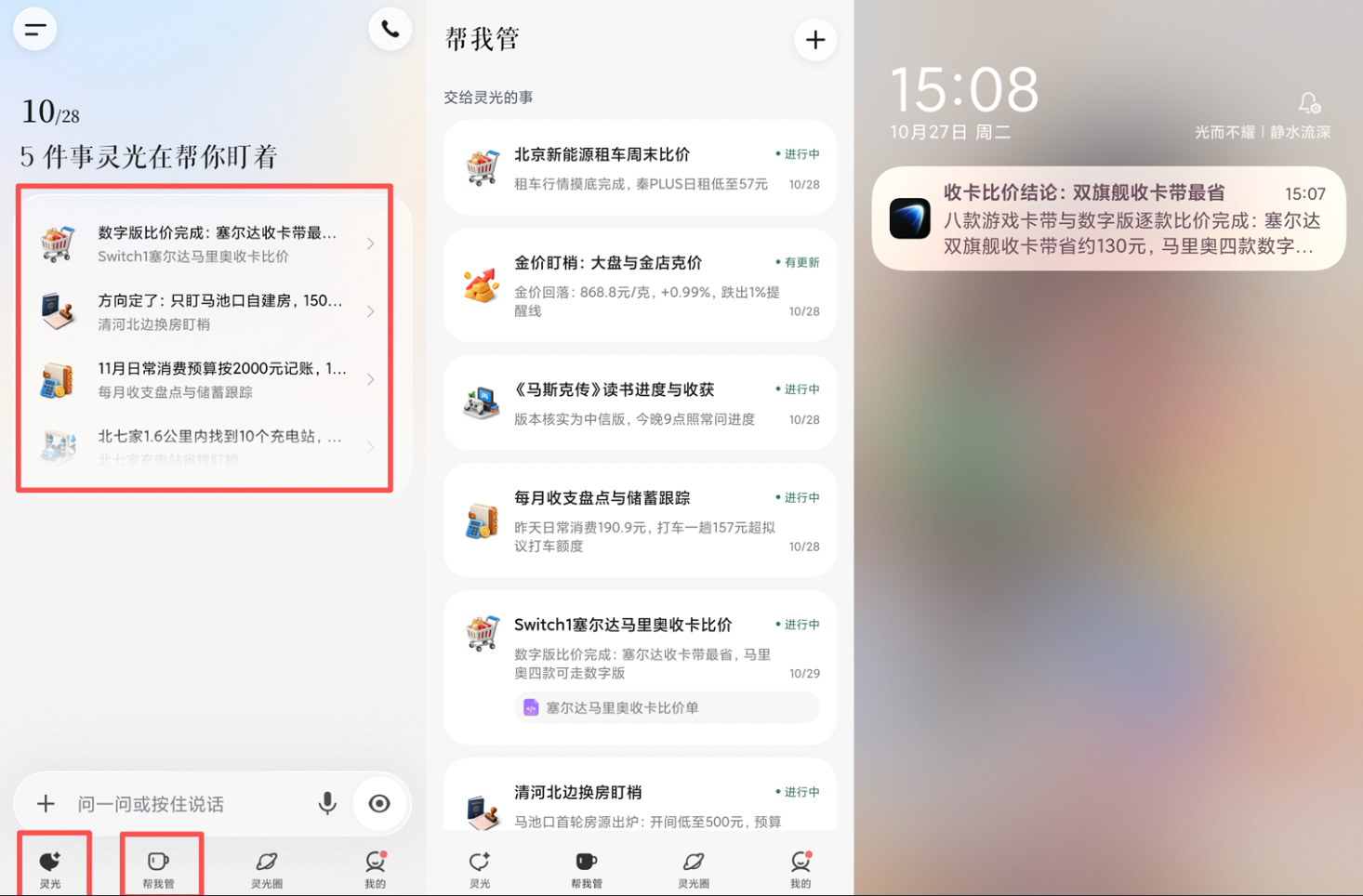
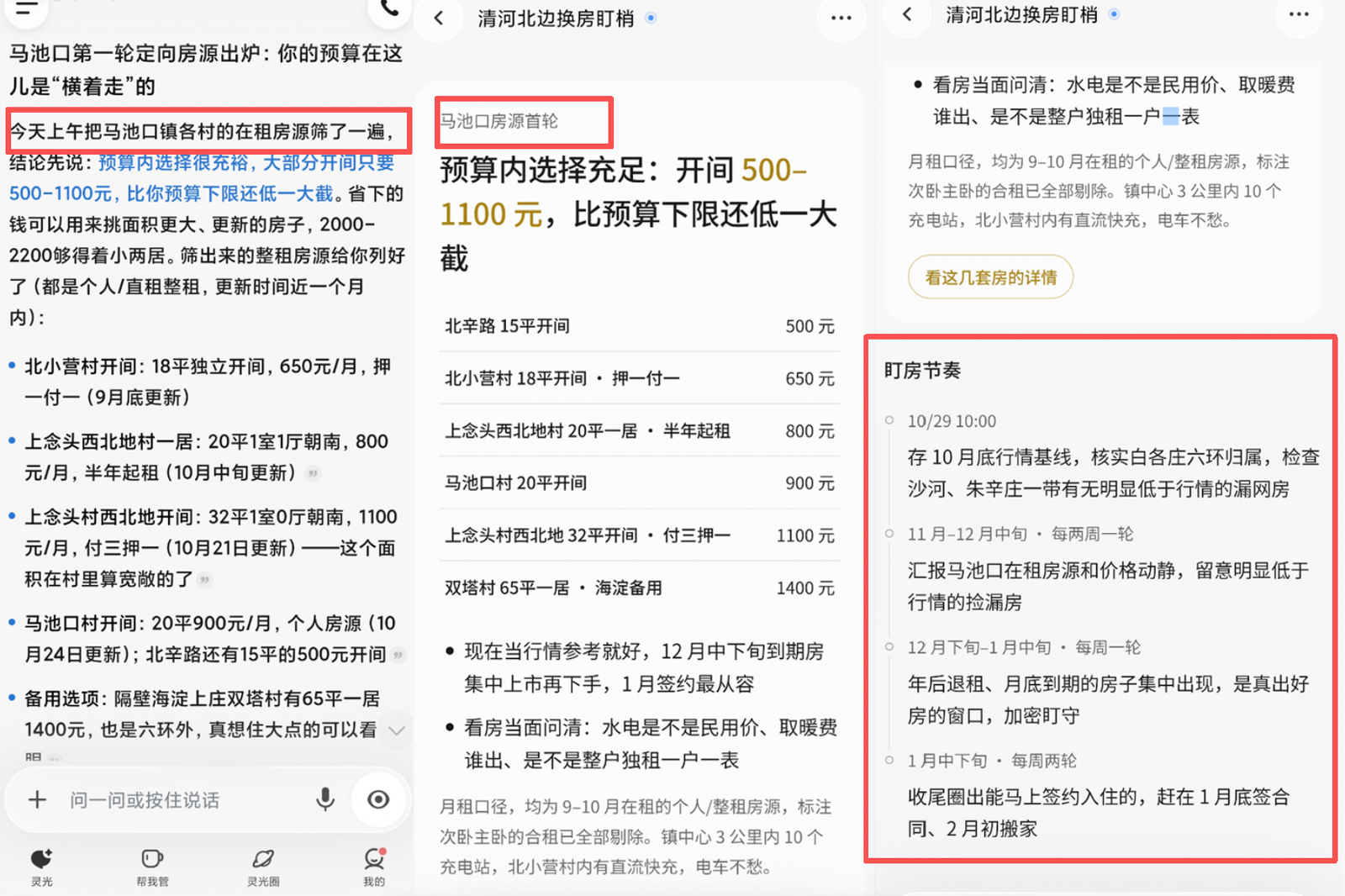
The first was an apartment hunt months ahead of a lease expiry: watch listings outside Beijing’s sixth ring, near Qinghe, between RMB 1,500 and 2,200 a month. The initial prompt was incomplete and the model said so, then refined the plan across several turns into a watching task that reports on a schedule and keeps tracking until the move is done.
The second was household accounting. After granting Alipay permission, the agent built a monthly review, broke spending into insurance, motorway tolls, rent and heating, and estimated savings.
The third was a shopping plan for the Double Eleven sales: compare prices on specific clothing categories, calculate the discount combination, and notify when something changes. A fourth tracked Nintendo Switch game prices and flagged drops. A fifth watched daily spending and reported when a day went past RMB 50.
The mechanical point is that these tasks run on a cloud host. Closing the app does not stop them, and the isolated host gives execution a clean environment.
Why the American pattern does not port
Muse launched on 8 September across iOS, Android and web in the United States, with published partners including Stripe, Shopify and Expedia covering payments, commerce, travel booking and retail. For a US user, an order confirmation arrives by email and a travel itinerary lives on a website. An agent that reads mail and drives a browser can assemble a fairly complete picture and act on it.
Chinese daily life is not organised that way. Ticketing, payments, office work and shopping each sit inside a mature app with its own account system, and the entry points are not interoperable. An agent can understand the request and plan the steps and still stall between applications, at which point the user takes over and the product’s premise collapses.
Lingguang 2.0’s answer is breadth of connection. Alipay bills, membership and travel services. Car life covering parking, fuel and charging. QQ Mail, DiDi, DingTalk, Feishu, Baidu Netdisk and Mijia. A standalone computer and browser for web tasks. Open interfaces through MCP and command-line tools. Extensions to Li Auto, Nio, XPeng and Huawei cars, fitness bands, body-composition scales and the 12306 rail booking service.
The trust layer is the actual product
Once software holds someone’s calendar, spending data and payment authority, the question stops being capability and becomes permission.
Ant has been operating Alipay independently since 2004. Payment security, identity verification and authorisation management have been refined for 22 years against real money. Lingguang 2.0 requires explicit authorisation before connecting another application, lets the user inspect, adjust or revoke it at any time, and constrains the agent’s actions to the granted scope.
The network behind it matters as much. Alipay connects more than a billion users, 80 million merchants and tens of thousands of services spanning consumption, transport, utilities and government admin. Persistent memory plus an established service network is what turns an intention into a booking, an order and a completed transaction.
The product lineage shows the shift. Lingguang 1.0 launched in November 2025 with all-modal interaction, one-sentence app generation and visual recognition, and passed 2 million downloads in six days. Version 2.0 moves from lowering the barrier to using AI toward taking over work that cannot finish in one turn.
What remains unproven
This is a first-party account of a first-party product, and the reviewer tested it for a short period on ordinary consumer tasks rather than under adversarial conditions. Whether an agent with payment authority behaves correctly when a merchant changes a price mid-task, or when a user authorises something and forgets, is not answered here.
The competitive question is also open. Personal agents have no settled form, and the winner may be decided less by model quality than by which platform owns the services a task has to touch. That is an argument Ant can make better than most, and it is the reason the product shipped inside Alipay’s ecosystem rather than beside it.
Editor’s note: This is an adapted translation of the original Zhidx report. It has been trimmed and restructured for readability for an international business audience. The full original (in Chinese) is at https://www.zhidx.com/p/605046.html.