On 16 October the China Securities Regulatory Commission published a filing notice for Youibot Robotics, which plans to issue up to 49.4778 million shares on the Hong Kong main board. Thirty-seven shareholders will convert 244 million domestic shares into overseas-listed stock, taking the company into full circulation.
Youibot is filing under Chapter 18C for specialist technology companies, with CICC as sole sponsor. It first filed in September 2025 and refiled in March 2026, and has now cleared the domestic regulatory stage. If it lists, the title of first listed mobile manipulation robot company will most likely be its.
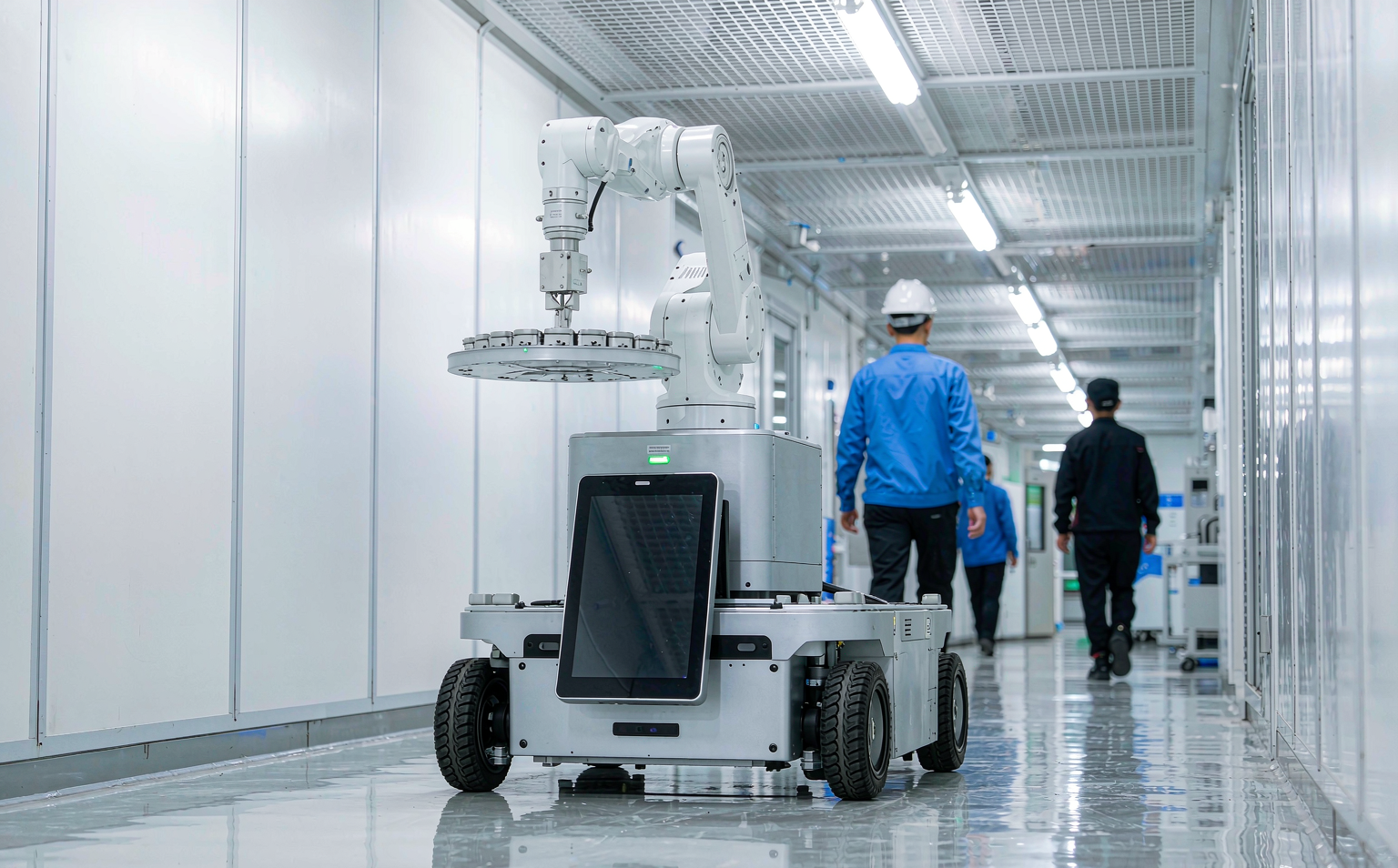
The three objections
Three criticisms have surfaced alongside the filing. Cumulative net loss of RMB 844 million between 2023 and 2025, with the loss widening rather than narrowing in 2025. Operating cash flow negative for three consecutive years while receivables keep growing. And revenue growth slowing from 136.7 per cent to 33.3 per cent while the top five customers account for a rising share.
All three have a basis in the accounts. But the prospectus contains a second set of numbers pointing the other way, and reading either set alone gives a partial picture.
Most of the loss is on paper
Net losses were RMB 260 million, RMB 200 million and RMB 384 million across 2023 to 2025. Within the 2025 figure, RMB 249 million, or 64.9 per cent, is a line called change in carrying amount of redeemable liabilities.
Those are preference shares issued to private investors and measured at fair value. Every time the valuation steps up, an accounting loss appears. No cash leaves the business, and after listing the liability is reclassified into equity and stops touching the income statement.
Switch to the company’s adjusted net loss and the picture changes. Adjusted losses were RMB 131 million, RMB 81 million and RMB 106 million, with the adjusted net loss ratio narrowing from 122.0 per cent to 31.9 per cent and then 31.2 per cent. The loss per yuan of revenue fell from RMB 1.20 to RMB 0.31 in three years.
The 2025 adjusted loss was about RMB 25 million wider than 2024. Research spending rose from RMB 62 million to RMB 83 million and selling expenses grew with expansion into Japan and other overseas markets. That is money spent on purpose, not lost on operations.
Across the track record, research spending totalled RMB 213 million, equal to 30.3 per cent of cumulative revenue. Its 141 research staff are 33.7 per cent of employees, averaging 7.5 years of experience, and the company holds 241 registered patents.
Gross margin is the tell
Gross margin rose from 26.1 per cent in 2023 to 35.2 per cent and then 36.5 per cent, a cumulative gain of 10.4 percentage points. Gross profit grew from RMB 28 million to RMB 124 million, a compound rate of 110.2 per cent, ahead of revenue growth at 77.6 per cent.
Inspection and maintenance solutions moved from 40.3 per cent to 48.1 per cent. Energy and chemicals solutions moved from 35.6 per cent to above 45 per cent.
A company buying scale with low prices sees gross margin fall. This one raised it by ten points while operating expenses fell from 161.6 per cent of revenue to 72.8 per cent.
The comparison is instructive. Geek+, the global autonomous mobile robot leader, posted RMB 3.171 billion of revenue in 2025, nine times Youibot’s, and lost RMB 3.536 billion cumulatively from 2022 to 2025 before narrowing its net loss to RMB 10 million in 2025. Standard Robots, also in the Hong Kong queue, lost RMB 347 million over 2023 to 2025, with RMB 147 million of the 2025 figure coming from share-based payment rather than a collapse in trading. Geek+’s Hong Kong retail tranche was 133.62 times covered in July.
Working capital, not collection failure
Operating cash outflow was RMB 94 million, RMB 80 million and RMB 185 million. Trade receivables and notes grew from RMB 51 million to RMB 247 million, and turnover days stretched from 165.9 to 208.9.
The customers behind those receivables matter. Youibot sells into semiconductor fabs, large state-owned energy groups and leading lithium battery makers, and has entered core processes at more than ten fabs at home and abroad. Average credit terms disclosed in the prospectus run from 150 to 270 days. Long payment cycles are written into the contract, which is normal for industrial business-to-business equipment.
Repurchase rates are the better indicator. More than 70 per cent of 2025 customers bought again, 75 per cent in semiconductors and 100 per cent in lithium batteries. Cash and equivalents rose from RMB 76 million at the end of 2023 to RMB 243 million at the end of 2025, and with available bank facilities the total reached RMB 427 million. In 2025 the company raised RMB 220 million in equity and took RMB 210 million of new bank loans.
Growth is changing shape
The 136.7 per cent growth of 2024 lifted revenue from RMB 108 million to RMB 255 million. Growing 33.3 per cent on that base added RMB 85 million, more than 80 per cent of the entire 2023 revenue.
By 2024 revenue Youibot ranked fourth globally in mobile manipulation solutions and first in China with 7.1 per cent share. On the narrower definition of industrial mobile manipulation it ranks first in both China and the world.
The customer base widened even as concentration rose. Semiconductor customers went from 35 to 93. Energy and chemicals customers went from 47 to 91. The company serves more than 400 enterprises across more than 800 industrial projects.
The mix is what changed. Lithium battery revenue jumped from RMB 16 million to RMB 89 million and now accounts for 26.1 per cent, with customers doubling from 13 to 27. Energy and chemicals revenue reached RMB 113 million, above a third of the total for a second year. Semiconductor revenue held at RMB 92 million.
Frost and Sullivan expects China’s mobile manipulation solutions market to grow from RMB 3.4 billion in 2024 to RMB 62 billion in 2030, a compound 58.0 per cent, with the industrial segment going from RMB 2 billion to RMB 17.6 billion at 47.8 per cent.
Overseas revenue outside mainland China rose from RMB 5.9 million in 2023 to RMB 21 million in 2025, now 6.3 per cent of the total. A Tokyo subsidiary handles local operations and products reach more than 30 countries. Semiconductor and energy customers use common technical and process standards worldwide, which is why a solution proven at a Chinese leader can be replicated abroad, and why a Hong Kong listing rather than an A-share one makes sense for a company selling globally.
Editor’s note: This is an adapted translation of the original OFweek report. It has been trimmed and restructured for readability for an international business audience. The full original (in Chinese) is at https://robot.ofweek.com/2026-10/ART-8321203-12003-30708623.html.