In May 2026, Figure ran eight consecutive days of live parcel sorting. For the first time a wide audience watched a humanoid work at real operating intensity rather than in a edited demonstration clip. Since then, grabbing parcels, flipping cartons and feeding conveyors have become standard routines at Chinese trade shows.
Policy has moved in the same direction. A humanoid real-scenario training programme run by the Ministry of Industry and Information Technology with the State-owned Assets Supervision and Administration Commission named warehousing and logistics a golden scenario for scaled deployment.
On 19 October, the Ministry of Commerce and eight other departments issued opinions on accelerating technology-driven commerce, explicitly pushing embodied AI into trade and logistics applications.
Why this warehouse and not another
Warehousing meets three conditions that matter for embodied AI today. There is real, high-frequency work. The environment is semi-structured and therefore controllable. And the output can be measured in operating metrics a finance team already tracks.
China’s total social logistics value passed RMB 368.2 trillion in 2025, and annual parcel volume is approaching 200 billion pieces, according to the China Federation of Logistics and Purchasing and the State Post Bureau.
Tang Wenbin, founder of Origin Intelligence, set out four conditions for embodied AI deployment. The task has to tolerate error, because robots are not yet reliable enough to run without human fallback. It has to tolerate takt time, because production rhythm cannot be rigid. It has to sit in a moderately generalisable environment rather than a perfectly regular one. And it has to run long enough for a return on investment to be calculated.
Warehousing matches all four. Industrial automation already handles the rigid, high-volume work. What remains is the flexible margin, the part that fixed conveyors and fixed grippers cannot reach.
Three camps competing for the same station
Embodied AI startups arrive with stronger perception and decision-making, and take on the non-standard tasks that conventional automation cannot cover. This group includes Star Motion, Bianliang, Origin Intelligence, Weiyi Zhizao, Galaxy General and Jijia Vision.
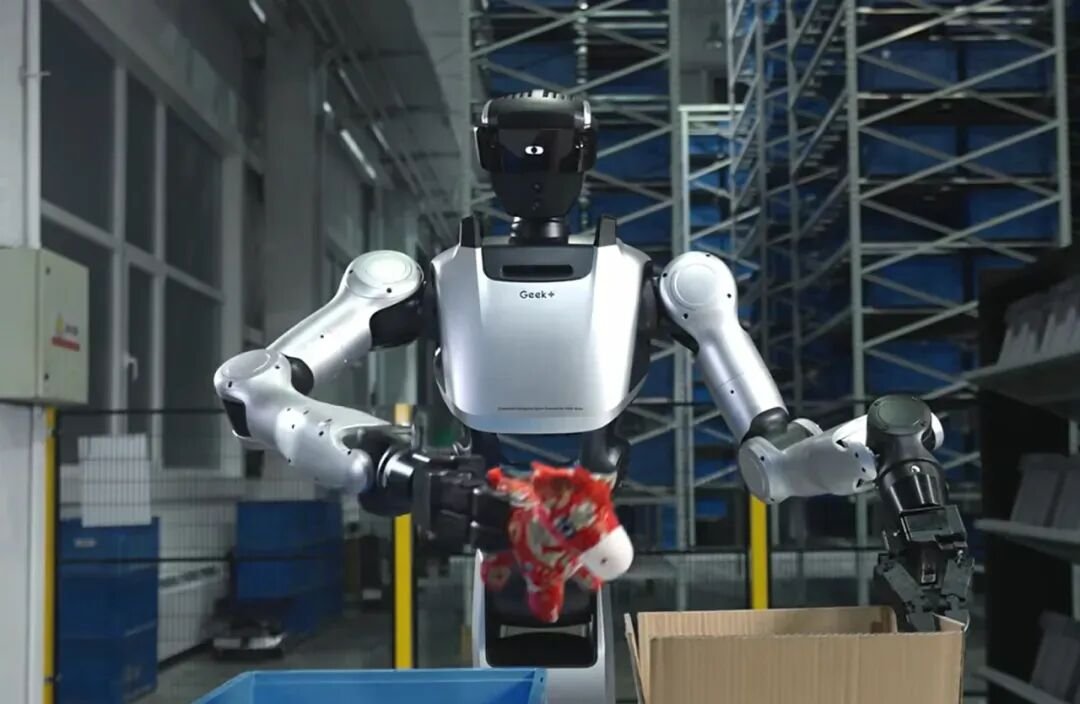
Logistics equipment makers arrive with installed estates, customer relationships and scheduling systems already in place. Geek+ and Dematic belong here. Their pitch is to plug embodied intelligence into warehouses that already run.
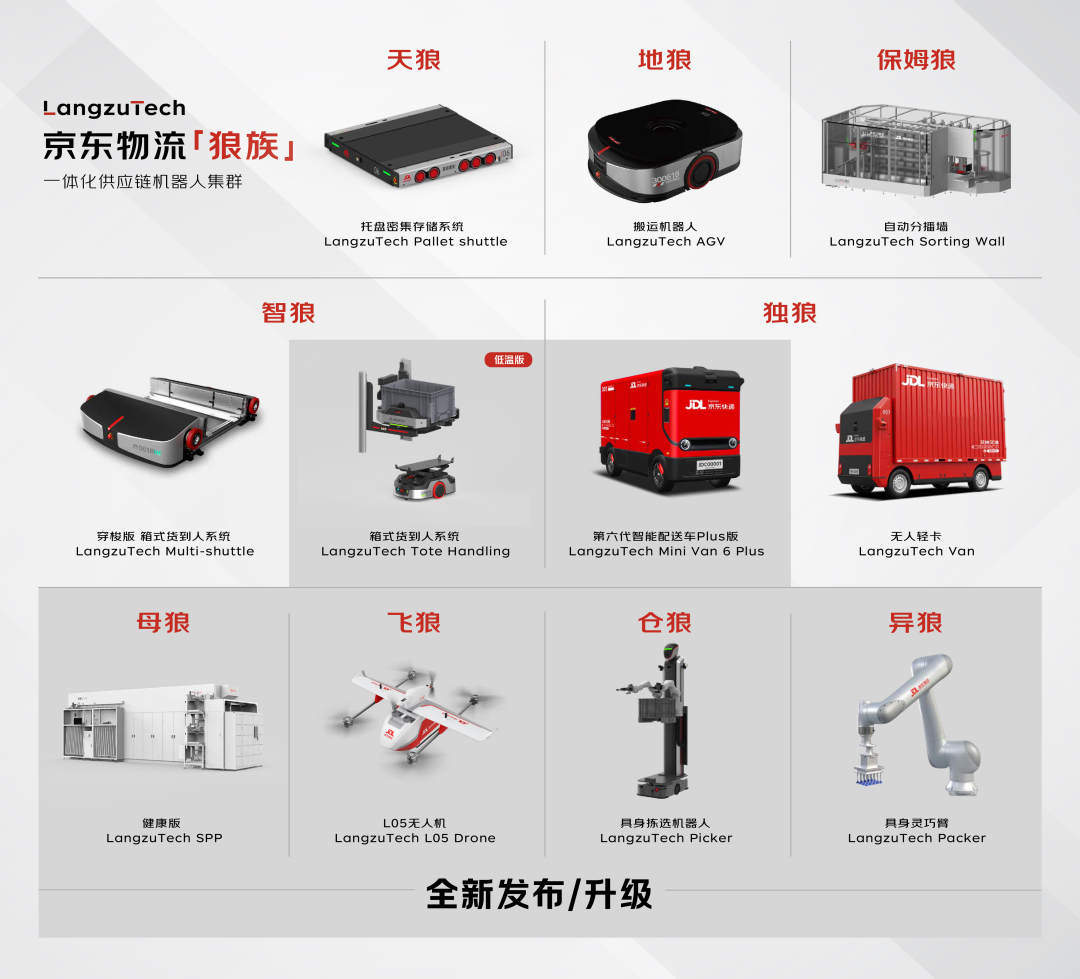
End logistics operators arrive with the real scenes. JD Logistics, SF Express and China Post control the sites, the data and the workflow definitions. They are beginning to define the robot form factor themselves rather than buying it.
The competitive question is not which camp builds the best robot. It is which one owns the interface between the robot and the warehouse management system, because that is where the switching cost sits.
What the exam actually tests
A demonstration proves a robot can pick a parcel. A deployment proves it can pick parcels for eight hours, at the pace the line requires, with a failure rate the operator can absorb, at a cost per pick below the loaded cost of the person it replaces.
That accounting discipline is what turns a shipping volume number into a business. It is also why warehousing is the right first exam. The site already measures throughput, uptime and cost per unit. A robot either shows up in those numbers or it does not.
Editor’s note: This is an adapted translation of the original OFweek report. It has been trimmed and restructured for readability for an international business audience. The full original (in Chinese) is at https://robot.ofweek.com/2026-11/ART-8321202-8420-30710256.html.