Three companies that supply parts to Chinese robot makers closed funding this year, and all three founders were taught by the same man. Liu Chunbao, a professor at Jilin University’s School of Mechanical and Aerospace Engineering, has sent his students into joints, hands and faces, the three components that decide what a humanoid can actually do.
Eight rounds in under two years
Quanzhibo, which builds robot joint modules, completed a Series B worth several hundred million yuan on 5 September. It has now closed eight rounds in less than two years. Revenue has moved from a few hundred thousand yuan to more than RMB 100 million in two or three years, and the company says self-produced output now exceeds half of total volume, with capacity being added in Wuxi and Chongqing.
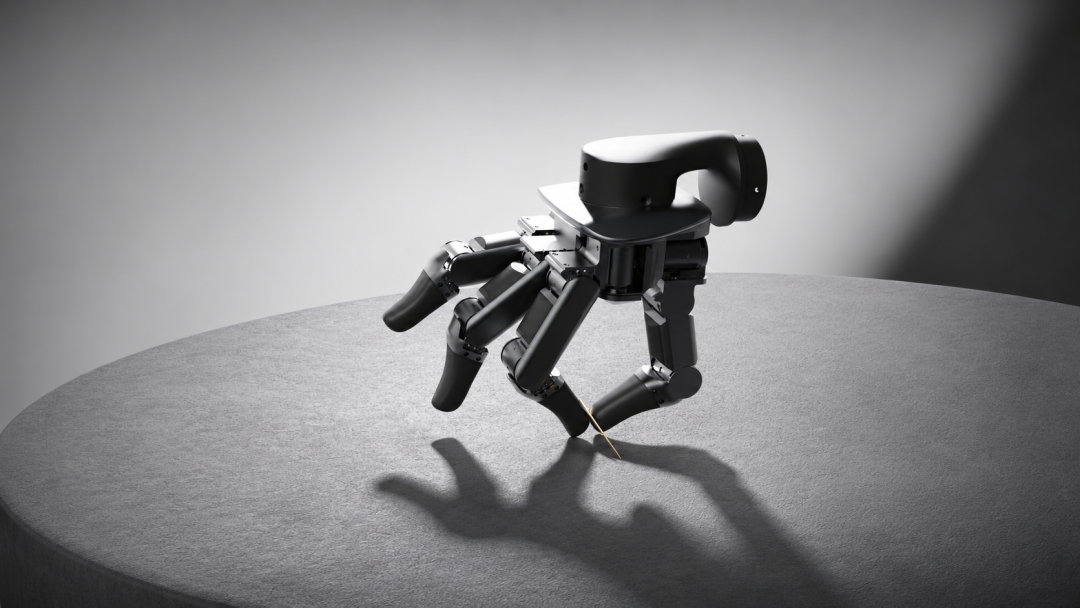
Heimai, which makes dexterous hands, has taken five rounds and crossed RMB 100 million in total. Its industrial variable-configuration hand is the product the company is betting on. Lingyan, which builds bionic faces, closed a seed round in the tens of millions of yuan after starting work in April this year.
How a vehicle transmission lab became a parts cluster
Liu studied at Jilin University from 1999 to 2009 and became a doctoral supervisor in 2016. His own supervisor was Ren Luquan, a bionic engineering specialist and academician at the Chinese Academy of Sciences, who pushed him away from vehicle transmissions and towards robot transmissions in 2014 and 2015, years before the current boom. Ren then sent him to Manchester University for a year to work on bionic robotics.
The teaching method explains the pipeline. Liu helped his first student start a company, co-planned the second, and pushed the third into founding one. On 3 November, at the Asia International Power Transmission exhibition in Shanghai, the Jilin University booth displayed Quanzhibo joint modules, a Heimai articulated hand and a Lingyan bionic face side by side.

The pricing problem behind the parts
Lingyan is the clearest case of engineering meeting a purchase order. The original plan was to sell a face directly to humanoid makers, until the arithmetic arrived. A face alone can cost RMB 100,000 to RMB 200,000, while a whole humanoid sells for a few hundred thousand. So the company moved first to exhibitions, guided tours and game IP, where buyers pay for interaction and tolerate a prototype, and will return to humanoids once unit cost falls.
Heimai faced the mirror image. A hand that works for an hour in a lab has to work for three months on a line before a factory will install it. Quanzhibo is past that stage and now fights capacity instead of credibility.
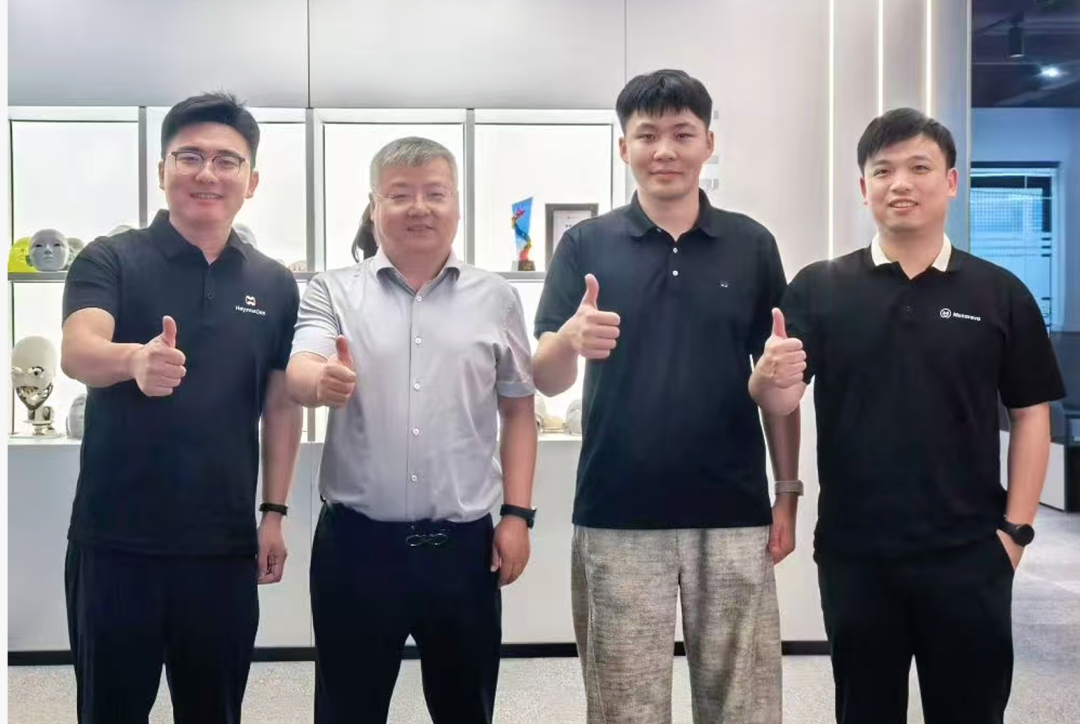
The three companies have started buying from each other. Yida Capital, which backed all three, brought the group together, and Wuxi-based Leju Robotics is coordinating links in which Quanzhibo develops small joint modules that then go into Heimai hands and Lingyan faces. Liu’s rule for intra-family pricing is to open the real cost base and take only the margin that survives disclosure. School patents cannot be used by the companies directly, and must be valued and transferred through the university.
Why none of them stayed in the north-east
Liu is direct about the geography. Northern private capital is thinner and skews towards state money, which prioritises capital safety and applies late-stage tests to early-stage technology. Robot parts also need dense supplier networks for drive, control, transmission, machining and assembly, and southern China has them within driving distance. Talent follows the same gravity.
He is already planning a fourth and fifth company, and supports Kexian Future, which builds bionic climbing robots for curtain-wall cleaning and solar mirror fields. His argument for that unglamorous market is simple. Skyscrapers still need their glass cleaned, the work is dangerous and hard to staff, and a machine that solves it has real value even if it never becomes a trillion-yuan business.
Editor’s note: This is an adapted translation of the original OFweek report. It has been trimmed and restructured for readability for an international business audience. The full original (in Chinese) is at https://robot.ofweek.com/2026-11/ART-898890-12003-30710616.html.