Apple Intelligence is live in China, two years after it first shipped outside it. The build is available now through the iOS 27.3 beta, switched on in settings under Apple Intelligence and Siri, with the general release arriving in December to every iPhone in the country.
The architecture is a hybrid, and the Chinese half is Alibaba’s Qwen.
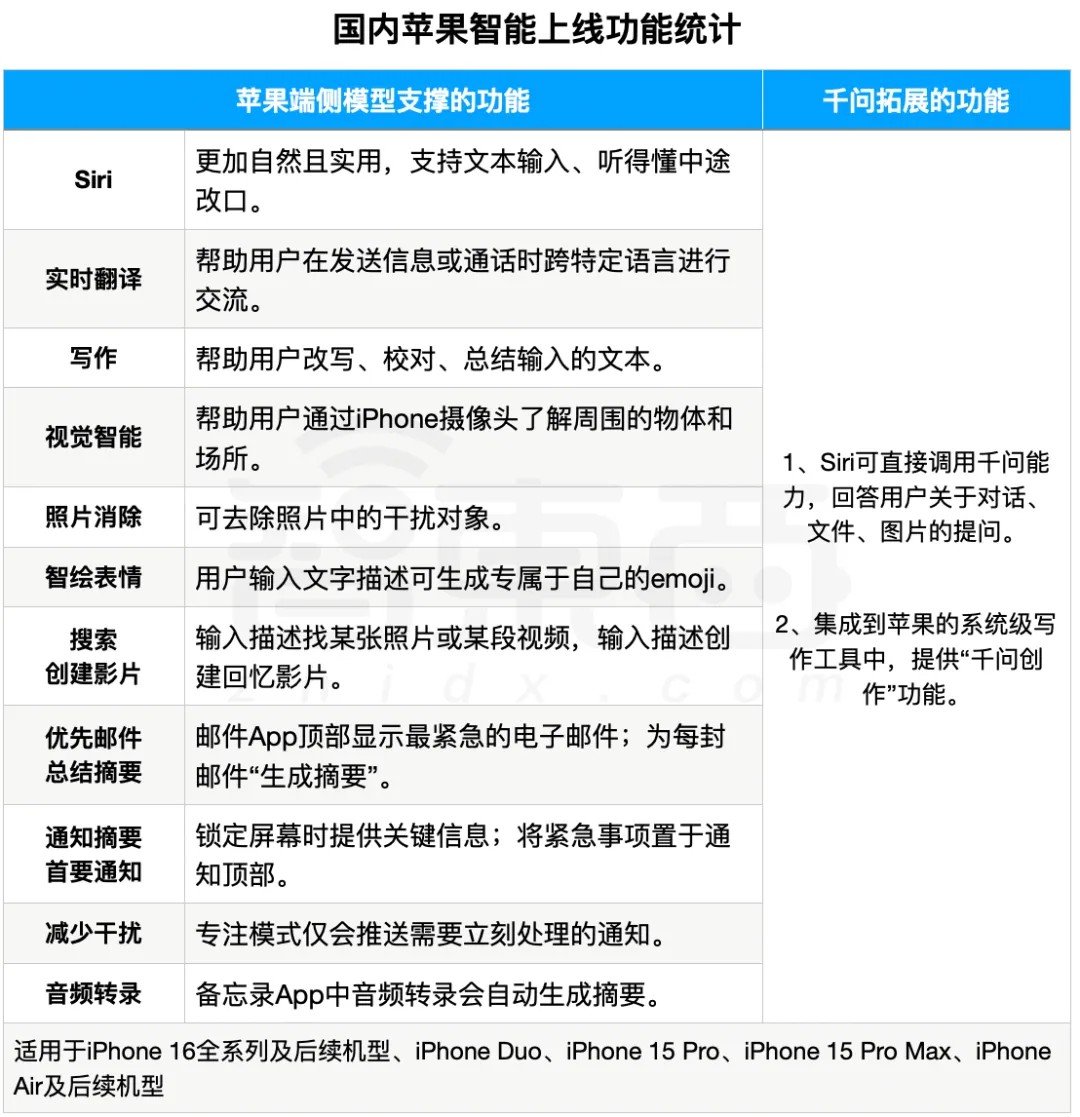
What is on the device and what is not
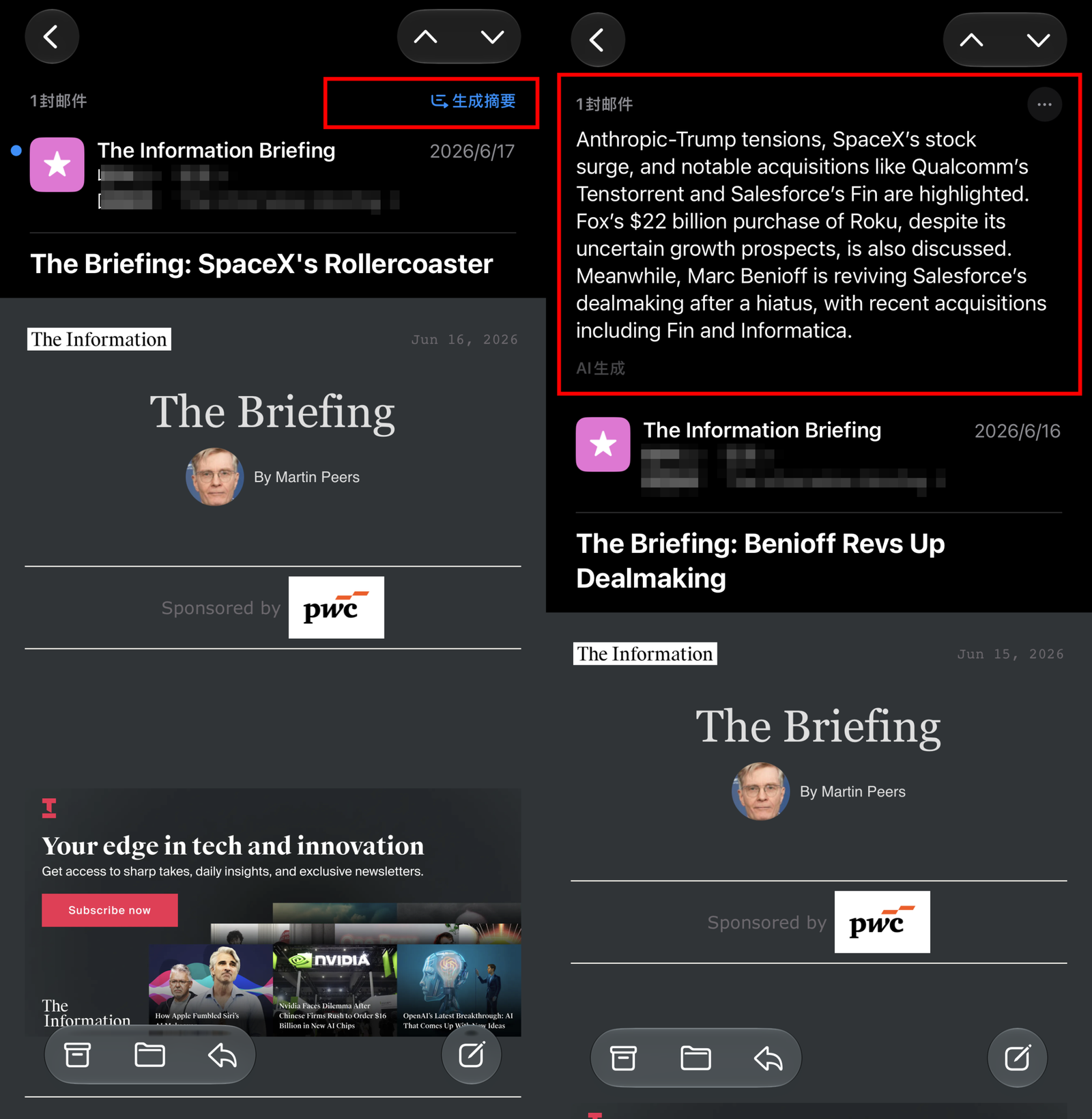
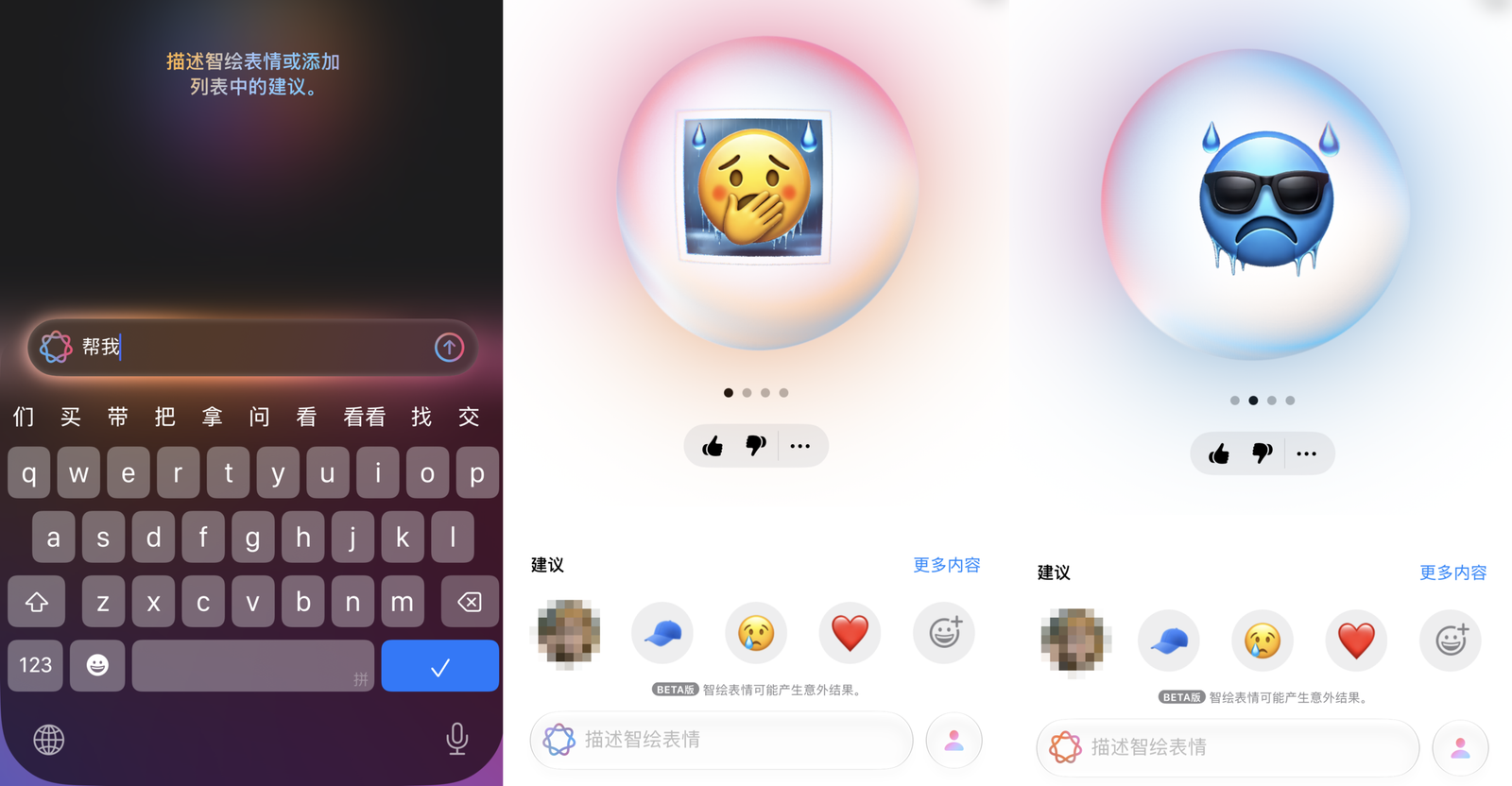
The first wave splits into two groups. Efficiency features cut information load: AI sorting of email, messages and notifications, with summaries generated per item. Generative features cover rewriting and proofreading, audio transcription summaries, photo clean-up, live translation and custom emoji generation.
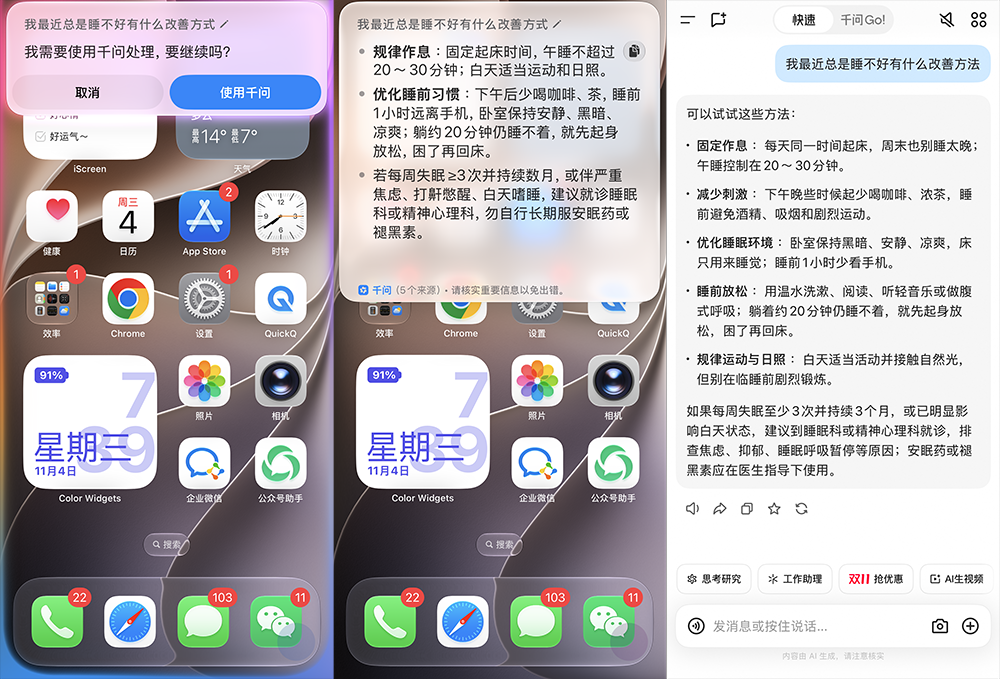
On-device work handles translation, transcription and photo processing. When a request exceeds what the local model can do, the system offers Qwen. It asks permission the first time, and every time after that before a handover.
In practice the seam is visible. Ask Siri why you keep sleeping badly and it will offer to hand the question to Qwen. Accept, and the answer arrives with a Qwen logo in the lower left corner that opens the Qwen app for a fuller response.
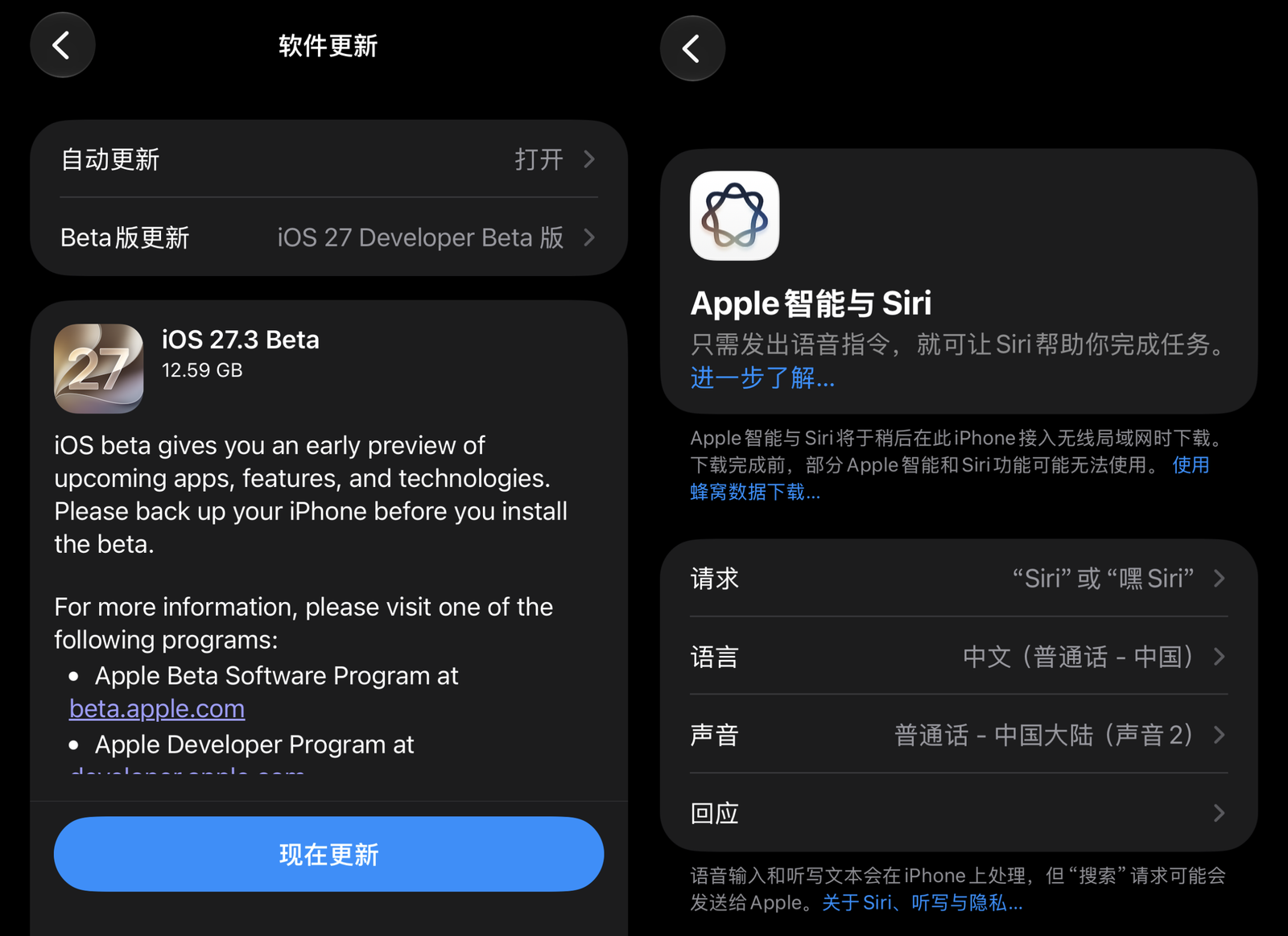
The feature list is a catch-up list
Live translation is the standout. Calls and messages translate in real time, and calls can be recorded, transcribed and summarised. Nine languages are supported on iPhone, and each language pack is about 800MB, so it has to be downloaded in advance.
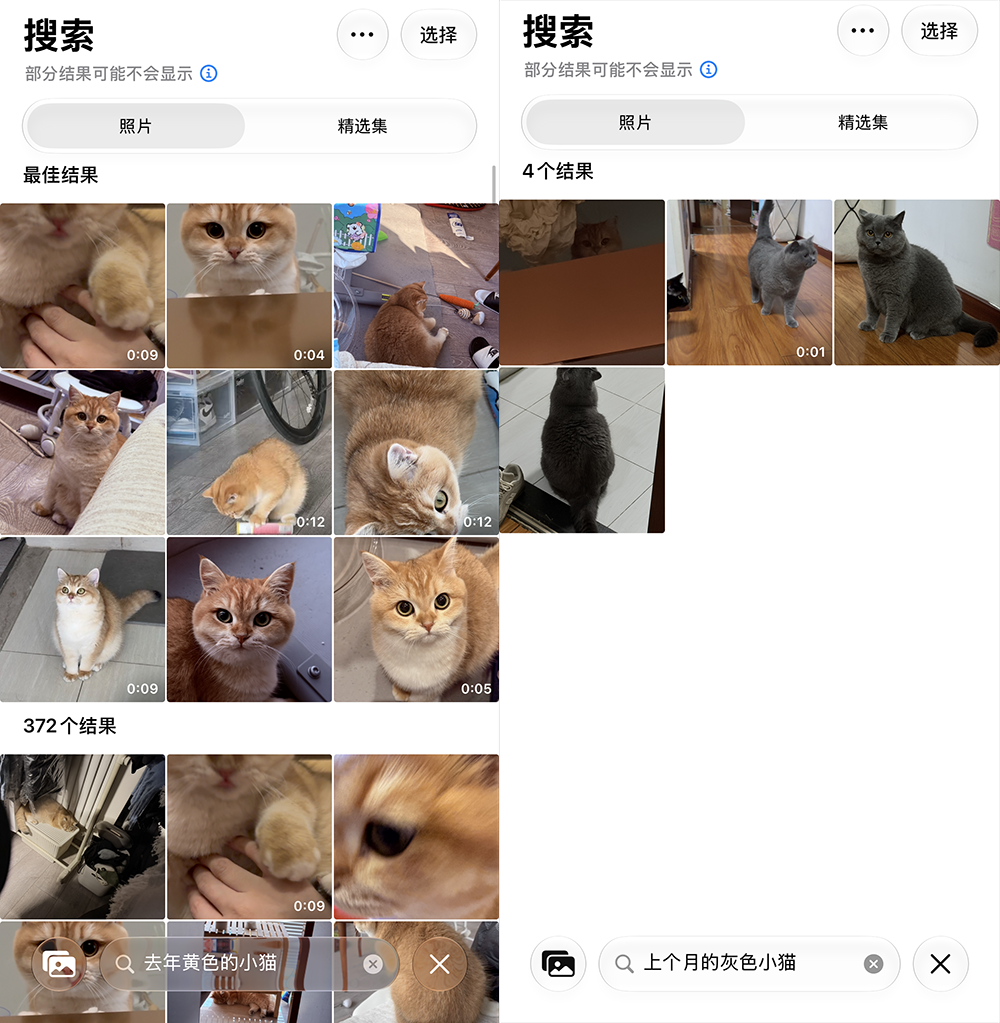
Photo clean-up works when the object is circled manually. Search by description works on prompts such as the beach, last year’s yellow cat, and last week’s grey cat. Notification summaries must be switched on manually, and news and entertainment categories are not yet supported.
Huawei, Xiaomi, OPPO and vivo shipped large-model assistants in 2023 and 2024 and have since moved on to agent capability. Apple Intelligence still cannot execute long multi-step tasks on its own and cannot call third-party vertical agents.
Visual Intelligence and where it points
Visual Intelligence opens from the camera control button. Point the camera at a Turkish restaurant menu and it translates. Follow-up questions route to Qwen, which produced a two-person ordering suggestion on request.
A search button in the corner of the Visual Intelligence screen jumps out to Baidu image search and to Dewu. That detail is more revealing than the demo. Apple’s China AI is not a single assistant, it is a routing layer sitting over Alibaba and, at the edges, over Baidu.
What Apple gave up to be here
Two years of delay in the largest iPhone market, a competitive feature set that trails local rivals, and architectural control of the model layer. In exchange it keeps the platform, the distribution and the billing relationship.
That trade is the template Western platform companies are likely to repeat elsewhere. Regulated markets do not get one global model. They get a local routing layer with a familiar interface on top.
The engineering is competent and unremarkable. The strategic content is that Apple accepted a subordinate position in the model stack to protect the position it actually monetises.
Editor’s note: This is an adapted translation of the original Zhidx report. It has been trimmed and restructured for readability for an international business audience. The full original (in Chinese) is at https://www.zhidx.com/p/607107.html.