BMW has redrawn its battery map along a border that has nothing to do with cost per kilowatt hour. Europe gets Korean cells from a Korean plant in Europe. The United States gets Korean cells from a Korean plant in the United States. China keeps the cars already in production.
On 9 November the Munich group said Samsung SDI would supply cells for its European vehicle plants and LG Energy Solution would supply its American ones, both drawing on existing factories in their respective regions and both starting deliveries in the late 2020s.
The pack that made this necessary
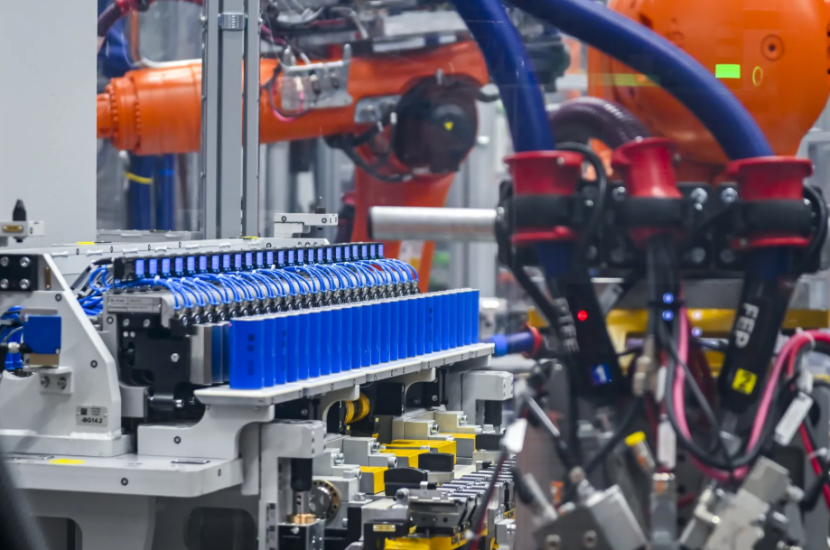
The sixth-generation high-voltage battery is not a commodity part. It is the structural centre of the Neue Klasse platform and the reason the iX3 and everything after it can be built at a different cost base. BMW says it is accelerating the retirement of the previous generation.
Assembly capacity for the new pack already exists outside China: in Germany, Hungary, Mexico and South Carolina. The company’s stated logic is distance, shortening the haul between cell supplier, pack plant and vehicle plant. That logic predates the current politics, but it happens to serve them.
In Europe, BMW had been running on CATL and EVE cells. Those are not being cancelled. What changes is the direction of travel: the incremental volume created by the new platform now lands with Samsung SDI in Europe and LG Energy Solution in the United States.
Brussels wrote the second half
Cell sourcing stopped being a procurement question in Europe the moment subsidy eligibility became conditional on local content. Under the Industrial Accelerator Act, a vehicle has to complete most of its production steps inside the EU before it qualifies for support. That single condition converts a battery contract into a compliance document.
This is the part European and American carmakers now share, and it is not really about China’s prices. China dominates cell manufacturing and the processing of the critical materials that go into them, and that dominance makes any supply chain that runs through it a political exposure rather than merely a commercial one. Sourcing Korean cells built on European and American soil does not remove the exposure. It relocates the layer where the exposure is measured.
What it means for the Chinese cell makers
CATL and EVE are not losing a customer. They are losing the marginal megawatt hour, which is the only part of a battery contract that grows. Existing BMW models keep their cells. The Neue Klasse volume, which is where the next decade of European battery demand actually sits, now has two Korean names attached to it.
The counter-move is already visible in Europe and it does not run through Bavaria. Chinese cell makers are building inside the EU to satisfy exactly the same rule, which means the 2020s will end with more battery capacity in Europe than the European car industry can absorb, owned by a mix of Korean, Chinese and European firms all citing the same legislation.
BMW’s announcement is a hedge, not a divorce. A hedge is what a carmaker buys when it cannot predict which rule survives the next election.
Editor’s note: This is an adapted translation of the original Gasgoo report. It has been trimmed and restructured for readability for an international business audience. The full original (in Chinese) is at https://auto.gasgoo.com/news/202611/10I70477462C501.shtml.