Honda’s latest quarter is the clearest accounting yet of what retreating from electric vehicles costs, and of what a carmaker looks like while it is paying.
The group raised full-year operating profit guidance by 20 per cent to JPY 780 billion, roughly USD 4.9 billion, from a previous forecast of JPY 650 billion. Net profit guidance moved up 25 per cent to JPY 500 billion, about USD 3.2 billion, and revenue guidance from JPY 24.15 trillion to JPY 24.4 trillion. The annual dividend stays at JPY 70 per share.
Where the money went
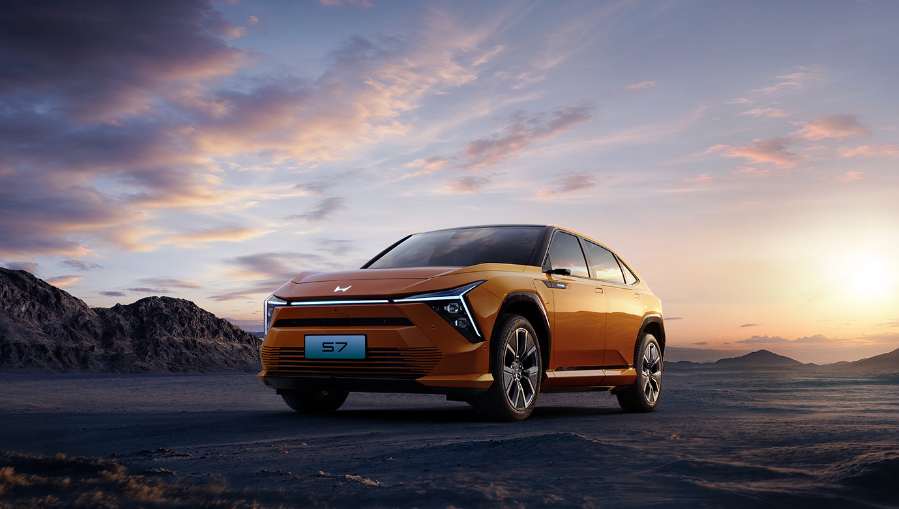
The July to September quarter absorbed JPY 484.8 billion, about USD 3.1 billion, in electric vehicle business restructuring charges. That pushed the automotive division to an operating loss of JPY 5.7 billion, or roughly USD 36.1 million, for the first half.
The half-year headline still improved. Revenue rose 13.2 per cent to JPY 12.04 trillion, operating profit 48.1 per cent to JPY 648.7 billion, and net profit 65.7 per cent to JPY 516.8 billion. All three landed below the JPY 643.2 billion operating figure analysts had modelled. Excluding the restructuring charge, first-half operating profit was up 71.3 per cent at JPY 1.13 trillion.
This is the second time Honda has paid this bill. In the previous fiscal year it booked more than USD 9 billion of electric vehicle restructuring costs and, in May, reported its first annual loss in nearly seventy years.
Motorcycles are the profit centre, again
Two-wheelers did the heavy lifting. First-half volume rose 10.6 per cent to a record 11.9 million units, led by India and Brazil, with operating profit up 19.2 per cent to JPY 439 billion and a margin of 19.3 per cent. No car division in the industry earns that.
Cars went the other way in China, where sales fell 6.6 per cent to 1.57 million units on weak demand. North America compensated: stronger compact and hybrid volume lifted the automotive division’s adjusted operating margin from 2.2 per cent to 6.2 per cent, and US sales in the quarter rose 9 per cent, accounting for half of global retail volume of 823,000.
The USD 3 billion bet on hybrids
Alongside the results, Honda confirmed a roughly USD 3 billion investment in a new vehicle plant in Ohio, sited between its existing East Liberty and Marysville facilities. It will be Honda’s eighth four-wheel plant in North America, capable of building hybrids, combustion models and battery-electric vehicles on the same line, with a maximum annual capacity of 240,000 units and production from 2029.
That lifts North American vehicle capacity from 1.67 million to 1.91 million and adds about 2,000 jobs. Transmission capacity in Ohio expands roughly 3.5-fold. Honda Canada’s share of the programme is CAD 166 million now, with total planned spending of CAD 867 million. Capital expenditure guidance rose JPY 120 billion to JPY 1.4 trillion.
The company also cut its full-year car sales target from 3.39 million to 3.16 million units while raising motorcycles from 22.8 million to 23.3 million, and lifting Brazilian motorcycle capacity in Manaus from 1.6 million to 2.3 million.
The second half is the hard part
Implied second-half operating profit is around JPY 131 billion. The first half was flattered by one-off items including tariff refunds that will not repeat, so the run rate has to come from hybrids and motorcycles rather than from accounting.
Cash tells the same story. First-half operating cash flow was JPY 929 billion and free cash flow JPY 266.4 billion, down from JPY 760.6 billion a year earlier, against net cash of JPY 3.404 trillion.
For European suppliers the read-across is direct. Every major carmaker is now deciding which electric programmes to slow, and each of those decisions arrives as a charge in one quarter and as a smaller order book in the following four.
Editor’s note: This is an adapted translation of the original Gasgoo report. It has been trimmed and restructured for readability for an international business audience. The full original (in Chinese) is at https://auto.gasgoo.com/news/202611/10I70477534C101.shtml.