Maserati has spent a decade losing China. The reported fix is to stop exporting to it and start building inside it, using someone else’s factory and someone else’s electronics.
Chinese media reported on 9 November that Stellantis, Huawei and JAC are working on a three-way project that may be named Maserati Design. Two new battery-electric models are said to have their exterior design confirmed, with volume production progress expected to be disclosed in the fourth quarter of next year. Neither Stellantis nor Huawei has published the terms.
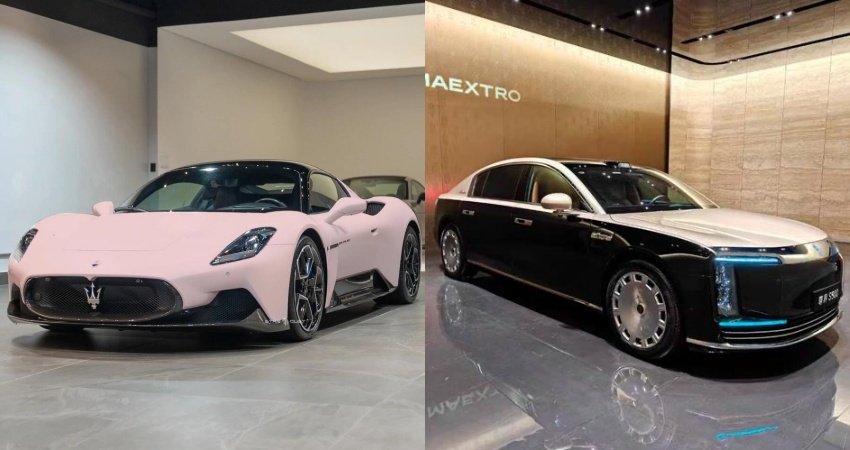
Why the factory matters more than the badge
The arrangement described by Chinese media is not a conventional joint venture. Maserati does not hold a passenger-car production licence in China, and acquiring one from scratch is slow and politically awkward. The reported structure routes around that: JAC manufactures, Huawei supplies the intelligent systems, and the two sales channels run separately. Domestic cars wear the Zunjie marque. Cars leaving China wear the trident.
That is a reversal of the pattern European carmakers spent thirty years perfecting. The technology, the software stack and the manufacturing base would all sit in China. What Stellantis contributes is the thing it still owns outright, which is a name that carries a premium outside China.
The numbers behind the urgency
Maserati sold 7,900 cars worldwide in 2025, a fall of 30 per cent on the year and more than 70 per cent below the 26,600 units it moved in 2023. That was already the brand’s weakest year in more than a decade. China, once its largest single market, took 1,374 cars in 2025. In 2017 the same market absorbed 14,500, so the collapse is above 90 per cent.
The first half of 2026 did not arrest it. Global volume reached 2,737 units against 4,366 a year earlier, a decline of roughly 37 per cent, while Chinese imports of the brand came to about 266 cars, down 48 per cent.
At that volume, a dedicated European production line for a low-volume electric GT does not amortise. Sharing a Chinese platform is the only arithmetic that closes.
What JAC has and has not said
The stock moved before the company did. JAC’s Shanghai-listed shares rose more than 20 per cent in cumulative deviation across three consecutive trading sessions on 28, 29 and 30 September as reports of the tie-up circulated. On 1 October the company published a clarification: talks with Huawei and Stellantis were real, but the content and form of cooperation were undetermined, and no binding agreement had been signed. It warned that subsequent progress carried significant uncertainty.
Maserati has also been courted elsewhere. Market chatter in May 2026 had BYD considering an acquisition of the brand, which BYD denied at the time. On 7 November, asked again about the rumour, BYD executive vice president Li Ke gave an answer that closed the door politely: the company might have been more interested a few years ago, but it had since found its own direction, and the fastest production car in the world was already its own.
What to watch
Two things decide whether this becomes a car or a press release. The first is the licence and the manufacturing agreement, which nobody has published. The second is which channel gets the engineering credit, because a Zunjie built in Hefei and a Maserati built in Hefei will be judged by different buyers at very different prices.
For European suppliers, the more useful signal is structural. If a brand with Maserati’s history concludes that its next electric model has to be engineered in China to exist at all, the tier-one contracts that used to follow the badge will follow the platform instead.
Editor’s note: This is an adapted translation of the original Chedongxi report. It has been trimmed and restructured for readability for an international business audience. The full original (in Chinese) is at https://chedongxi.com/p/379615.html.