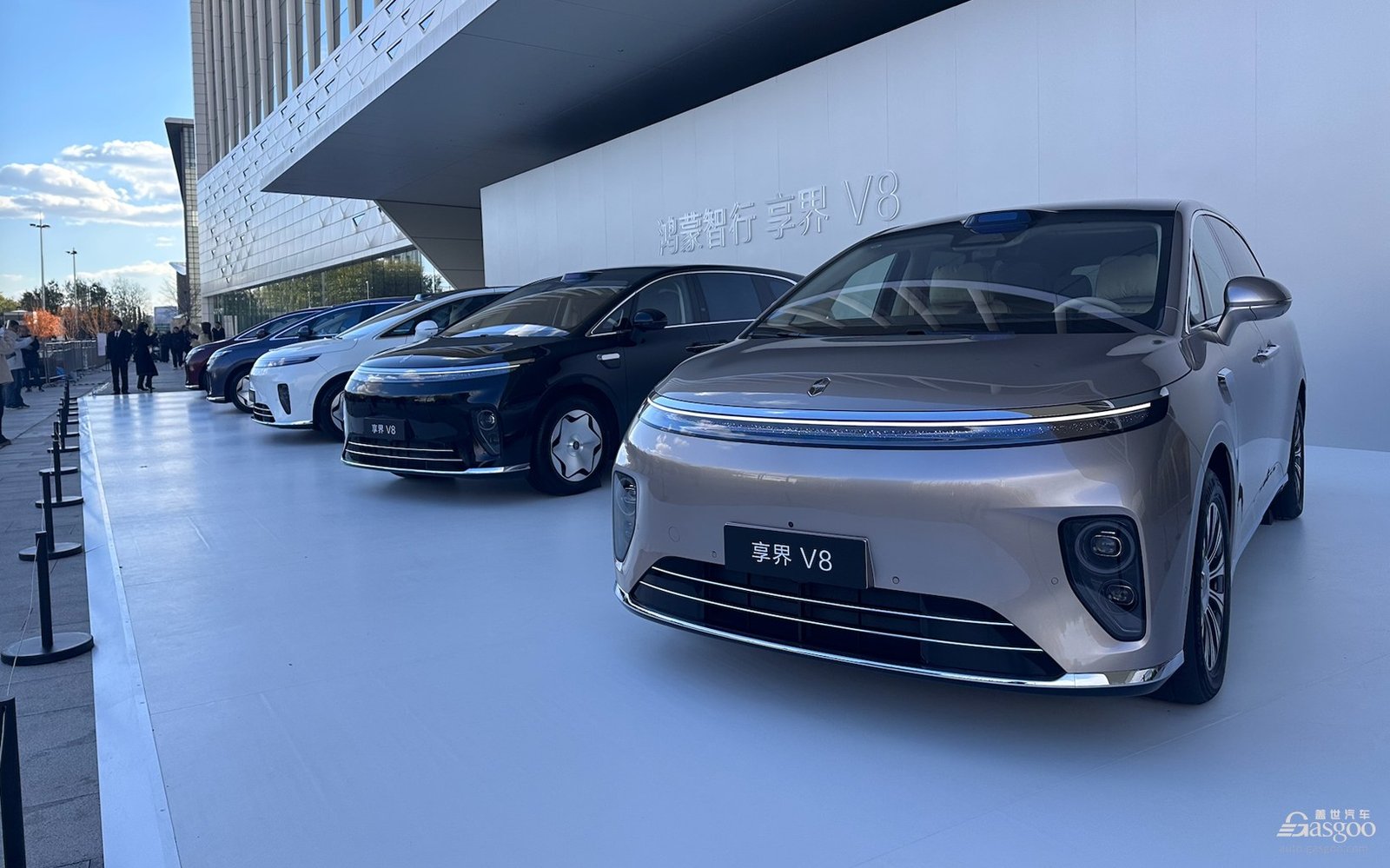
The Maextro V8 went on sale on 20 November at RMB 319,800 to 429,800, with seven trims in battery-electric and extended-range forms. Harmony Intelligent Mobility Alliance said delivery began at the moment of launch. At the same event, Huawei and BAIC said their strategic community would be upgraded around four systems: technology and products, dedicated teams, quality assurance and service experience.
A deal settled before the launch
The upgrade did not come out of nowhere. Ahead of the launch, BAIC Group party secretary and chairman Zhang Jianyong led a team to Shenzhen for talks with Huawei founder Ren Zhengfei and other senior executives. The two sides spoke of continuing to share difficulties and move forward together, and of building the Maextro into a Chinese luxury brand.
That sequence matters. The car and the deeper partnership were announced together, with the leadership meeting setting the tone first. The relationship has moved from co-developing a single vehicle to a strategic community covering product, research and development, manufacturing, channels and service. The question this round tries to answer is whether one system can keep producing premium vehicles, not just one.
Filling out the range
The V8 fills the MPV gap in the Maextro line-up, which already had the S9 saloon, the S9T wagon and the G9 SUV. Yu Chengdong, Huawei executive director and chairman of its terminal business group, gave a specific reason for choosing a family MPV. In a large six-seat SUV, six passengers may fit but their luggage may not. Large MPVs solve the space problem but are hard to drive and park, so family members may not want to drive them.
The V8 tries to keep the MPV space advantage while improving the flexibility of a large vehicle and retaining SUV-like ground clearance. Zhang Jianyong described the aim in plain terms: the driver should not feel like a chauffeur, the second row should not feel stiff, and the third row should not feel like an afterthought. That frames the car around every seat rather than around the second row alone.
Bodies and luggage at the same time
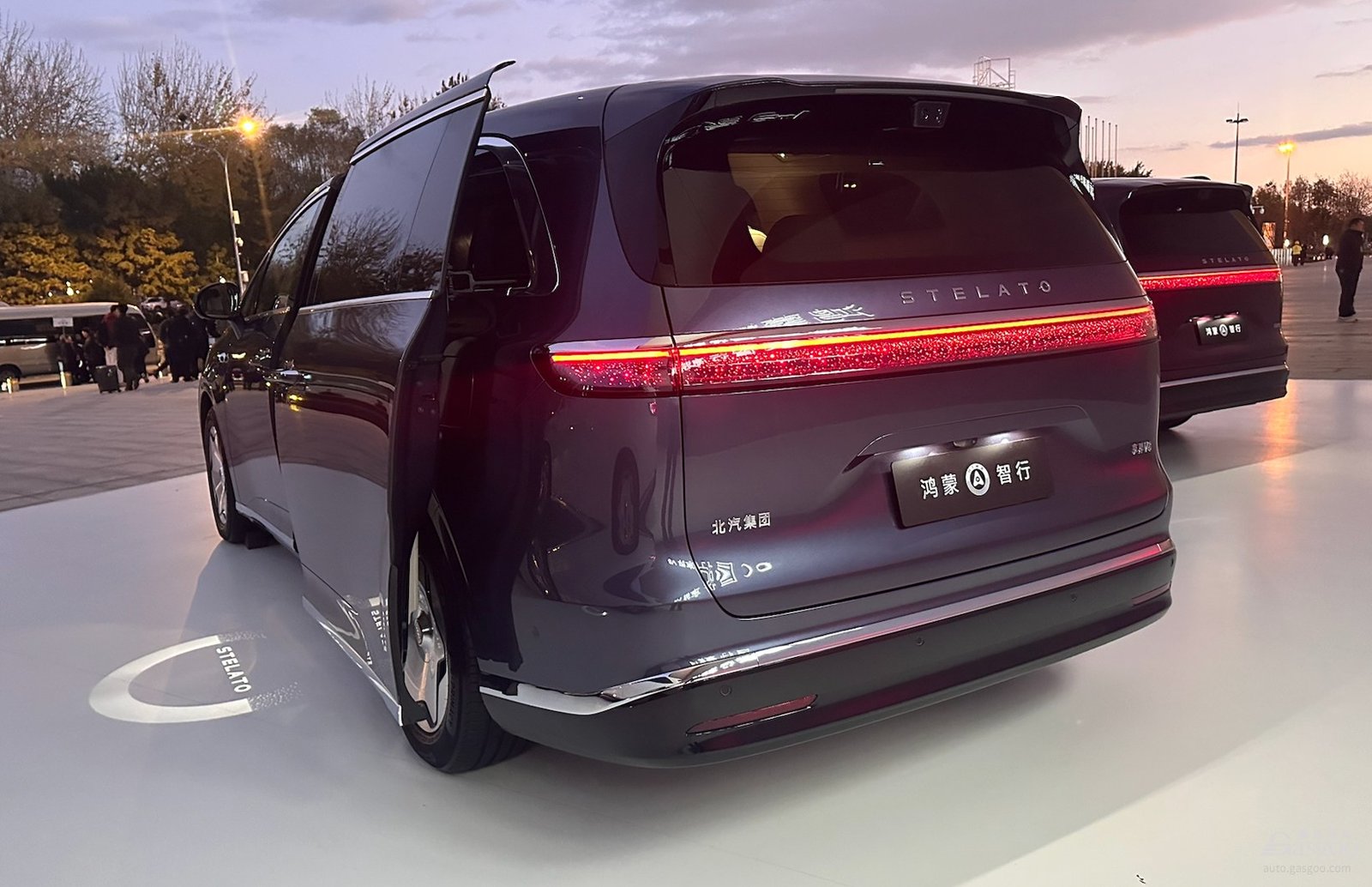
The V8 is 5,335mm long with a 3,250mm wheelbase, a 2+2+3 seven-seat layout and 3,697mm of usable cabin space, giving a space efficiency figure of 69.3 per cent. With all seven seats in use, the boot still holds 674 litres, enough for ten 20-inch cases. Folding the third row expands it to 1,552 litres. The design targets households that need seats and luggage at once.
Four zero-gravity seats come as standard. The second row rotates electrically to 45, 90 or 180 degrees and moves laterally by 150mm, allowing more than 30 seating combinations, including face-to-face layouts. A concealed rail reduces the dust and trip hazards of conventional MPV tracks. A 730mm power sliding door, a 380mm low step and a 340mm B-pillar grab handle are aimed at elderly passengers and children.
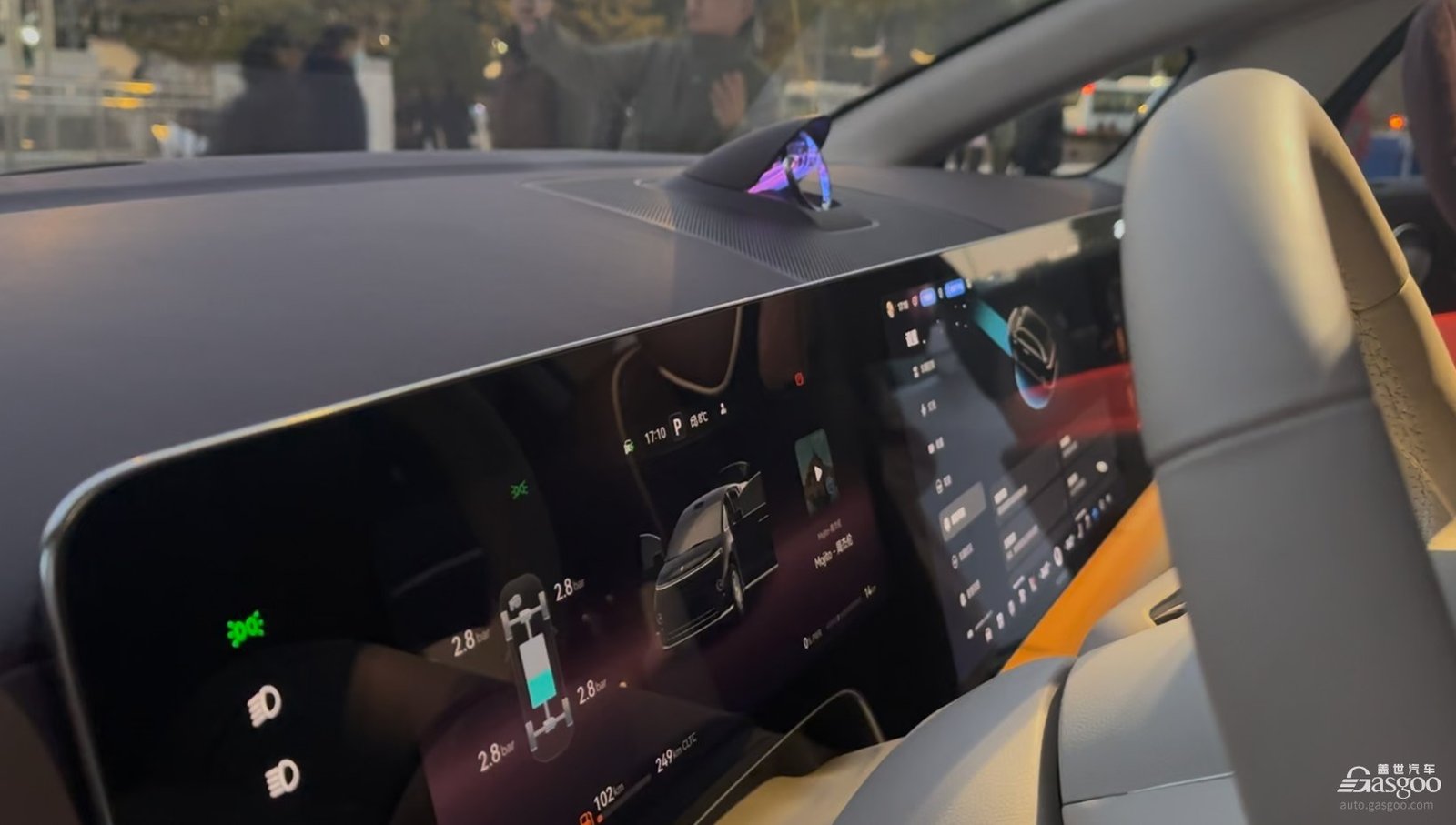
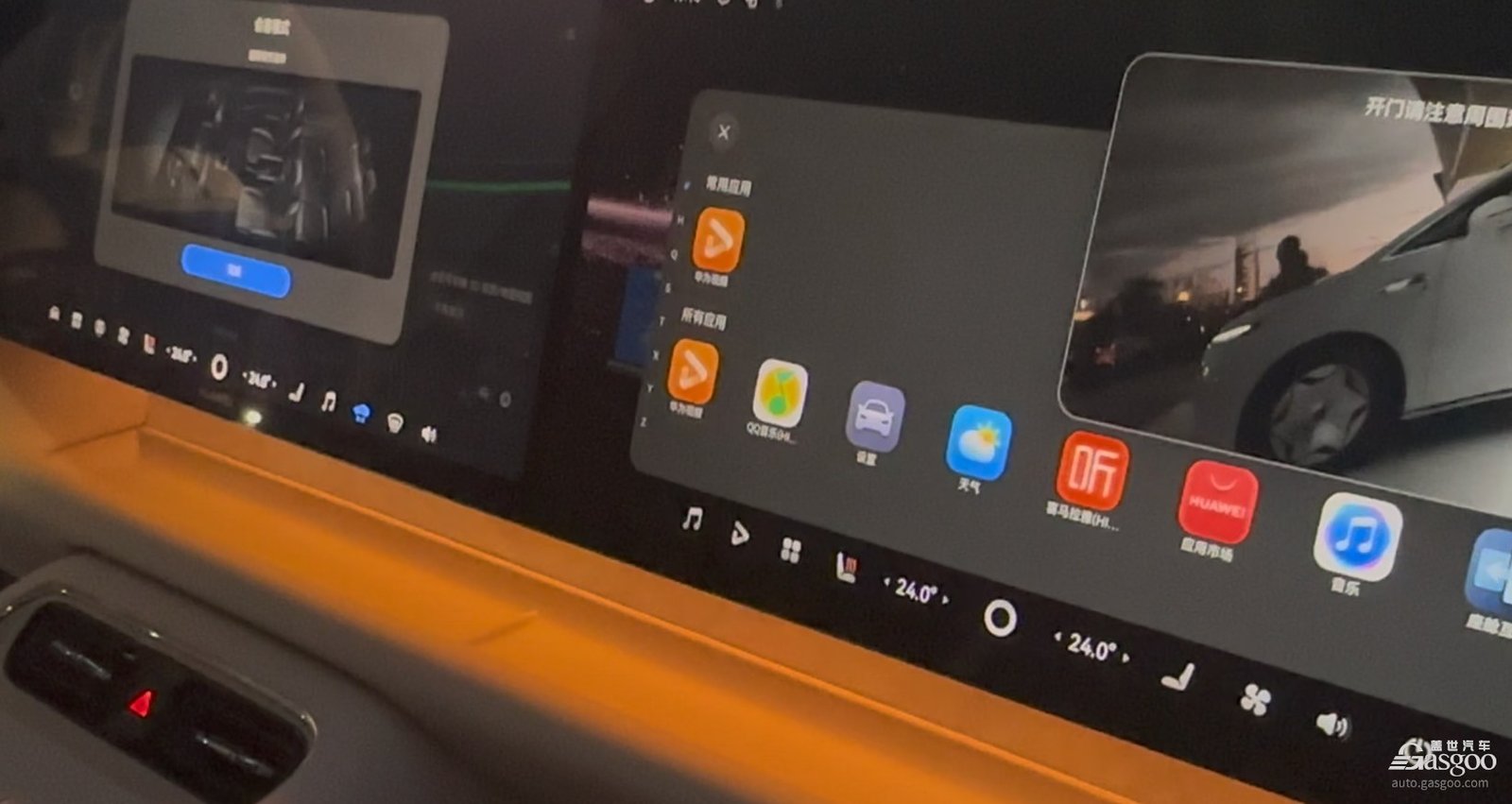
The cabin also gets a 21.4-inch Huawei ceiling screen, the Harmony cockpit, Huawei audio and 39 storage spaces, with connectivity to Huawei children watches. For family buyers, in-car entertainment, child monitoring and storage are frequent use cases rather than extras.
Making a large MPV drivable
The V8 is built on the Huawei Tuling platform and gets plus or minus 12 degrees of rear-wheel steering as standard, cutting the minimum turning radius to 5.09 metres. Twin-valve continuously variable dampers, dual-chamber air suspension and a motion-sickness relief system are fitted, with official figures claiming a 43 per cent improvement in overall ride comfort.
On the 800-volt Huawei battery platform, the battery-electric version reaches up to 830 kilometres on the CLTC cycle. The extended-range version offers up to 430 kilometres of electric range and 1,465 kilometres combined. Two powertrains cover households with very different access to charging.
The car carries Huawei ADS 5 with up to 38 sensors and an eight-layer redundancy design. Huawei says 120 km/h Level 3 cross-city highway testing has begun, alongside valet pick-up, very tight-space park-in and narrow-road passing. That is a progress report on testing, not a Level 3 service for ordinary buyers. After the launch, Yu Chengdong corrected the record: the V8 ships with Level 2 assistance, with Level 3 hardware present but not switched on. Drivers still need to hold the wheel.
From one car to one system
For BAIC, the Maextro is no longer just a premium option in a product grid. Zhang called it a strategic move upmarket, with Huawei supplying intelligence and BAIC contributing vehicle development, high-end manufacturing and quality systems. That is more specific than a promise to keep cooperating. It assigns each side a role, and it puts the burden of proof on the system rather than on a single launch.
Editor’s note: This is an adapted translation of the original Gasgoo report. It has been trimmed and restructured for readability for an international business audience. The full original (in Chinese) is at https://auto.gasgoo.com/news/202611/21I70478691C107.shtml.