On 16 November, the Ministry of Industry and Information Technology published the 412th batch of its catalogue of road motor vehicle manufacturers and products. The list added Lantu Automobile Technology as a member of Dongfeng and Anhui Zhijie New Energy Automobile as a member of Chery. On the evening of 17 November, Lantu confirmed the change in a voluntary announcement to the Hong Kong exchange.
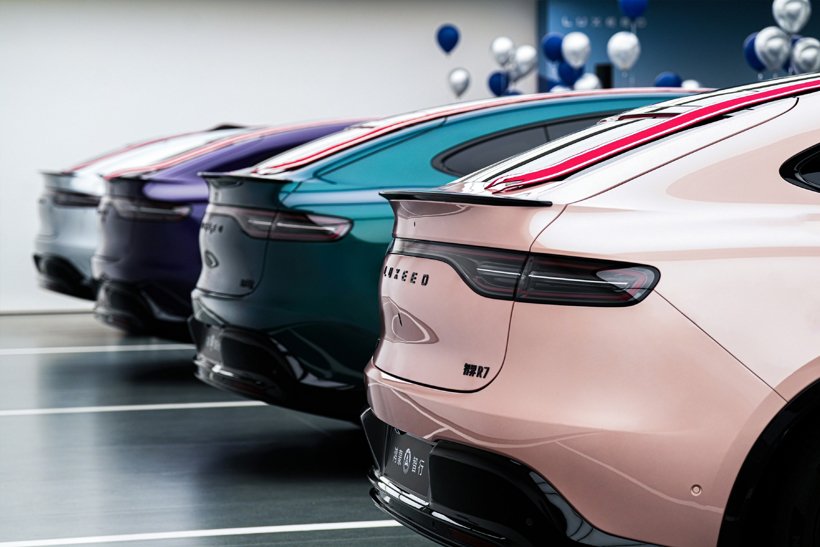
Both companies now hold vehicle manufacturing qualification. They can apply to register models under their own names, organise production and independently carry responsibility for product approval and manufacturing consistency.
A transfer, not a new licence
Read on its own, the announcement looks routine. In the context of China’s production qualification system, the two approvals are different. Lantu completes the independence of a Hong Kong listed company; Zhijie moves from contract filing to operating as a real entity.
The 412th batch was open for public comment from 17 to 23 October 2026, when both companies already appeared on the proposed new entrants list. A detail in the final announcement is easy to miss. In the same batch, Chery applied to cancel the qualification at its Wuhu plant address, the exact address Zhijie uses. Dongfeng cancelled the qualification at its Wuhan plant address, where Lantu is based.
Two cancellations and two changes point to the same fact. Both qualifications came from a transfer inside the group, and the regulator did not open a new gate. Chery did not gain an extra licence, and neither did Dongfeng. What changed was the legal entity to which capacity and qualification attach.
Vehicle qualification has two layers. Enterprise access decides who is eligible to build cars, covering production sites, capital, staff, development capability, consistency assurance and after-sales. Product access decides which model can be sold. Until now, Zhijie’s S7 and R7 were filed under Chery, and Lantu products were registered to Dongfeng Motor. The cars could be sold, but the legal manufacturer was not the brand itself. After the change, certificates, nameplates, recalls and quality responsibility move to Lantu and Anhui Zhijie. For buyers, the visible change is the tail badge: current Zhijie cars say Chery, and future ones are expected to say Zhijie.
Lantu’s last missing piece
China has effectively closed approval for new passenger car manufacturing qualifications. Since the 2018 investment rules took effect, approval of new pure electric passenger car projects has tightened steadily, and Xiaomi was the last company to receive a full new vehicle licence. New brands have three paths left: transferring existing capacity, contract manufacturing, or splitting from a parent entity.
Lantu and Anhui Zhijie used the group management route, which allows simplified review for qualified group members and permits them to commission production by another qualified member. The approach lets regulators allocate qualifications to entities with real manufacturing bases without adding total capacity. Both brands already have products on sale and disclosed sales volumes, which likely explains why the regulator approved them.
Lantu listed on the Hong Kong main board in March 2026 under ticker 7489, as the listed passenger car vehicle of Dongfeng’s system. Listing documents exposed a long-standing flaw. At the time, 51 Lantu brand products were registered to Dongfeng Motor in the ministry’s system, with another eight registered to Dongfeng Automobile. Lantu had development, manufacturing and sales capability but was not, in the catalogue’s terms, a vehicle manufacturer in its own right.
That matters for capital operations. A qualification attached to the parent weakens asset completeness and forces extra explanation around capacity plans, profit allocation and responsibility. Dongfeng’s transfer of the Wuhan plant to Lantu, and the right to file new cars under the Lantu name, completes the picture. For a listed company likely to raise more capital and expand capacity, the value is close to that of the listing itself.
The operating numbers support the claim to independence. Lantu delivered 13,030 vehicles in October and 128,511 year to date, up 13 per cent, with cumulative deliveries of 400,000. By its own account, it is the first state-owned high-end new energy brand to reach that scale.
Editor’s note: This is an adapted translation of the original Gasgoo report. It has been trimmed and restructured for readability for an international business audience. The full original (in Chinese) is at https://auto.gasgoo.com/news/202611/19I70478527C109.shtml.