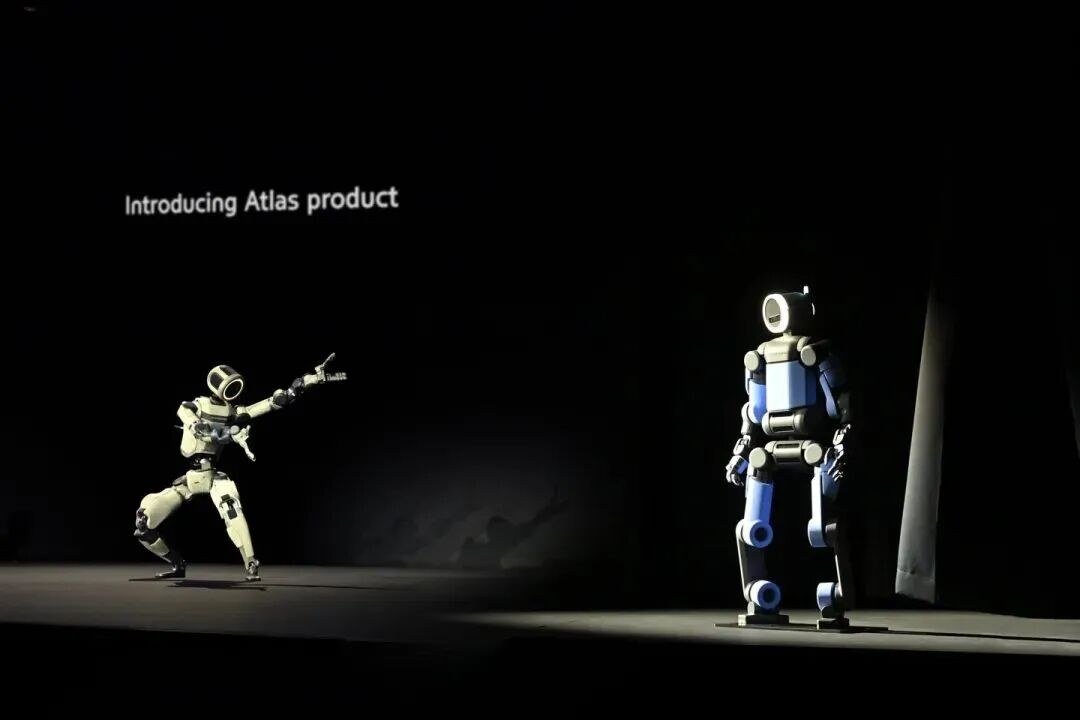
Boston Dynamics, the robotics company owned by Hyundai Motor Group, and chipmaker GlobalFoundries have expanded their cooperation. The four-legged Spot robot will be deployed across more GlobalFoundries wafer plants in the United States, Europe and Asia. GlobalFoundries will also become the first Boston Dynamics customer outside the car industry to test the humanoid Atlas, and the first semiconductor manufacturer to validate a humanoid robot on site.
Built on four years of data
This is not a new relationship. GlobalFoundries has used Spot at its Burlington plant in Vermont for more than four years. The decision to expand rests on data from its Singapore facility. Since April, two Spots have walked nearly 900 kilometres in the underground support layer of the fab, completed more than 90,000 inspection runs, and succeeded in 99 per cent of tasks.
The company moved 875 routine inspection tasks to the robots in two weeks and plans to more than double inspection volume using vision-based checks. The economics are straightforward. A fab has thousands of inspection points, and fitting fixed sensors to every machine is uneconomic. Spot makes the sensors mobile, reading temperature and gauge data from pumps, motors and compressed gas systems on demand.
From reactive to predictive
Pradip Singh, chief manufacturing officer at GlobalFoundries, said Spot has moved the plant from fixing faults after they happen to predicting them from data. Under the agreement, Spot will cover plants in Malta, New York; Burlington, Vermont; Dresden, Germany; and Singapore. The Dresden site gives the programme a European foothold inside one of the continent’s most strategic chip facilities.
Atlas is a different proposition. The all-electric humanoid differentiates itself through two-arm dexterous manipulation, but which tasks it will take on has not been fixed. The two companies will first run skill development workshops to assess use cases and integration needs. Field testing is not due to start until early 2027. Semiconductor manufacturing demands extreme cleanliness, precision and safety, so whether a humanoid can work steadily on a real production line remains an open question.
The wider signal is about where Atlas can go. The potential customer base is spreading beyond Hyundai’s own car plants into chip fabrication. Boston Dynamics is choosing to prove value with the mature Spot first, then validate Atlas carefully with early customers. That is a slower path than a headline launch, but it gives a humanoid robot a credible reason to be inside a fab.
Editor’s note: This is an adapted translation of the original Gasgoo report. It has been trimmed and restructured for readability for an international business audience. The full original (in Chinese) is at https://auto.gasgoo.com/news/202611/20I70478626C601.shtml.