In 2026, the market for large six-seat SUVs is getting denser and more competitive. Family travel demand is still growing, but the differences between products are being erased quickly. Refrigerators, screens, large seats and a usable driver assistance package are moving from selling points to standard equipment. Powertrain choice is redrawing buyer expectations, with pure electric three-row SUVs gaining share while plug-in hybrids hold their ground on long-distance refuelling convenience.
When configuration sheets stop distinguishing cars, competition shifts to deeper product definition. For a six-seat SUV expected to handle both daily commuting and long family trips, the balance between efficiency, refuelling convenience and driving feel remains a decision buyers cannot avoid.
A wheel that folds away
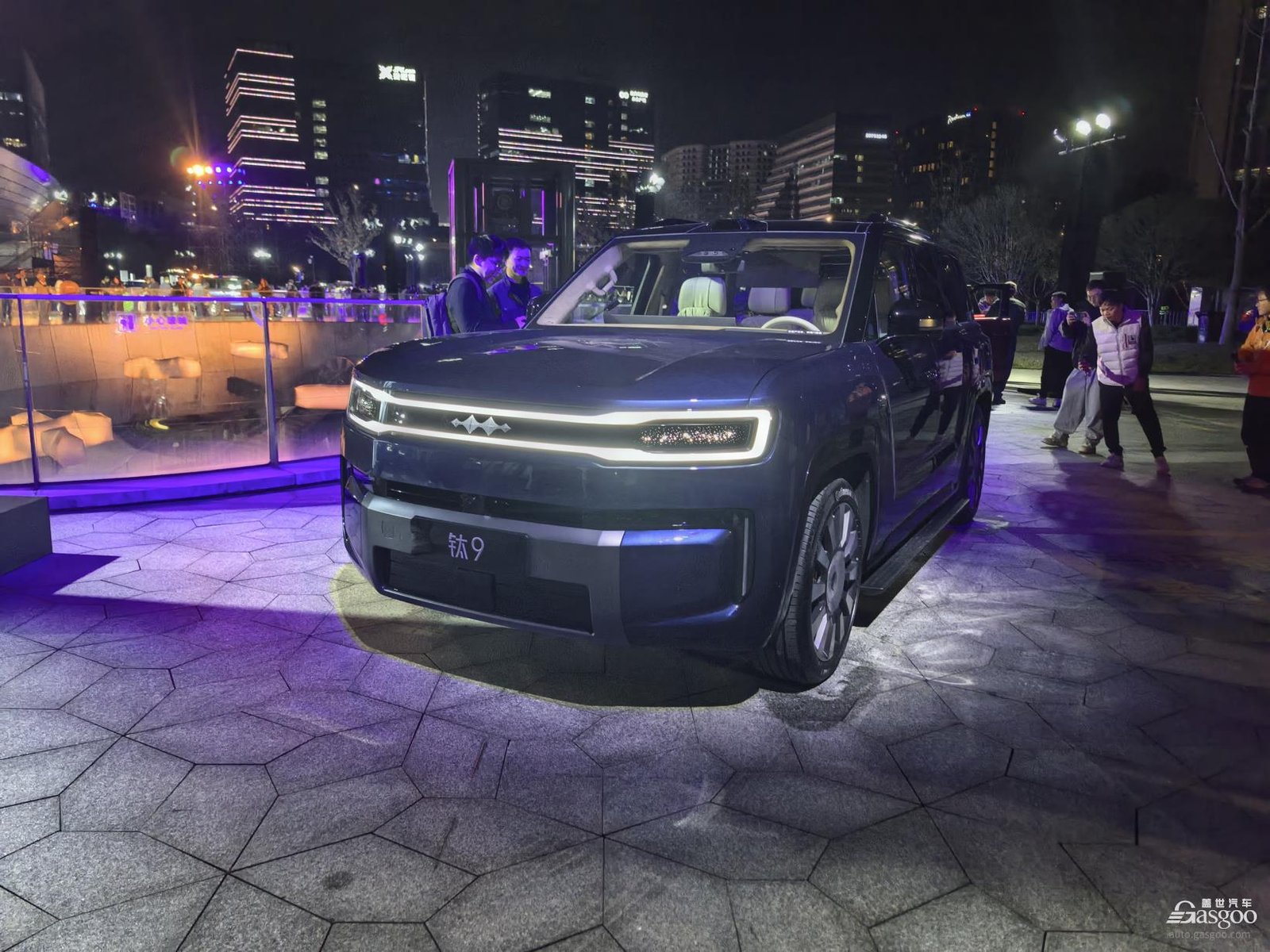
The Fangchengbao Tai 9 enters at RMB 279,900, with the top folding cockpit version at RMB 329,900. It is the first model to use the DMS all-round hybrid platform, and the first to fit a production folding steering wheel.
General manager Xiong Tianbo described the folding cockpit as a top technological achievement of BYD’s long-term approach and a forward reserve for the era of Level 3 and Level 4 driving. He also said Fangchengbao was repositioning from a personalisation brand to a personalised luxury brand.
The idea of stowing a steering wheel was raised around 2016, but the mechanical column linking wheel to wheels was a physical obstacle. The Tai 9 could bring it to production only because steer-by-wire replaced that column, allowing an electrical signal to take its place. The wheel folds from 0 to 180 degrees within ten seconds, can fold while the car parks itself, and is rated for 80,000 start-stop cycles.
From an engineering view, this is a real production breakthrough, and BYD’s role in drafting the standard and bringing it to market is clear. Whether it becomes useful to owners depends on the setting. Folding is limited to a parked car. While driving, the wheel stays in place and the driver remains responsible.
Buyers who nap or camp in their car may value the space freed in the driver’s seat and the end of a wheel pressing into their legs. Commuters who rarely rest in a parked car may not rank it highly. Calling it a reserve for Level 3 and Level 4 also suggests its strategic meaning points forward. Until autonomous systems actually take over, the folding wheel delivers novelty and a sense that the car is ready for the next era.
The system underneath
That means its value sits less in the comparison column and more in brand positioning. In a highly uniform category, a memorable engineering label can persuade buyers that one car is different at very low communication cost, buying attention for the rest of the product story.
The Tai 9’s real anchor is a system that works without asking the driver to change habits. The DMS platform combines the capabilities of DM-i, DM-p and DMO. A 1.5 litre engine dedicated to plug-in hybrid use works with front and rear motors producing a combined 400 kW. The 5,270 mm SUV with a 3,130 mm wheelbase reaches 100 km/h from rest in 4.8 seconds, with fuel consumption of 6.4 litres per 100 km when the battery is low.
The second-generation blade battery gives up to 400 km of electric range under the CLTC cycle and 1,630 km combined. Fast charging takes the battery from 10 to 70 per cent in five minutes at room temperature and from 10 to 97 per cent in nine minutes. At minus 30 degrees, the same charge takes only three minutes longer. The point of these numbers is not any single record but an attempt to remove the trade-offs that have long defined large SUVs, where strong performance often means high consumption and long range often means a poor refuelling experience.
Editor’s note: This is an adapted translation of the original Gasgoo report. It has been trimmed and restructured for readability for an international business audience. The full original (in Chinese) is at https://auto.gasgoo.com/news/202611/20I70478595C107.shtml.