PollyPolymer has completed two equity rounds back to back, B2 and B+, raising more than RMB 500 million in total. Cornerstone Capital and existing shareholder Jinshajiang United Capital co-led B2, with Gezhi Capital, Tiantang Silicon Valley, Zhongshi Capital, Yunjin Capital and Zhuopu Fund following. Matrix Partners China led B+, with Anade Capital and Tiantang Silicon Valley following, and industrial investor Changying Precision participating.
Proceeds go to polymer and composite material development, equipment capacity and a headquarters base, applications in embodied intelligence and other frontier fields, and a global delivery network. Since its A round in 2020 the company has closed four rounds, all pointed at materials, equipment and capacity.
From material to cloud factory
Founded in 2017, PollyPolymer works on polymer elastomers and ultra-high-speed 3D printing for volume manufacturing, spanning materials, equipment, software and production services. Its HALS platform prints 20 to 100 times faster than conventional approaches, and by 2026 the company had accumulated more than 16,000 polymer formulations covering elastomers, high toughness, high strength and high temperature resistance.
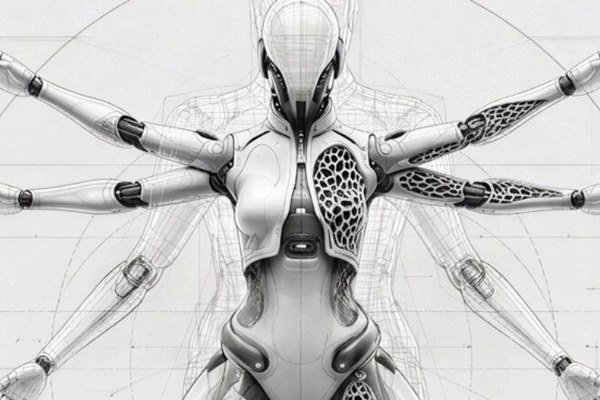
Materials are matched to industries rather than sold generically. Footwear needs breathability, zone-specific cushioning, rebound, flex resistance and abrasion resistance at a controlled cost. Robot parts need flexible cladding, designable damping, topology and impact resistance. Medical parts need biocompatibility and forming precision. Two solutions launched in August 2026, RoboFab for robotics and PollyAlign for footwear digitalisation, share one material library and process base.
On the equipment side the company fields TAPS 200, TAPS 400 and TAPS 6080. The last, launched at TCT Shenzhen in October 2026, offers a build volume of 603 by 339 by 800 millimetres, about 4.9 times that of TAPS 400. For continuous load-bearing structures such as bionic limbs, joint housings and one-piece chassis, large-format printing removes the splice line where a segmented part would concentrate stress.
Production runs through PollyWorks, a cloud factory where five bases co-ordinate materials and machines under the PollyPilot control system, with mobile AGVs and collaborative arms handling continuous output. More than 10 million end parts have been delivered, and one-piece complex structures are now in routine scheduling. In January 2026 the cluster passed 1,000 machines.
Robots are the second act, shoes were the first
Footwear was the early volume business: uppers, functional midsoles and one-piece shoes for more than a hundred brands and design studios. In October 2026 the company opened a PollyFab retail flagship in Shenzhen MixC, scanning feet in store and producing customised shoes from a cloud production system without tooling or minimum order quantities.
Robot parts are the growth story. PollyPolymer supplies artificial muscle and soft structures, silent foot pads and anti-interference housings, with tens of thousands of sets delivered to dozens of Chinese and US robot companies including UBTech and Zhuoyide. Robot customers need frequent structural changes between models, which is where tooling costs and lead times bite, and where printing without a mould earns its place.
Overseas, the company sells turnkey factories rather than machines: a printing cell plus process capability plus long-term material supply. One such plant is running in Vietnam, with projects or intentions in Italy, Spain and Belgium. More than 400 customers across 30 countries are on the books.
What the investors said
Matrix Partners China framed its test as whether a product can be delivered in stable volume, noting that PollyPolymer moved from technical possibility to routine production across several industries in two years. Jinshajiang, an investor since the A round, cited vertical integration across materials, equipment and software without external outsourcing, and argued that Chinese manufacturing moves from exporting products to defining standards through companies that hold the whole chain.
Editor’s note: This is an adapted translation of the original 36Kr report. It has been trimmed and restructured for readability for an international business audience. The full original (in Chinese) is at https://36kr.com/p/4072516740797318.