Daxiao Robotics has completed adaptation, tuning and deployment validation of its Kairos 3.1 world model on Hygon’s Shenzuan-3 DCU accelerator and C86 CPU, closing the deployment path for the model on a fully domestic compute stack.
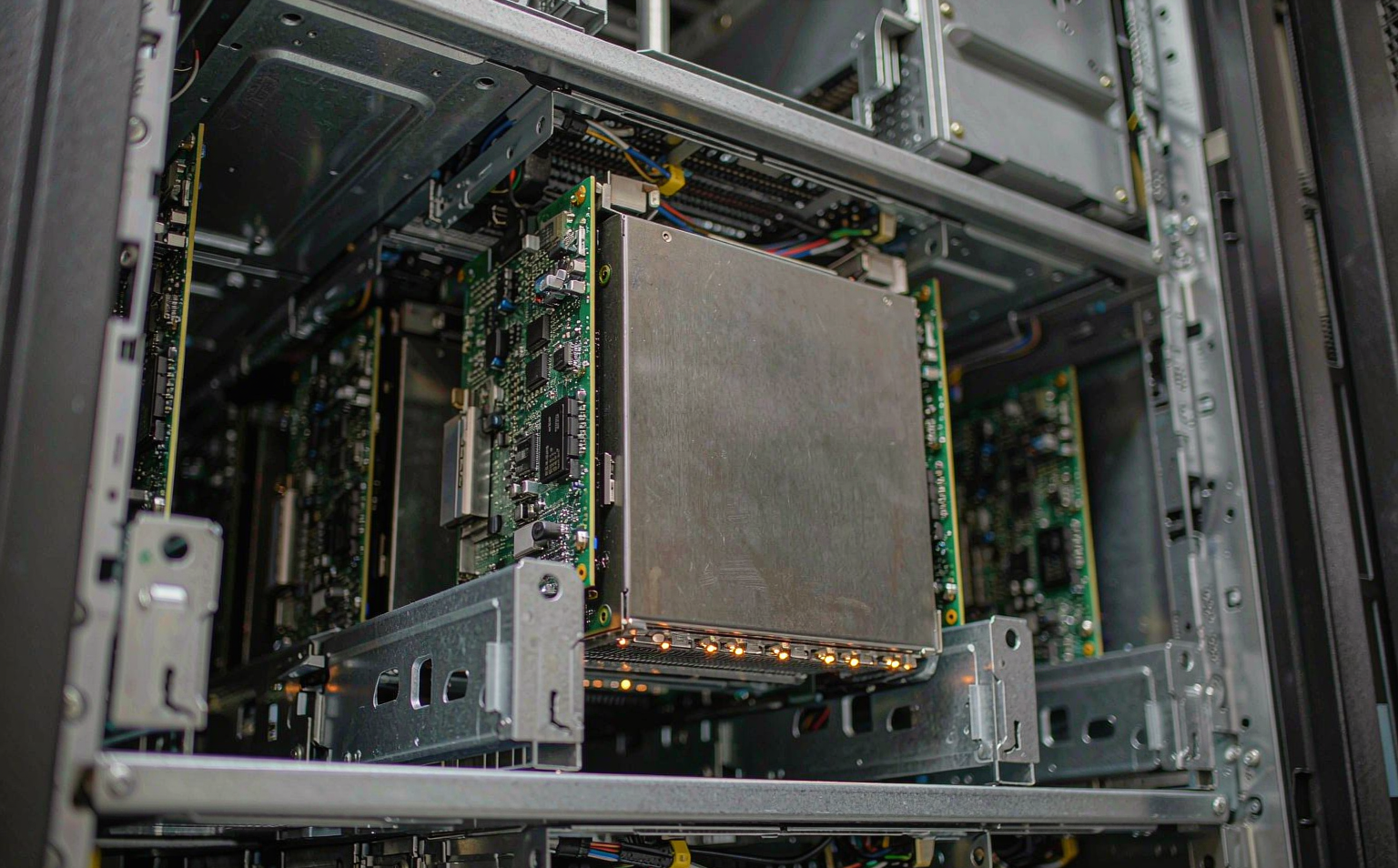
The performance figure is the one that matters. In a 480P text-to-video inference task, a single Shenzuan-3 card completed the job in 12.42 seconds, reaching 94.2 per cent of the performance of a mainstream international GPU reference product.
The number behind the number
That 94.2 per cent did not arrive with the hardware. At its first adaptation the same workload ran at 62 per cent of the reference. The gap was closed by 32.2 percentage points through software work.
The two companies optimised software dependencies and core operators on Hygon’s DTK stack and completed two rounds of compatibility certification. Output precision is described as substantially the same as the reference.
This is the recurring shape of domestic accelerator adoption. The silicon arrives below parity, and the deficit is paid down in compilers, kernels and operator libraries rather than in transistors.
What the model actually does
Kairos 3.1 was released in July at the World Artificial Intelligence Conference. It uses a hybrid Transformer architecture and combines understanding, generation and prediction, aimed at robot manipulation and physical scene simulation.
On the application side, Daxiao has completed data collection in instant retail warehousing across tens of thousands of stock keeping units, five stages and 13 atomic actions. Scenes generated by the model are already being used in training.
In home service it has reached on-device deployment, supporting long-horizon interactions such as retrieving items from a fridge and handing objects over.
Delivery and the open question
The solution ships in both appliance and cluster forms, deployable through pre-installed model images.
What remains unproven is behaviour under different workloads and in real operating environments. Text-to-video at 480P is a proxy for world model fidelity, not for whether the generated scene is physically consistent enough to train a manipulator on.
The strategic point stands regardless. A world model is the most compute hungry part of an embodied stack, because it generates the data that everything else learns from. Making that run at near parity on domestic silicon removes a dependency that export controls made expensive.
For US builders and investors, the relevant comparison is no longer chip count. It is how quickly a substitute stack can be brought to the same throughput, and this one took one adaptation cycle to move 32 points.
Editor’s note: This is an adapted translation of the original Gasgoo report. It has been trimmed and restructured for readability for an international business audience. The full original (in Chinese) is at https://www.gasgoo.com/apps/e060bad9eca91db7f01403fc7120041f/robot/news/70476915-%E5%A4%A7%E6%99%93%E6%9C%BA%E5%99%A8%E4%BA%BA%E6%90%BA%E6%89%8B%E6%B5%B7%E5%85%89-%E5%AE%8C%E6%88%90%E4%B8%96%E7%95%8C%E6%A8%A1%E5%9E%8B%E5%9B%BD%E4%BA%A7%E7%AE%97%E5%8A%9B%E9%80%82%E9%85%8D/.